


My cat is losing hair after flea and tick medicine. What should I do?
Updated On September 23rd, 2025
Pet's info: Cat | Mixed Breed | Male | 1 year and 6 months old | 15 lbs
We applied flea and tick medication to our cat and even though he's fine he is losing his hair. What should we do?
5 Answers
Most Helpful Answer

Published on April 24th, 2018
I am not sure if he is losing the hair just in the area where you applied the flea and tick medication or is he losing hair in general? It is a ell known side effect. Some cats have more sensitive skin and so react with losing their hair in the area of the application. As long a the skin does not look angry or red or injured you do not have to worry. Most of the time the hair will regrow. Should the skin react angrily you will need to have your vet examine your kitty. He may need some ointment on the lesion.

1Pet Parents found this answer helpful
Related Answers from Veterinarians
-
Published on October 4th, 2017
This a side effect if any topical medication. As long as the skin is not red or irritated then no treatment is needed and the hair will regrow but you might want to try a different product next time. If the area is bothering him then you can wash the area with baby shampoo to remove as much as possible and consult your vet if it is not improving
1Pet Parents found this answer helpful
-
Published on February 3rd, 2018
Thanks for using Petco Pet Education Center, formerly Petcoach! This is possibly due to allergies. It really comes down to figuring out what is causing his allergies so that they can be treated or the specific allergen avoided. There are many things that can cause allergies though in most cases they can be broken down into 3 big categories: flea, food and environmental allergies. Allergies are usually worked up in a stepwise fashion starting with flea allergies as this is the easiest and cheapest to take care of. If not on a flea preventative, then it would be a good idea to get started on one. If already on one then it would be a good idea to change to something else (there are many new products out in the market). If not improved in 1-3 months then it is time to move on and check for food allergies by switching to a novel diet (new protein and new carbohydrate). If that does not seem to be the issue then you are left out having to check for environmental allergies which require blood and/or skin tests. Allergies can be very frustrating to deal with at first but so rewarding at the end when we are able to treat them effectively!
1Pet Parents found this answer helpful
-
Published on June 15th, 2017
Maxwell could lose hair for a few reasons. In general things that cause hair loss in cats are: flea allergy, food allergy, hyperthyroidism, ringworm, bacterial infections or environmental allergy. I would advise to take him into the vet to have him examined. They may be able to determine the cause based on physical exam. At home there's not much you can do except protect the area if Maxwell seems to want to lick/scratch it with an Elizabethan collar. If he is not on a reputable flea product, you may put him on one (I recommend Revolution) just to rule out fleas for sure. Sometimes you just have to start moving down the list of things that cause hairless until you figure out which one it is!
2Pet Parents found this answer helpful
-
Published on March 23rd, 2017
Poor Buddy! Hair loss can have a number of underlying causes, including fleas/flea allergies, food allergies, environmental allergies, ringworm, mange, or even traumatic events like burns. Treatment will be determined by the underlying cause. Ultimately, Buddy should be examined by his vet to check for ringworm, mange (caused by mites), fleas, or signs of a skin infection as a result of itching. Until you are able to take Buddy to his vet, closely examine his fur (mostly around the tail base and head/neck areas) for the presence of live fleas or flea dirt. Flea dirt resembles flecks of pepper that turns reddish-brown when moistened with water on a white paper towel. Regardless of whether or not you see fleas, administer a high quality flea preventative, such as Advantage, once a month. Some fleas are good at hiding in the coat, and if Buddy is allergic to fleas, only one flea bite could make him itchy and cause hair loss. If you see signs of fleas, give Buddy a Capstar (available at most pet stores) to kill live fleas in 30 minutes. If you do see signs of fleas, make sure you wash his bedding in hot water and vacuum every day or two. Aside from flea control, there is not much else you will be able to try at home without determining the underlying cause of Buddy's hair loss.
1Pet Parents found this answer helpful



Hi there! There is a little bald spot on my kitty where I applied advantAge. Should I be concerned about that and is there a way to prevent that from happening ? The last two times I applied it it didn't happen . Thank you
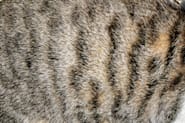
Large Cat of 14 years (male). About 3 weeks ago applied Seargents Flea treatment.Not only did the stuff not work he has some hair loss on his back and when I try to touch or gently pet him there it's like he goes into A spastic state for A few Secon
I have a cat he's about 5 years old. I noticed he has a patch of hair loss on his back. I'm not sure what it could be but it looks as though it is wet. I don't think it hurts him because I have felt around it and he didn't react as if he were in pain
Hello Pet coach. I flea my cat once a month with spot on drops to the back of the neck,between the shoulder blades,but I've noticed some fur loss in that area and a scratch where she's scratched it. I've tried tablets,but she knows it's in her food.

Hello. Does frontline cause hair loss? I applied it on Tuesday and there seems to be hair loss near the site. She wouldn’t let me see much yet so I couldn’t see if there is any signs of other possibilities of hair loss. Thanks.
My cat is losing his hair in the place I put his flea medication. It was a new one that I used called Hartz Ulta Guard and he seemed to be having a negitve reaction to it last night so I washed it off his fur however today I noticed the beginnings of

We put flea and tick medicine on my cat and ever since she has been twitching her back. It is for cats and it's also the first time we have ever put it on her.

Please help, spotikiss is showing hair loss around his ears along with little black spots, he also expirenced hair loss around the tip of his tail but the hair is growing back slowly with a better diet, my first though was fleas but I couldn’t find a

Hello, my 5 month old kitty seems to have lost a chunk of fur in between her shoulder blades and I can't seem to find the cause. We put some antibiotic ointment on the skin but I'm still not sure what caused it and how I can really help her. She's ne

My cat, Lucky, is four years old and has been losing his fur. What causes that? Does he need to see the vet?
Book an appointment with the pros – our expert vets are here to help.
