


Why does my cat have red skin, bumps, and gashes after flea treatment?
Updated On September 23rd, 2025
Pet's info: Cat | Mixed Breed | Female | unspayed | 1 year and 2 months old | 6 lbs
So I have had Nala for over a year now, she was found as a 3 week old kitten in front of my job. About 5 months ago or so i noticed she started to have skin problems. She would have large gashes/ bumbs/ red skin all over her body. I took her to the vet and they told me it was a flea problem. They told me how to take care of it and i did. The problem continued still, so i got her a cone to maybe help keep her off her skin. Then i woke up to this on her chest! What do you think?


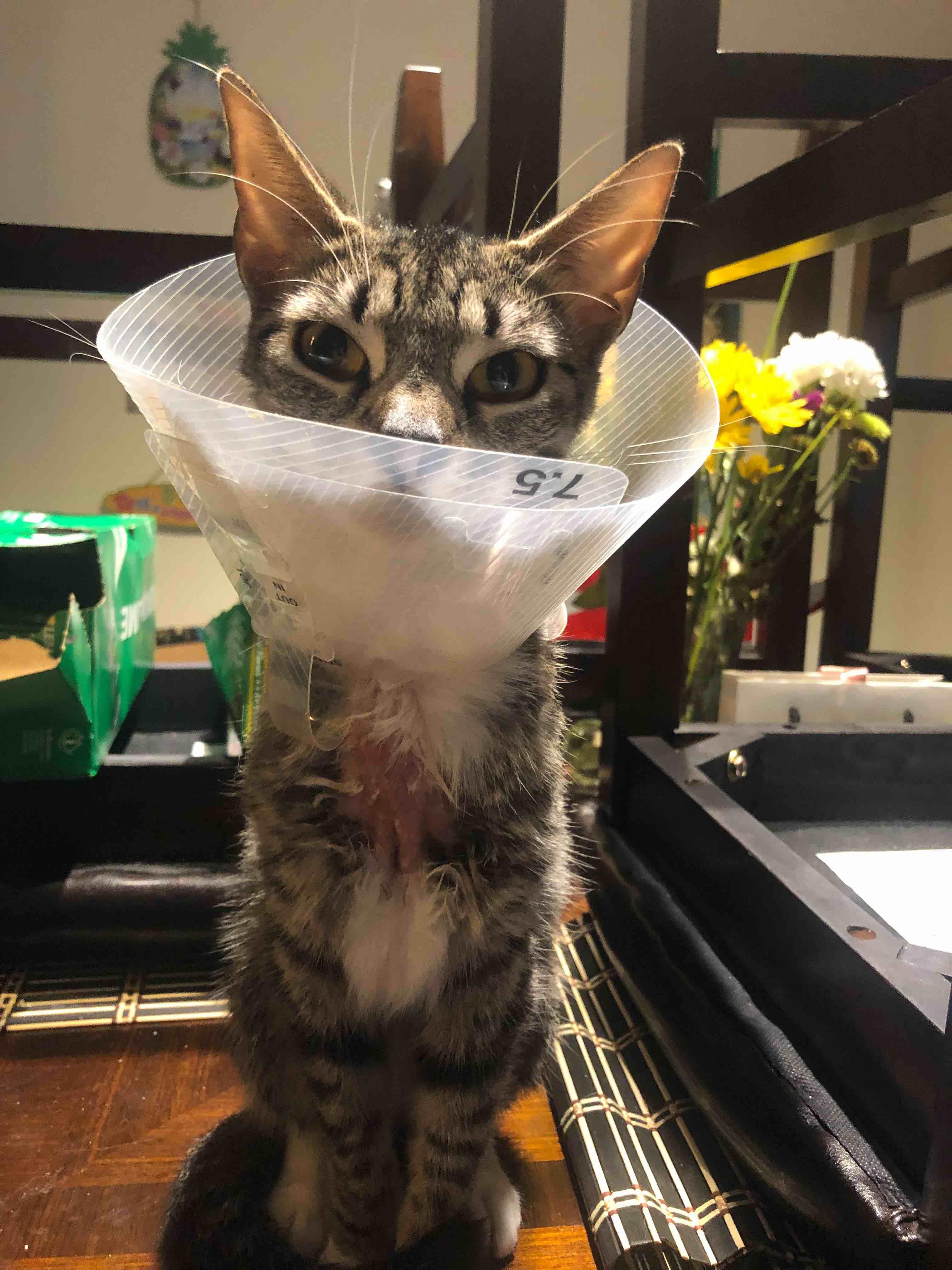
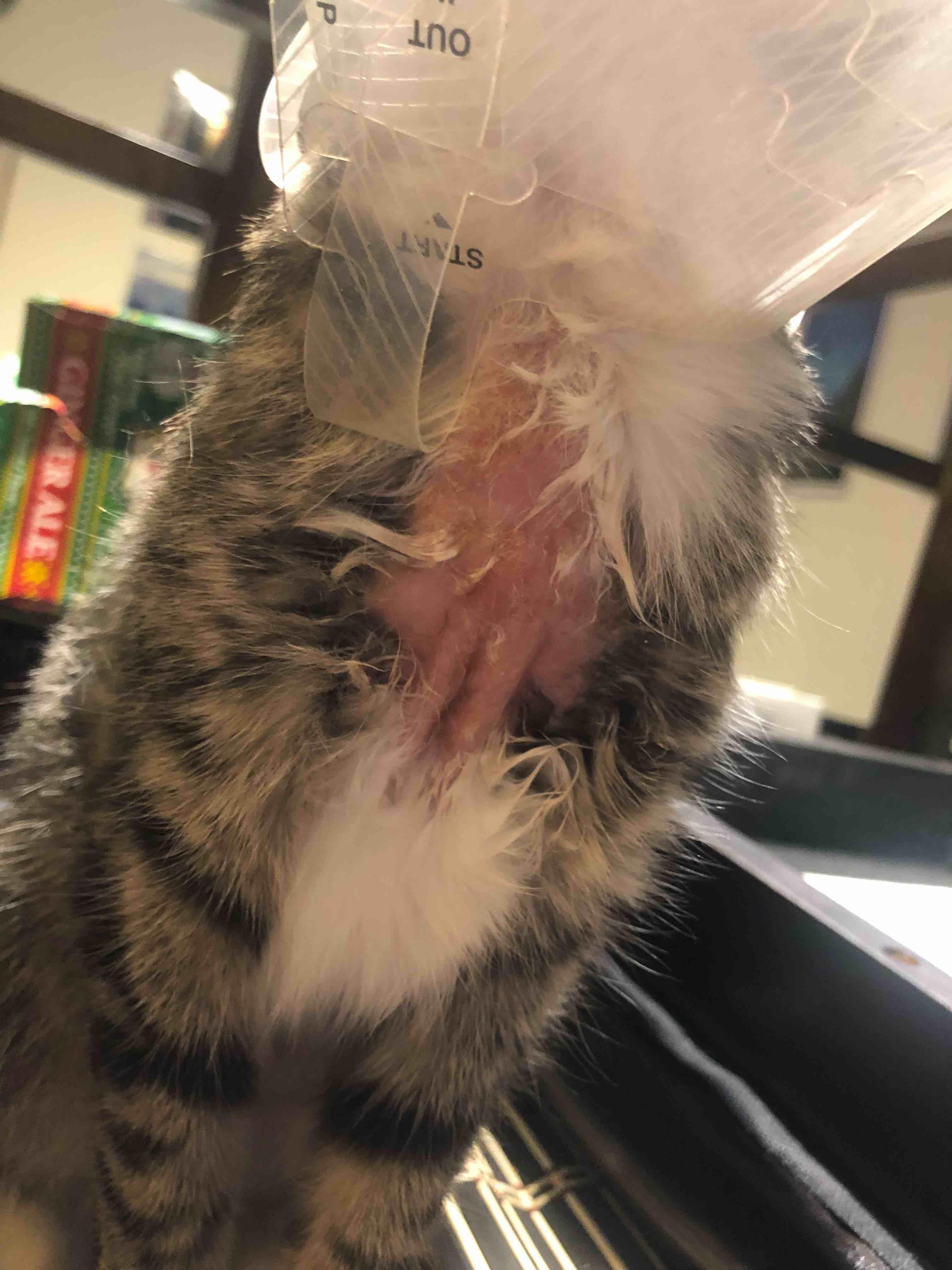
4 Answers
Most Helpful Answer

Published on July 31st, 2019
This is probably due to a severe allergy, although it could also be fleas or mites. First of all, in order to rule out skin parasites, you will need to treat her with a high quality flea treatment (e.g. advantage), then get her to the vet to perform a skin scrape - this might reveal an infection or a mite infestation. If all of those came back negative, the next step is to treat the allergy symptomatically and try discovering the cause of the allergy. Some medications can be given by the vet in order to repair the skin lesions (steroids and antibiotics). simultaneously you should start her on a prescription hypoallergenic diet for at least 2 months. Hopefully you will see some results after all this, if not you and your vet should consider putting her on a long term allergy treatment (Atopica).

1Pet Parents found this answer helpful
Related Answers from Veterinarians
-
Published on November 3rd, 2018
This is probably caused by an allergic reaction. first of all make sure you de-flea Bella regularly every month with a high quality spot on (ex. Advantage) as fleas are by far the most common reason for these reactions. If the fleas are not the problem, it could be an allergic reaction to food or an environmental factor. this is more complicated to treat and will sometimes require medications such as Steroids, anti histamines or cyclosporin in order to stop the allergy.
1Pet Parents found this answer helpful
-
Published on June 11th, 2017
This is probably due to an allergy, although it could also be infection or mites. First of all, in order to rule out skin parasites, you will need to treat with a high quality flea treatment (advocate or advantage), then ask the vet to perform a skin scrape - this might reveal an infection or a mite infestation. If all of those came back negative, the next step is to treat the allergy symptomatically and try to discover the cause of the allergy. Three main type of allergies are usually affecting pets: food allergies, flea and parasite related ones and environmental type (allergens coming from trees, pollens, dust etc etc). Some medications can be given by the vet in order to repair any possible skin lesions (like steroids and antibiotics). Please do not hesitate to contact us again on the forum or by requesting a consultation if you have any more questions or to discuss it any further.
2Pet Parents found this answer helpful
-
Published on February 1st, 2017
This is probably caused by an allergic reaction. first of all make sure you de-flea Maui regularly every month with a high quality flea product (ex. Advantage Multi) as fleas are by far the most common reason for these reactions. If the fleas are not the problem, it could be an allergic reaction to food or an environmental factor. this is more complicated to treat and will sometimes require medications such as Steroids, anti histamines or cyclosporin in order to stop the allergy. In some cases a course of antibiotics is also needed in order to treat the secondary infection that has appeared.
1Pet Parents found this answer helpful



You know why she have these sore and whats costing it

Can someone tell me what is my cat’s skin/fur suffering from?

Hello, two days ago I saw some red spot on my cat's hands. I give her a bath just with warm water just to make sure the shampoo isn't the problem. but it was just hair loose. but today I saw the back of her feet lost lot of hair. she doesn't go out,
Hi, my 2 year old cat has had fleas for a while now (we've been trying to get rid of the fleas, but they keep coming back) and she's lost quite a bit of hair. I noticed today she has a bunch of red, circular, blister-like, moist welts all over her st
My 15 year old cat, has been having an itchiness around his face and neck. At first, the vet thought it was an allergy to fleas but no fleas. Yet he still wants to scratch at his face and at times makes himself bleed. I'm thinking its an allergy of s

My cat is suffering from severe eczema she is given antibiotica what else can I apply ..she has scratched her face and a big wound has occurred color less liquid oozes out from the wounds .she also has very bad itchy wounds on stomach .I have put her

I have two dogs that go outside. They are treated by a vet and have no fleas. My 2 cats already had fleas, which I have treated for many months with Advantage II. Did not help cats. One of my cats has flaking skin and sores and the other is not as ba

My cat has rashes on the bottom of her tail, belly and around her eye. Scratches the area and lick constantly. This continues for a year. 3 different Vets tried 3 different therapies; none solved it. One injection (containing cortison) helped for a c
My cat has these sores and some small ones all over her body. Is this fungal infection? How should I treat them?

What’s wrong with my kitty? He’s a year and 8 months old :(

Book an appointment with the pros – our expert vets are here to help.
