


Cat scratched a sore from fleas. How do I cover it to prevent more scratching?
Updated On September 23rd, 2025
Pet's info: Cat | Domestic Shorthair | Male | neutered | 9 lbs
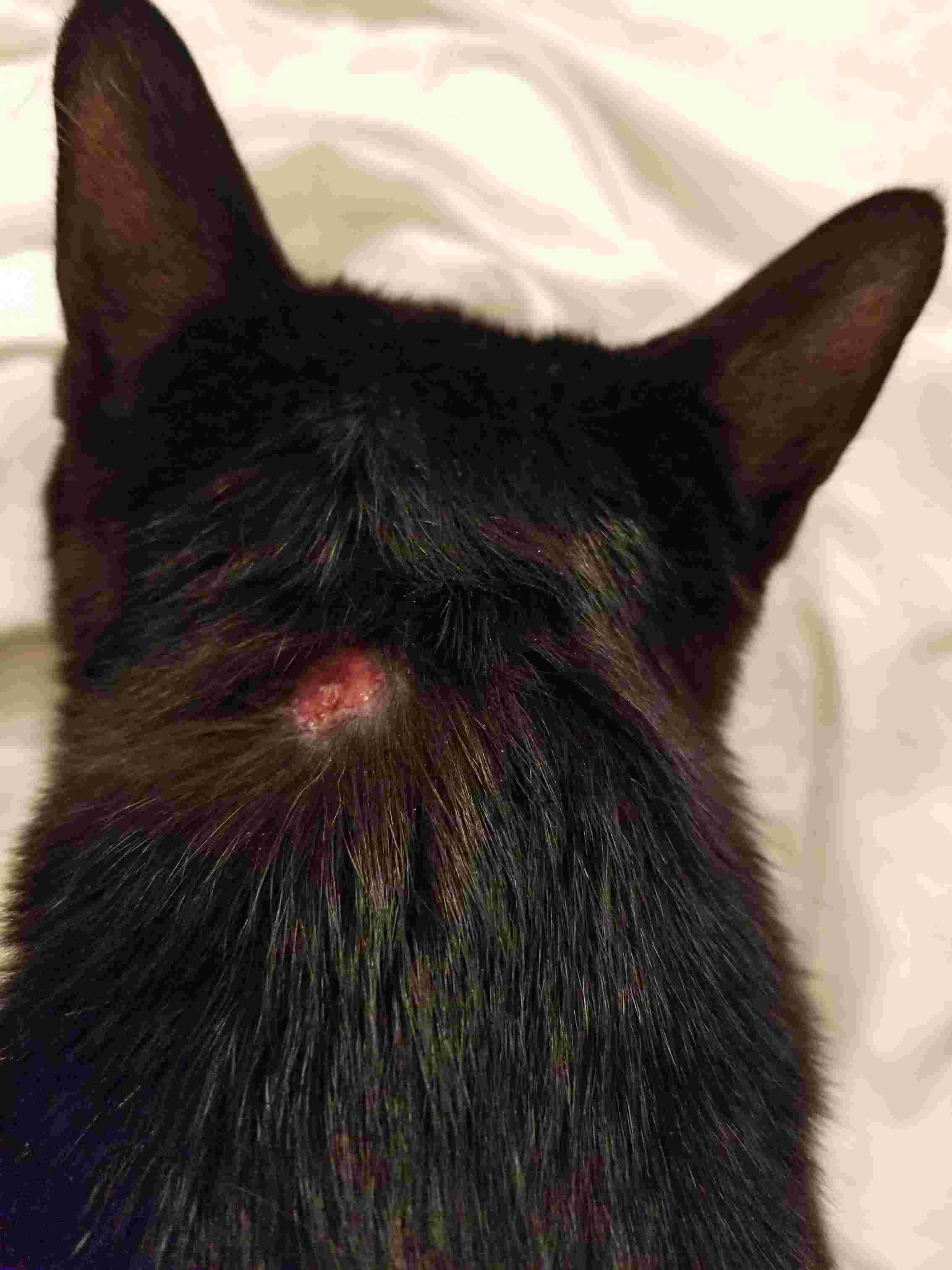
My cat has scratched himself until he created a sore. I have tried to clean the wound with peroxide and put a bandaid over it but he scratches it off. I know he scratched it due to fleas. I have given him tablets for that but how do I cover the wound?


4 Answers
Most Helpful Answer

Published on February 8th, 2019
Depending on where it is located, you could try to do a light neck wrap using rolled gauze or a ace bandage. Do NOT stretch the material. Just lightly wrap it. You could also get a cone collar to prevent him from scratching if the sore is far enough up on the neck. I would try to use some oral Benadryl and Benadryl spray to help with e itching. You can also put a small amount of Neosporin on it twice a day to help it heal. If it isn't improving, I would have your vet take a look. Your vet will be able to put him on the proper meds and allergy meds to help it heal. I hope this helps! https://www.petcoach.co/canigive/cat/benadryl/

7Pet Parents found this answer helpful
Related Answers from Veterinarians
-
Published on February 26th, 2016
Sores or scabs on a pets skin are a sign of scratching in this area. This is a common area for fleas and flea allergy. I would recommend that you use a "flea comb" to comb through the hair to look for evidence of fleas (black specs that turn red when mixed with a drop on water on a paper towel). If there are no fleas present then something else, perhaps atopy (environmental or food allergy) is at play here or another type of insect bite or topical irritant. I would recommend monitoring the area for further discomfort, itching/scratching. If there is discomfort then a vet visit is needed. However if there are just old scab wounds that are healing on their own and causing no pain, then I would recommend letting them run their course, it will most likely heal on its own.
11Pet Parents found this answer helpful
-
Published on February 2nd, 2024
Ouch! That does look like an irritated spot that's trying to heal. I would first try to clean the area as gently as possible so you can get a better look at it, and also try to keep it clean and dry to help it heal. If Nina is pawing at it at all, an Elizabethan (cone) collar can help reduce further irritation. Spots like these can be due to a number of things including cuts and scratches, parasite bites or allergic reactions (sometimes from topical medications as well), general allergies, skin infections, and more. If the area doesn't appear to be healing with home care, worsens, swells under the skin, or has other signs of an infection such as oozing debris, pain on touch, feeling hot to the touch, etc, then a vet visit is best to have a vet take a better look at it in person.
1Pet Parents found this answer helpful
-
Published on May 1st, 2019
Thank you for submitting your question regarding Tails. Fleas can be present in cats without actually seeing them. Allergic pets can have sore on their bodies due to a single flea bite every three weeks. So this is still a possibility. Unfortunately, if he has open or crusted over sores, he will likely need oral antibiotics to help his wounds heal. I would contact his veterinarian and see if a prescription medication can be given in advance of his appointment. Gabapentin, for example, can help to relax a cat and make the visit less stressful. In the meantime, you can place an E-collar on him to prevent any licking or biting of the wounds. I hope this information helps!
1Pet Parents found this answer helpful



Hi, Dr. Elizabeth! The lesion you saw on Leo's neck from my earlier answer is the one he can easily get to and scratch. I clean it and put Neosporin on it everyday and because he's able to scratch it it won't heal properly and stays inflamed. He has
My cat wont stop figuring out a way to scratch his cut. He was bitten by a mosquito and his vet gave me cream to put on it. I guess it itches like crazy because someway he is able to scratch it open even with his cone on. He won't let it heal. I have

I have a year old cat who scraped his head on something. (Not to sure of what) I have been watching it and letting it air out to heal but he has been scratching at it so I bought a e cone so he can touch it but when I'm at work he scrapes it off of h
My cat has fleas very badly. His skin gets so irritated that he scratches himself extremely hard to the point where he is developing large scabs all over his neck, face, and bottom. I have given him baths, I give him flea medication. I spray my furni
my cat keeps scatching his sore and won't stop. What can I use to help the healing process
My cat has scratched his mouth & ear. The wounds have grown to cover his entire chin & more than ½ his ear is covered in a thick crust. Yesterday, he pulled a patch of fur off of his paw (don't know how.) He's in a lot of pain, but it's Saturday. We

Our 7 yr old dog (male lab-pit mix 60 lbs.) has a dime size sore below his ear. How do we keep him from scratching it?

My cat has had an allergy to flea bites. Where she had scabs, she has scratched them off and has several open sores. They are not big and aren't weeping, so should I let them heal naturally or clean them with something like hibiscrub, or will she nee

My cat scratched his head open. He did it before about a year ago, we took him to the vet and they gave him a shot and said it should heal on it's own. Should I call and take him in for this? Or should it heal on it's own? I'm worried and don't want
Through what I guess is normal scratching with his left rear leg, Nicco has this longtime scab near his left eye. It will heal, but then it will become bloody again. This is off and on... I clean it softly with just water and a cotton ball but can I

Book an appointment with the pros – our expert vets are here to help.
