


Two Easy Ways to Start Earning Rewards!
Become a member today! Members-only pricing and offers, personalized care notifications, Vital Care points back on every purchase and more!
 Become a credit card member today!
Earn 2X Pals Rewards points at Petco
when you use Petco Pay!APPLY NOWLearn More About Petco Pay Benefits
How do I know if my dog or cat is overweight? What signs should I see?
Updated On September 23rd, 2025
What signs should I be looking for to know if my dog or cat is overweight?


3 Answers
Most Helpful Answer

Published on January 9th, 2019
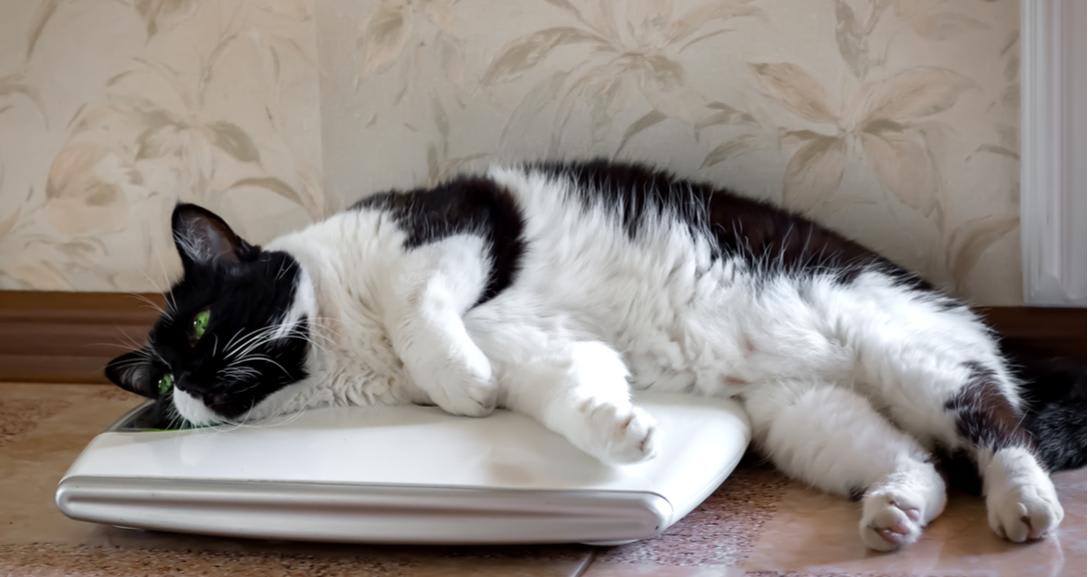
Sadly, overweight pets are so common that those actually at a healthy body weight may appear too thin to many people. As a general rule of thumb, a dog or cat’s ribs should be easy to feel under a *thin* fat covering, but should not be visible or difficult to feel. Additionally, a dog or cat should have a visible “waistline” with a tuck up in their abdomen. Your veterinarian can assess the body condition scores of to provide a more objective measurement of your pet’s weight, but tools like the [PetCoach Healthy Pet Weight Calculator](https://www.petcoach.co/healthy-weight-calculator/) can also help to guide pet owners at home. Maintaining a healthy weight is crucial to a pet’s health, as obesity can lead to an increased risk of developing heart disease, diabetes and a number of other health conditions.

82Pet Parents found this answer helpful
Related Answers from Veterinarians
-
Published on March 2nd, 2017
Your veterinarian can assist you in determining obesity. A physical exam can be done along with a Body Condition Score (BCS). There are 2 systems, a 5 point system and a 9 point system. This information along with Maggie's weight can determine if she is obese or not. She should have a thin layer of fat over her ribs which should be easily felt. Looking at her from above and from the side, her waist should be easily discernible. She should not be rectangular. She should also have a nice abdominal tuck sloping from her chest to abdomen. The following link can describe the BCS in more detail. http://www.cliniciansbrief.com/sites/default/files/sites/cliniciansbrief.com/files/BodyConditionScoresforDogs.pdf
1Pet Parents found this answer helpful
-
Published on March 2nd, 2018
She actually doesn't appear to be underweight based on the pictures shown. I'd have to examine her to be sure, but the biggest indication that she is not underweight is the fact that she appears to have well-developed muscles. Dogs of this breed tend to be naturally lean and put more weight on their muscles rather than their ribs, or belly. If I was concerned that she was underweight, then I would first want to rule-out a disease, or parasite causing her to lose or not gain weight. It's best to have a veterinarian evaluate her, so you can ensure she's healthy and ensure that you are not going to feed her unnecessarily. Dog obesity is a big problem in the U.S., which means that the average person thinks a fat dog is at ideal weight; and a dog with an ideal body condition, or a lean body condition is thought to be starving. The truth is that the lean dogs are statistically healthier and live longer than overweight dogs. Some dogs (much like people) are able to naturally maintain a lean body condition. I suspect Lulu is one of those dogs, but would urge you to have a veterinarian examine her to make that call. Below is a link to a body condition scoring guide. This is what veterinarians use when assessing whether a dog is overweight or underweight. We prefer them to be at a BCS of 4 or 5, but some are naturally at a 3. https://www.wsava.org/sites/default/files/Body%20condition%20score%20chart%20dogs.pdf At this time, I recommend feeding her normally and would not recommend a diet change until she can be evaluated by a veterinarian. I hope that helps and all is well with Lulu.
1Pet Parents found this answer helpful



Is my cat overweight? How to determine a healthy body condition.

How to feel if my furry dog is a healthy weight under all that fur?
How to tell if my cat is a healthy weight without a scale at home?

Is my cat too thin? How do I know if his weight is healthy?
My kitten looks chubby. How can I tell if they're overweight?
Is my cat too skinny? How can I tell if she's underweight?
My dog's stomach is bloated. Sonogram shows fat. Is he overweight?
How to tell if my 8-month-old Persian kitten is a healthy weight?
Is my cat too thin or too fat? How to check her healthy weight.
Is my dog overweight? How to check her weight and diet needs?
Book an appointment with the pros – our expert vets are here to help.
