


My cat has blood in stool, parasites, and pancreatitis. What's next?
Updated On September 23rd, 2025
Pet's info: Cat | Mixed Breed | Female | spayed | 1 year and 4 months old | 5 lbs
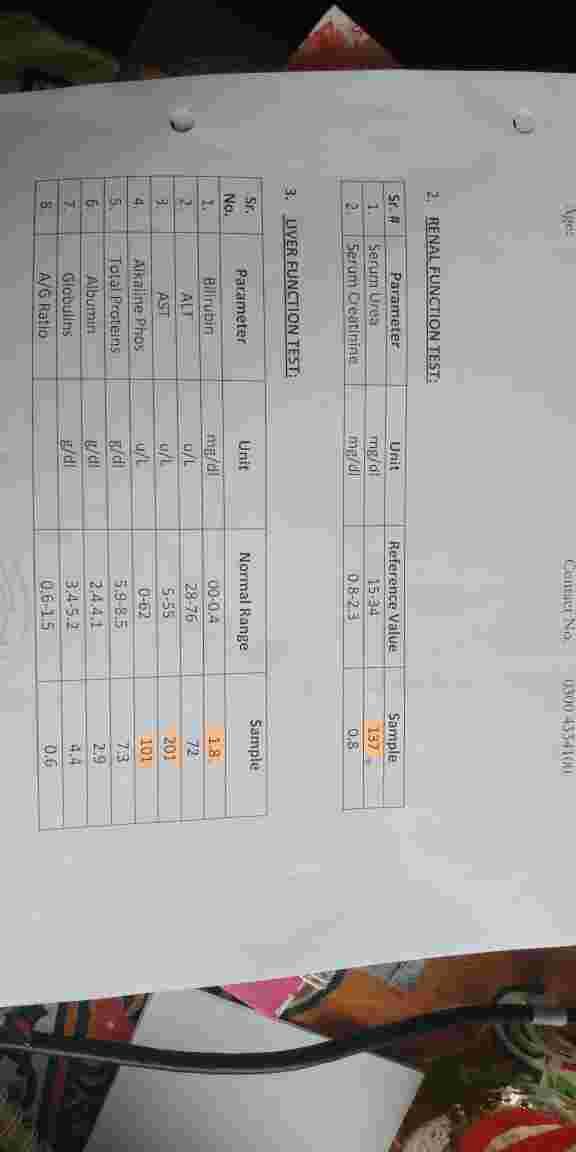
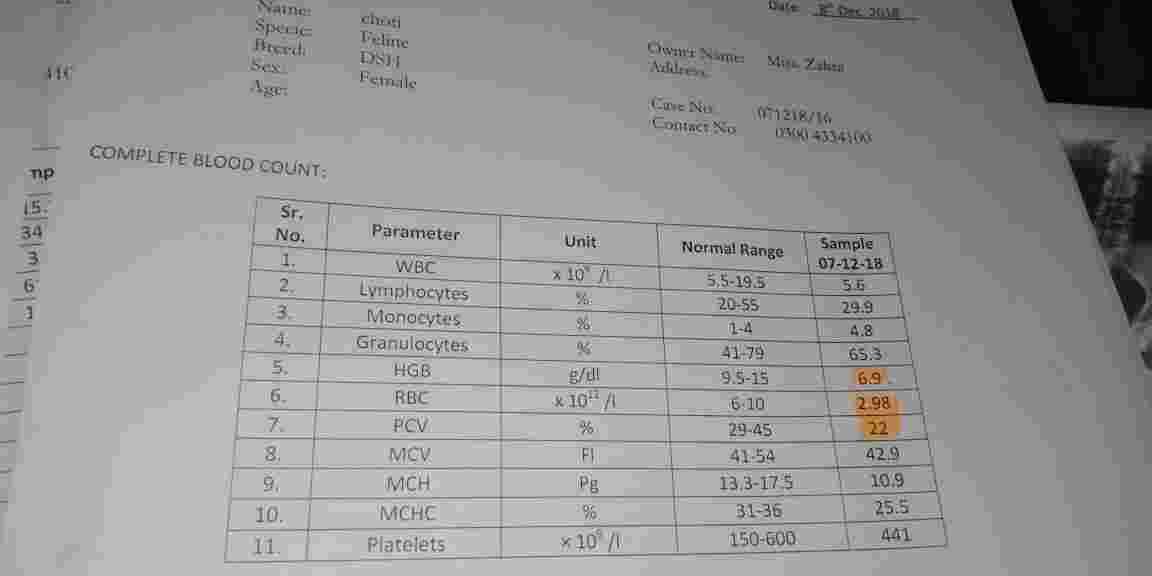
Choti had blood in her stool but was eating fine. She was given fenbendazole 26th Oct-30th,metronidazole 26th-1st Nov. When blood persisted she was given metronidazole IV 12-17th Nov,Amoxycilin 18th-20th,Fenbendazole 22nd-26th,Metronidazole 22nd-28th,eniprazole 24th,Albendazole 1st Dec (when worms appeared in her stool too). She was fighting blood parasite that recently got worse & had a blood transfusion. She now has pancreatitis. Attached are her results from before the transfusion. Plz advise



2 Answers
Most Helpful Answer

Published on December 9th, 2018
I would recommend that you discuss the possibility of IMHA with your vet. The bilirubin could be elevated because of the body attacking red blood cells. Some blood parasites need intensive treatment with steroids to see improvement. I agree with the other vet, additional diagnostics are needed at this time. An ultrasound will help to evaluate the liver and kidneys and intestines.

1Pet Parents found this answer helpful
Related Answers from Veterinarians
-
Published on April 14th, 2021
Hello and thank you for contacting Petco Pet Education Center, formerly Petcoach. The two significant findings on the bloods are - mild elevation in ALT, which is one of the liver enzymes - elevation in TBIL (which means that Bits is mildly jaundiced) The most common cause of these abnormalities is liver / gall bladder / bile ducts infection. Also, it is not uncommon to find this results in cats that suffer from pancreatitis (pancreas was not tested on the blood work you posted). The next step of investigation would be an ultrasound scan of the liver, pancreas and gall bladder. However, if Bits is not clinically ill (if she does not have temperature, is not vomiting and has normal appetite) your vet may decide to treat her with a course of antibiotics and then run the bloods again. Good luck
1Pet Parents found this answer helpful

Hi there! My cats bloodwork is all normal and no parasites found in fecal test. Once in a while there is what you see a lil blood . There also appears to be a filmy substance covering the stool ? I'm wondering what could be going on and what I shoul

Hi! We have 2 cats, an almost 2yo male and 8 month female. in October, we noticed Mouse (the male) pooped blood, so we took him to the vet. They tested his feces and he had Giardia. We treated both of the cats for it, and due to recurring symptoms w

Our Siamese is 6 months and was on a tape worm medicines and a yellow dewormer solution for 9 days a few weeks ago because she had diarrhea and worms we give her earth born and she's done the dewormer but there's dark blood in stool when pooping what

My cat is one year old. He has had bloody stools several times a week since late November. He was initially diagnosed with giardia. We did several rounds of panacur and metronidazole. Our vet said the giardia was probably resolved after several tests
My cat's poop has blood in it lately. He's had loose stools for about 2 weeks now, which was when he was dewormed. I started him on these probiotics three days ago. He's eating his food but he doesn't finish it in one sitting. He usually finishes it
I adopted a cat from petco , has worms . Took her to the vet day after I got her. They treated her for worms (they treated her once before she went to petco). Her belly is still big and pooped worms 5 days after 2nd treatment, I gave her more meds th
I got Chatran at the Humane Society 5 wks ago. He was treated for parasites there when younger. His recent fecal test was positive for a parasite and he was prescribed Albon, (finished dose 3 days ago). There’s been an occasional drop of blood in his

A 12-year old Siamese cat has pancreatitis and ileus, the pancreatitis subsides and he started eating, however the ileus persists and interrupts his appetite and lifestyle. 1. Should we treat the ileus and how? Will it stop after treatment?
Hi there! I was recently advised to get my kitty's vit b levels checked as well as do a pancreatic function test and bloodwork to determine nutrient absorption by the intestines ( because of blood and mucous in stool ). Does that all fall under a GI
Greg has had chronic diarrhea that has turned into pure blood and orange to yellow liquid that chronically comes out and leaks. He has also stopped eating for the past two days. He is on Albon and Mitranidazol and he sees his vet tomorrow first thing

Book an appointment with the pros – our expert vets are here to help.
