


How to make puppy potty training easier and less stressful for me?
Updated On September 23rd, 2025
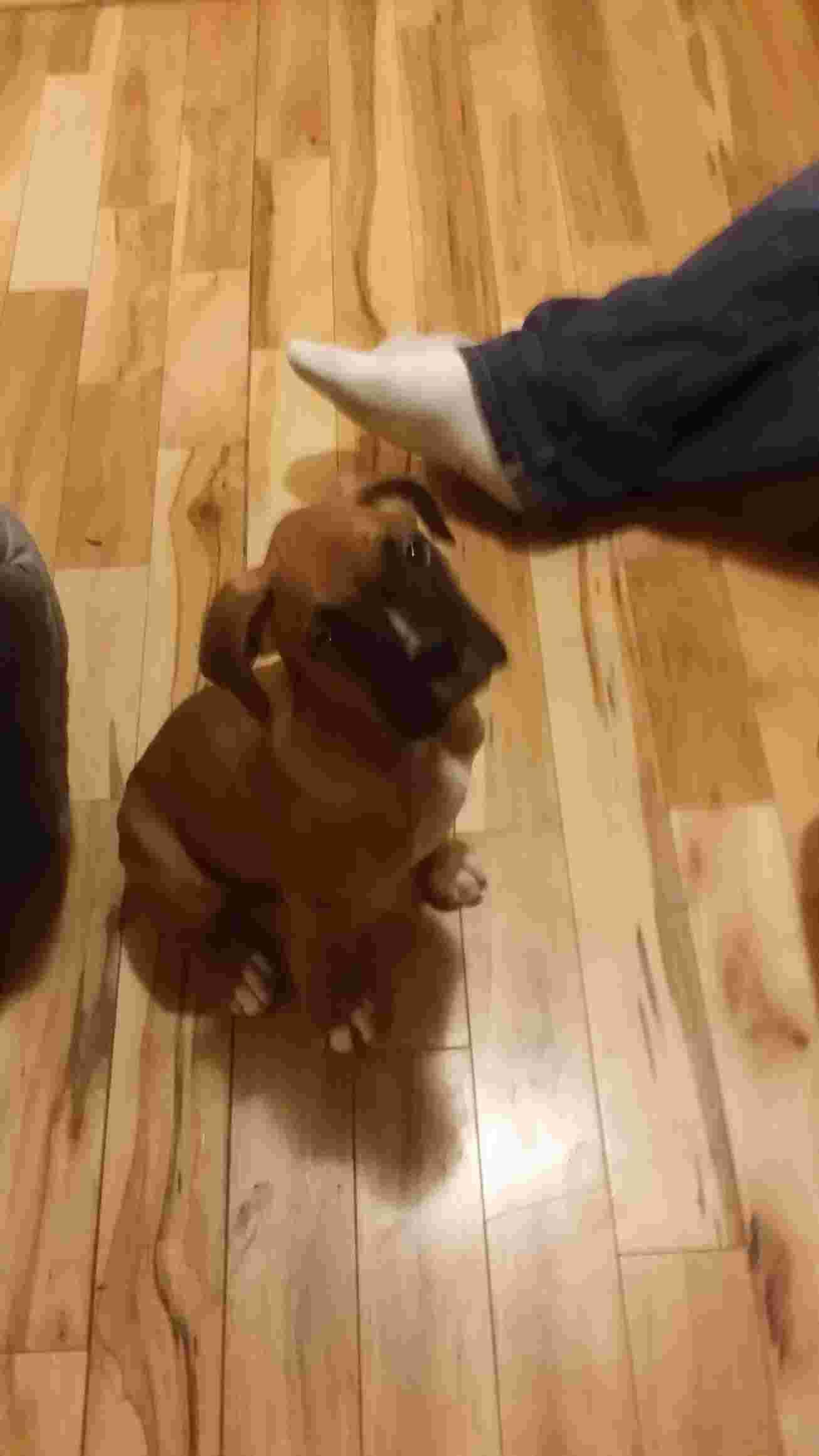
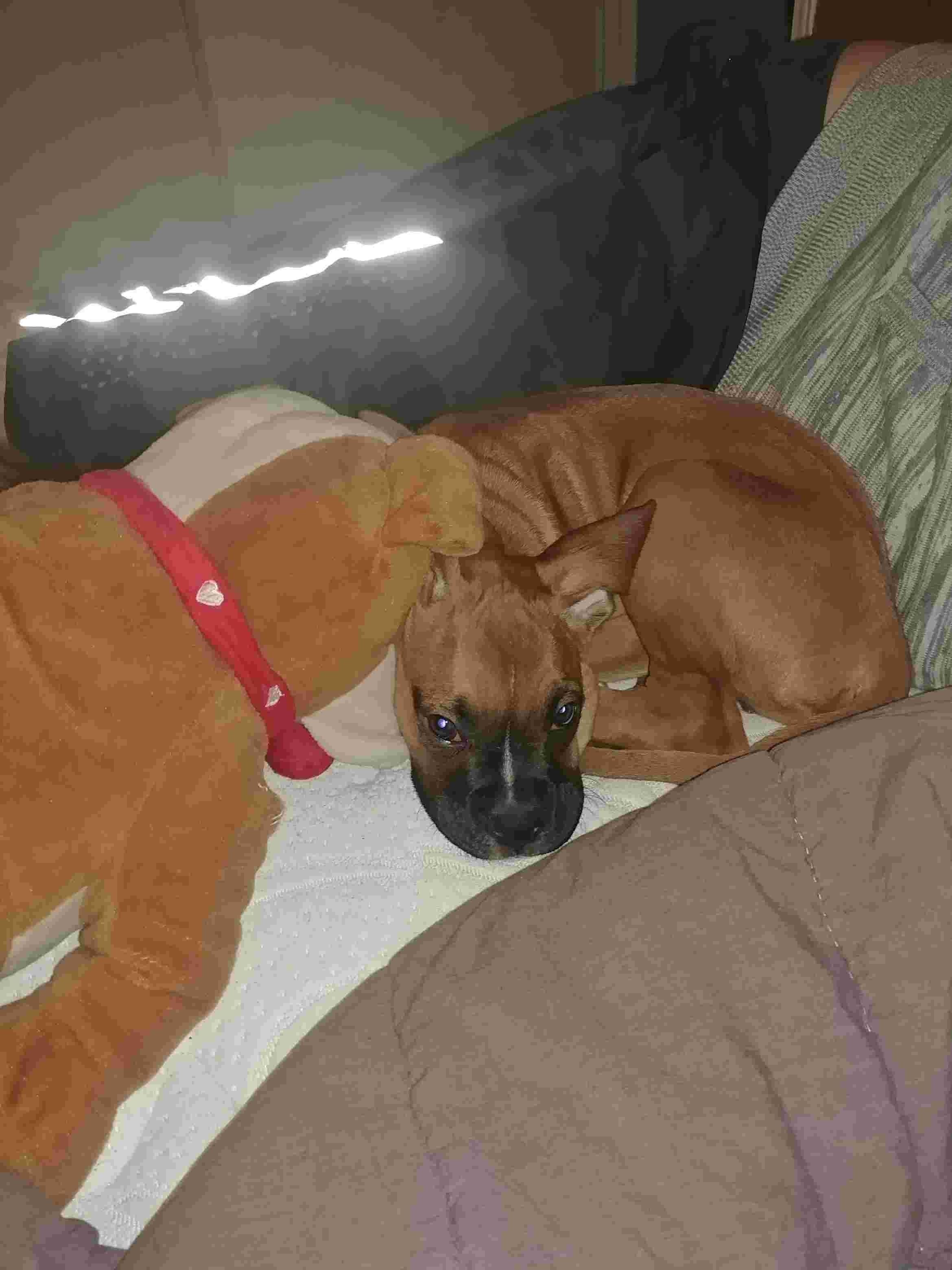
This is my first time owning a boxer and I love Joey to pieces and I would never get rid of them but I'm headed I've almost have with son with the training part is there a easy way to train them there's gotta be easier way everything that he was doing and he was doing so well at it it's becoming really stressful for me and causing stress on my relationship and I need help what can I do to get him to go to the bathroom where he's supposed to


3 Answers
Most Helpful Answer

Published on November 16th, 2018
Steps to take when you are away from home: •Take your puppy outside to eliminate before you leave •Keep your puppy in a confined area. By keeping your puppy in a small area, he will refrain from eliminating where he has to lie down or stay close to the accident. The area needs to be roomy enough for your puppy to stand, lie down and turn around. A great way to do this is to crate train your puppy (see crate training handout). However, if you puppy is going to be alone for an extended period of time, he should have a bigger place than just a crate. •Avoid leaving your puppy alone for extended hours. Although a young puppy of 8 – 9 weeks of age can go about 7 hours controlling his/her bladder, it is important to give your puppy ample opportunities to do the right behavior and eliminate outside. The more times your puppy goes where it is supposed to, the faster your puppy will learn where you want them to go. It is a general rule to let a puppy go outside at least every 4 hours. •Remember to take your puppy outside as soon as you come home. Do not to let your puppy play or eat before it has gotten a chance to go to the bathroom. Puppies can be very unpredictable and can even eliminate right in the middle of playing fetch! What if your puppy has an accident? •Housetraining a puppy can take weeks to months, and accidents will happen. When your puppy has an accident, it is very important that you do not punish your puppy! •All accidents must be immediately & fastidiously cleaned up, as odors of past accidents will draw your pup into voiding in the same places. We recommend cleaning with an enzymatic cleaner, such as Anti-Icky Poo ® or Nature’s Miracle ®. •It is very important to refrain from verbally or physically punishing your puppy for eliminating in the house. Punishment creates fear and hiding or avoidance of human contact, and your puppy may even become fearful of eliminating in your presence. Furthermore, if your puppy is being punished after he eliminates in an inappropriate spot, he will not know what he is being punished for. So punishing your puppy can do more harm than good. •If you catch your puppy in the act of eliminating indoors, distract him, pick him up and take him outside to his bathroom spot. If your puppy finishes eliminating outside, immediately praise and reward him for doing the right thing. Common mistakes when housetraining: •Not taking your puppy outside often enough •Not supervising your puppy as closely as you should •Missing “clues” from your puppy that he needs to eliminate •Giving your puppy free run to the entire house before he is fully housetrained •Verbally or physically punishing your puppy for improperly eliminating in the house •Not cleaning up properly and immediately after an accident Lastly, remember that although housetraining may be time consuming and frustrating, it is very rewarding and a great bonding experience for you and your new puppy! If you have questions or concerns about your puppy, do not hesitate to call or visit your veterinarian.

1Pet Parents found this answer helpful
Related Answers from Veterinarians
-
Published on
Hello, thank you for your question. Puppies are challenging and time consuming in the initial stages. Training takes time. I have attached some information below that I hope will help provide guidance to you! Congratulations on your new puppy! This new relationship is going to bring you many great memories and experiences. Housetraining a puppy can be a somewhat frustrating task but very rewarding if done with patience and diligence. Here are a few tips and guidelines to help you get started. Steps to take when you are home: •Establish a routine and schedule for your puppy (see below for sample schedule). Your puppy should be taken out at least every two hours and when he wakes up in the morning, after playing, after eating, or after napping. •Establish a feeding schedule for your puppy. A regular feeding schedule is also important to keep bathroom breaks regular and predictable. •Keep your puppy in your sight at all times. This can be done using the “umbilical cord method” by putting your puppy on a leash and tying it around your waist. Baby gates and crates (refer to handout on crate training) can also be used to confine your puppy to an area where you can keep a close watch on him. •Use verbal cues when taking your puppy to eliminate. Using phrase like “go potty” in an encouraging tone of voice helps your puppy understand what he is supposed to do. By consistently using the same command, your puppy will learn that when he hears you say that phrase you want him to eliminate. •When your puppy eliminates where desired, reward and praise your puppy A LOT. You can reward your puppy by saying “good puppy” or giving your puppy treats. Be sure to praise your puppy as he is eliminating in order to avoid rewarding him for a different behavior such as coming back into the house. Take your puppy outside to eliminate during the night. You will need to set an alarm to wake you up in the middle of the night once or twice to take your puppy outside to eliminate. This is very important and necessary because it is physically impossible for a young puppy to hold it through the night. Sample schedule: •In the morning: Immediately after waking so he can eliminate after a long night indoors. •Feeding times: As soon as he is done eating. Most puppies will eliminate shortly after finishing a meal Feed your puppy at the same times each day so it will be more likely that he will eliminate around the same time. •During the day: At least once every hour, especially during playing, after playing, and after eating. The frequency will decrease as he ages. Keep him close by when you’re at home and if he looks like he might need to go, immediately take him outside to his designated spot. Remember, you’re setting up your puppy for success!
0Pet Parents found this answer helpful
-
Published on August 22nd, 2017
I would not obtained any puppy younger than about 8 weeks. If it is truly on 4 weeks old then he is too young to be weaned from his mom. Also, 7 hours is quite awhile to leave a puppy that young in a crate so make sure he has a big enough crate that he can pee/poop if needed and not have to lay in it. I would not leave water or food in there as this will encourage him to pee/poop while you are gone. You can give him food and water about 30 minutes before you leave but be sure to take him outside before crating him. Training a puppy to go outside and to hold it can take weeks. Most large breed dogs are trained by the time they are 4-6 months old. i hope this helps!
1Pet Parents found this answer helpful


Here's the thing, my puppy can hold her pee for maximum 2-4 hrs. But when she is out of her cage or leash she pees every 15 min and she pees a lot. How do i train her?

So my puppy is being very stubborn with training. Can't spank him or put his nose close to his messes without him screaming blood murder. Can't discipline or he yelps nd trys to run. He does not listen to anything or anyone. I need help please.
I have done everything to potty train my puppy Austin on the pee pad he was torn up the pads I have now taped them down do he cannot nut now he is peeing on the floor and poops on the pad what more can I do i go through this everyday
How can i stop the puppy from peeing and pooping in the house?

How exactly does crate training work? I know nothing about it, and would like to start. Where's a good place to start/how to start? What to do? I have a presa canario pit bull mix
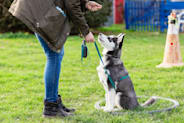
How do i potty train my 5 month old puppy when im not home and there are other puppies from her litter that potty on the floor, and when she wont pee outside? At this point im very tired of cleaning up potty messes i have 8 puppies that go potty in m
Hi, I have 2 puppies that are 5 weeks old. They are completely on puppy food because the mom refuses to feed them. We are trying to potty train them but it seems like they have to pee like every 10 mins. Is that normal?
My puppy is being potty trained so we take her out every 30 minutes or less. Although she goes outside she comes inside and almost immediately pees or poops on the floor. Why is she going so often and right after we walk her?
Katie S- Ant tips for teaching a puppy to be home alone? No separation anxiety just haven’t been left more than 3-4 hours and would like to do it right! Also any tips for loose walking she won’t pull much expect new places and if she sees a dogs she
My daughters puppy a 12 week old Huskey mix is hard to potty train. Does go outside but goes in the house it seems every few minutes, almost immediately upon taking him out of the crate. Any pointers?
Book an appointment with the pros – our expert vets are here to help.
