


My dog has a red rash on her belly. What's wrong and what to do?
Updated On September 23rd, 2025
Pet's info: Dog | Mixed Breed Small (up to 22lb) | Female | unspayed | 5 months and 14 days old | 2 lbs
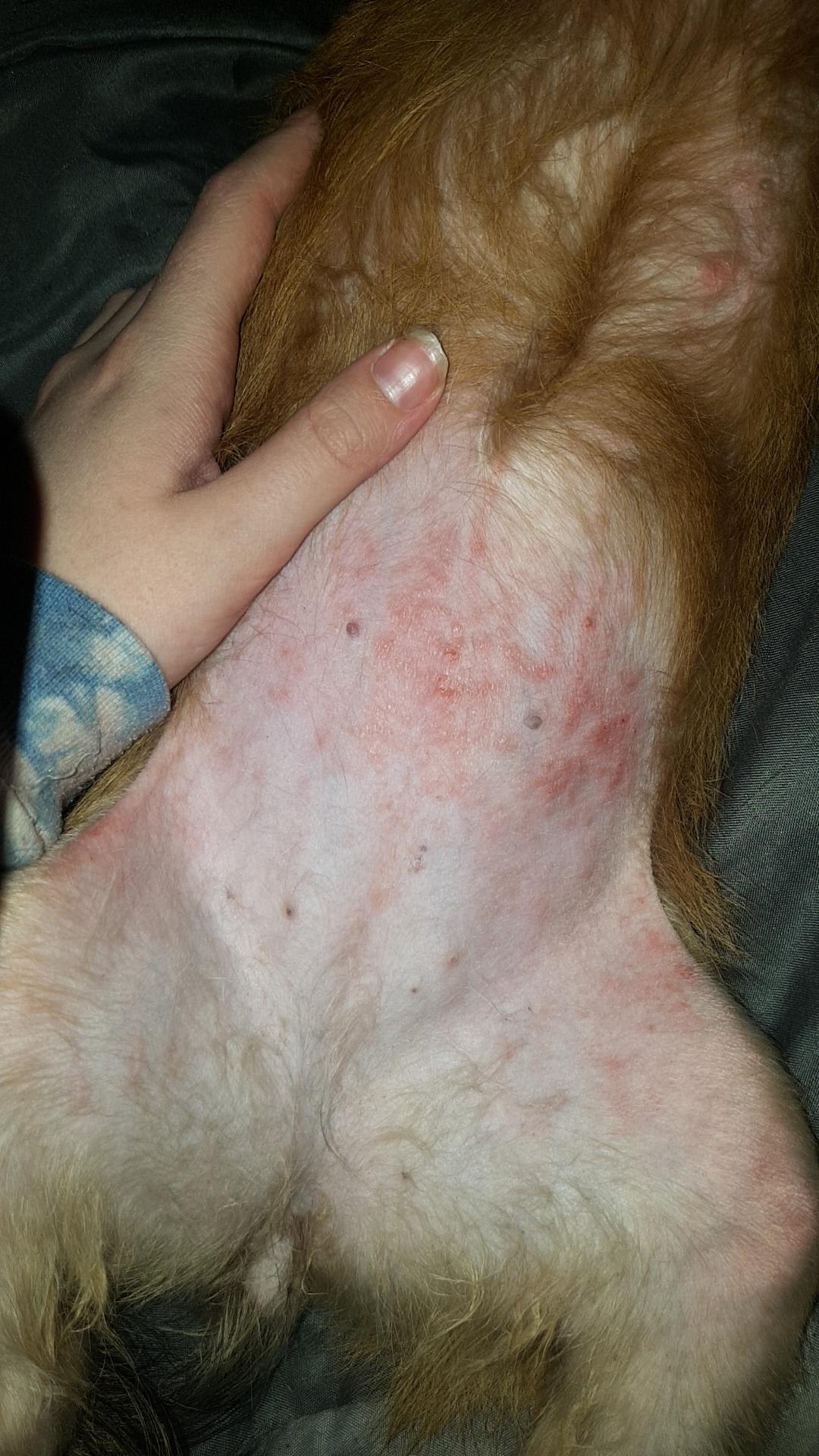
My dog has this rash on her belly what is it?


5 Answers
Most Helpful Answer

Published on November 15th, 2018
It could be a local bacterial infection, fungal infection or inflammation. You would need to have Lily physically examined by your veterinarian for a definitive diagnosis and for treatment. If she is licking at it, place an e-collar (cone) on her. Keep the area clean and dry until she sees the vet.

10Pet Parents found this answer helpful
Related Answers from Veterinarians
-
Published on December 12th, 2017
Ouch! That rash does look uncomfortable! I would definitely encourage you to have her evaluated by your veterinarian soon. In the meantime warm compress with Epsom salts may be of comfort. If you have any cortisone cream that may improve comfort as well. This is not a resolution as I think she likely need antibiotics. However, it may improve her comfort until she can be seen. I would also try to keep her from licking it. A tee shirt tied at the waist may be helpful. Best of luck and I hope she improves soon! Thank you for using Pet Coach.
1Pet Parents found this answer helpful
-
Published on January 8th, 2018
Hi there, It looks like Blair could be having an allergic reaction as you suspected and now she has a secondary bacterial infection. I would recommend you taking her into your vet for a skin test. They can find out what is causing the rash and also get her started on medications to clear it and make her comfortable. I hope that helps and thanks for using Pet Coach!
3Pet Parents found this answer helpful
-
Published on May 16th, 2022
Poor Riggley! It's a good idea to schedule a vet visit since redness and rashes can be caused by a number of things including parasites, allergic reactions, yeast or fungal infections, hot spots and more. Treatment varies on the cause and may include topical medications, shampoos, or oral meds to help. Until you can get to your vet, keeping the affected areas clean and dry can help reduce irritation. Over the counter antihistamines such as benadryl may also help. It's also a good idea to not let Riggley lick or chew the spots with an Elizabethan (cone) collar as licking can introduce bacteria and lead to infection.
2Pet Parents found this answer helpful
-
Published on November 27th, 2017
Thanks for using Petco Pet Education Center, formerly Petcoach! This could be due to allergies for example. It really comes down to figuring out what is causing her allergies so that they can be treated or the specific allergen avoided. There are many things that can cause allergies though in most cases they can be broken down into 3 big categories: flea, food and environmental allergies. Allergies are usually worked up in a stepwise fashion starting with flea allergies as this is the easiest and cheapest to take care of. If not on a flea preventative, then it would be a good idea to get started on one. If already on one then it would be a good idea to change to something else (there are many new products out in the market). If not improved in 1-3 months then it is time to move on and check for food allergies by switching to a novel diet (new protein and new carbohydrate). If that does not seem to be the issue then you are left out having to check for environmental allergies which require blood and/or skin tests. Allergies can be very frustrating to deal with at first but so rewarding at the end when we are able to treat them effectively!
1Pet Parents found this answer helpful



My dog daisy has started to get a rash around her belly area

My dog has a weird rash on her lower belly/private area.. it's red and there are some raised crusty spots. She doesnt have fleas and she is only fed high quality grain free food. No people food. Any idea what it is?

I just discovered a deep dark red rash on my blk labs stomach. Was wondering what it may be?

I looked at my dogs stomach today and saw it looked like this. Immediately I was alarmed as I have no idea what could have caused this. Her stomach has a rash and her nipples look raw and scabby. Anyone know what could’ve caused this? I’m planning on

My dog has a red blotchy rash near her vagina. She keeps licking it

My black lab is somewhere between 3-4 years old. On his belly closer to his rear he has red rashes that he is constantly itching. Do you know what it is or how he gets them?
I need help! Vets a last choice. My pit mix has broke out underneath on her lower tummy. No bugs from outside and she didn't get anything or into anytjing. She's like the other half of me, I know what she does 24/7. She's not covered from fleas but I
Rashes on belly part red and black maybe because of summer
My dog has been scratching and licking his belly so much that his fur has a mat now. After I shaved it I saw that his belly is really red and has a lot of rash.
My dog Has rashes on her belly and around her ears. It looks like she may have some type of reaction to something she touched. But I’m not really sure. My vet is not in until Monday and I gave her some Benadryl. After giving her a bath and seems to c

Book an appointment with the pros – our expert vets are here to help.
