


My fish got stuck in filter, tail injured and not moving. How to help?
Updated On September 23rd, 2025
Pet's info: Fish | Unknown - Fish | Female
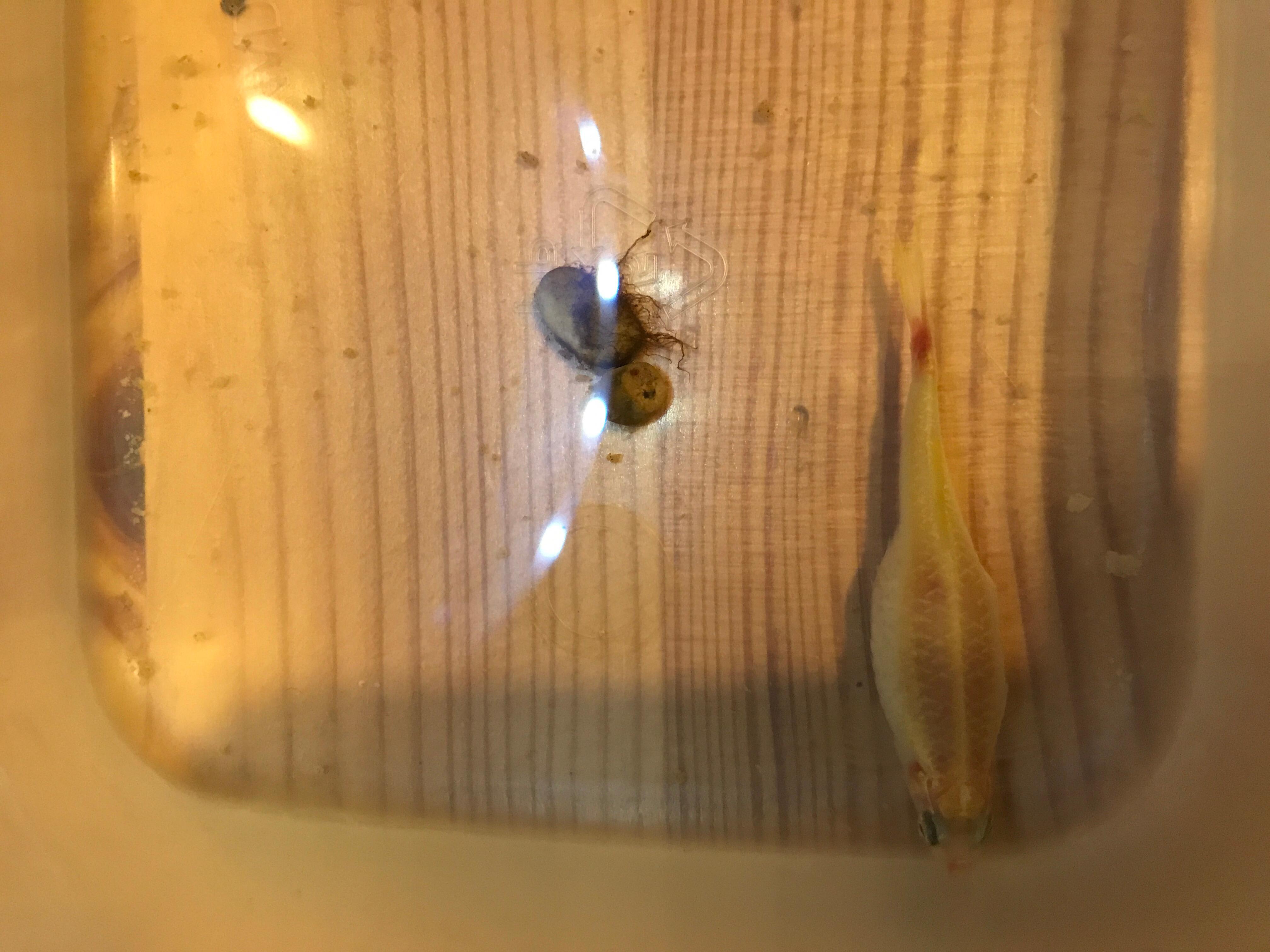
My fish has got stuck in the filter, I have released her from the filter but she is breathing heavily and has damaged her tail. She’s gone to the bottom of the tank, is not moving or eating. I have put her in a separate tank so the other fish do not bother her. Her tail is red and looks like it’s filled with blood. What can I do to help her?


2 Answers
Most Helpful Answer

Published on March 18th, 2018
Keep her in the hospital tank until she heals. maintain adequate water quality and temperature via frequent water changes, filtration and the use of a small, submersible heater. Plain aquarium salt (NOT table or Epsom salt) can be used as a general tonic to reduce stress, increase gill function, treat minor infection and aid in recovery. Dissolve up to 1 teaspoon of salt per gallon of water. Treat for 10-14 days then reassess fin condition.

5Pet Parents found this answer helpful
Related Answers from Veterinarians
-
Published on January 6th, 2019
The best you can do is to maintain pristine water quality and proper temperatures. If she is not a salt sensitive species, you can use plain aquarium salt (NOT table or Epsom salt) as a general tonic. It can reduce stress, improve gill function, treat minor infection/injury and aid in any recovery. Dissolve 1 teaspoon of salt pr gallon of water in a cup or two of tank water. Gently pour it into the tank. Treat for 14 days then reassess the condition. Perform partial water changes afterwards to reduce salinity. Use only conditioned water that is temperature matched to prevent further stress or shock.
1Pet Parents found this answer helpful


have a little fish came home at 4pm and it was on the wave maker not quite moving it was stuck on it the side that was on the wave maker looks horrible moved to hospital tank she was moving around by on her side trying to move her tail with difficaul

Last Monday, I got 3 bleeding heart tetras. All seemed well. When I checked on the fish last evening, I noticed 1 of the bleeding heart tetras was missing her tail. I know she does not have fin rot, as her other fins look healthy. It didn't look

Hi. My back moor goldfish is currently about six years old and I have grown quite attached to him. I have had him along with some other fish for half my life. But sadly he has developed a large slit on the lower half of his tail. He is not a fan tai

I have convict cichlid fish she was going through a fin rot stage noticed that her sister was biting her opened wound on her tail she wasn't looking good so I took her out put her in a hospital tank the 1st time she jumped out of the net and the seco
My goldfish's tail is damaged. The fin looks bitten off as there are exposed spines where the tail fin should be. There is also a red color that looks to be blood on the base of the tail, as well as the side of the dorsal fin close to the tail. It is

My daughter put three betta females together.. They were fighting to the point where fins were lost.. I took the aggressive betta out.. The injured two are together getting along. What can I do to help them heal?
My Sarassa comet goldfish jumped out of the tank and laid on the floor for about 45 minutes before being found. He swims and eats but the side that was face up dried out and now it looks concerning. Is there anything I can do to help him? Will he sur
My goldfish has redness around their top fin, is holding their top fin, and has had a crooked tail for a week. What should I do?
Is there away I can help one of my little grandfish he or she had her his eye bitten off its not bleeding or anything its just gone from one of the other siblings in the tank I put him her in with her him aunt in a hospital tank aunt isn't happy abou

Chronos (my fish) seems to have a sore and a missing scale under his top fin, and up till now his top and bottom fins have sections that are see through but doesn't present any of the symptoms of fin or tail rot. He is in his "hospital" tank with bet

Book an appointment with the pros – our expert vets are here to help.
