


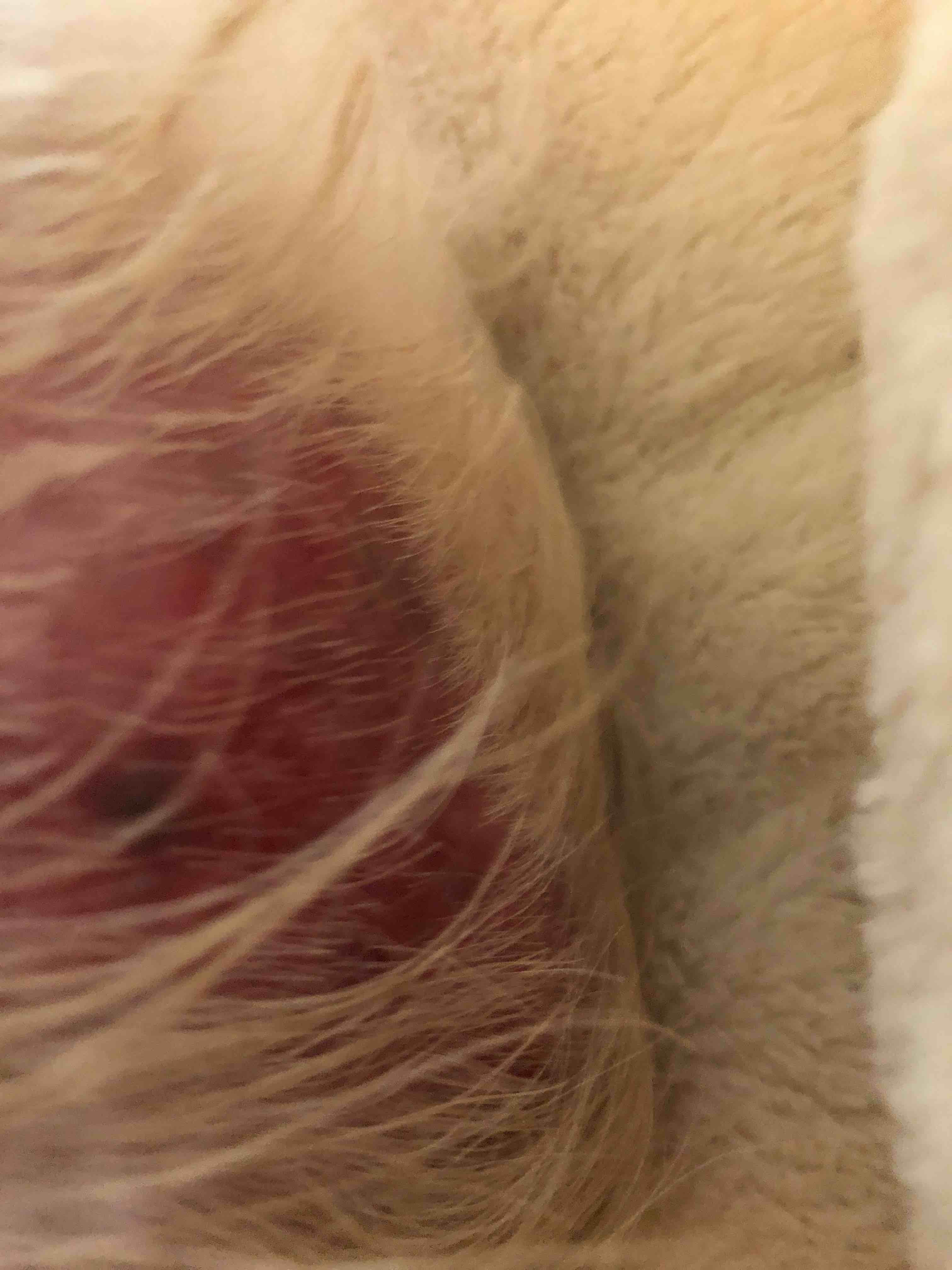
Dog licking fur raw, bleeding, warm skin. Vets can't diagnose. What to do?
Updated On September 23rd, 2025
Pet's info: Dog | Mixed Breed | Female | 10 lbs
My dog eats away her fur until she is raw and bleeds, her skin is warm and I don’t know what to do she has been to the doctors a couple times but nothing has helped



4 Answers
Most Helpful Answer

Published on July 27th, 2018
Place an e-collar (cone) on Angel to prevent further licking or chewing. Rule out fleas by treating with a monthly preventative for at least 3 consecutive months. Vacuum the house and wash all bedding. Use an area treat such as Indorex or Knockout ES. Once fleas have been ruled out, consider other parasites, such as mites. Your veterinarian may need to perform skin scrapes to diagnose mites. Infection (bacterial or fungal) should also be ruled out. This may require submitting samples for cultures. If all is negative and conservative treatment (steroids, antihistamines, antibiotics) are ineffective, a consult with a veterinary dermatologist would be recommended. Discuss allergy testing, hydrolyzed diets and food elimination trials with the vet. Allergies can be frustrating to diagnose, but once you pin them down, management becomes quite easy.

2Pet Parents found this answer helpful
Related Answers from Veterinarians
-
Published on January 3rd, 2017
Place an e-collar (cone) on him to prevent further licking or chewing. Have him examined by your veterinarian to diagnose skin infection, allergies or external parasites such as mites. Lice are typically species or host specific meaning dog lice stick to dogs and human lice stick to humans.
1Pet Parents found this answer helpful
-
Published on July 11th, 2018
Place an e-collar (cone) on Buddy to prevent further licking. If the skin is broken or inflamed, he should be physically examined by your veterinarian. Your vet can check Buddy over for fleas or mites and can test for bacterial or fungal infection. Another potential cause may be allergies. Allergies can be frustrating to diagnose since they have many causes (flea bite, contact allergy, inhaled allergy and food sensitivity). Discuss allergy testing, antihistamine use, hydrolyzed diets and food elimination trials with your vet. Do not medicate Buddy without the advice of your vet. Anything you apply will likely be licked off and ingested which may cause stomach upset or worse.
1Pet Parents found this answer helpful
-
Published on June 24th, 2019
These issues for Wilf could be several things including allergies to fleas, allergies to something in the environment, food allergy or endocrine disease. Without knowing further information, it's hard to know how best to advise. Parasites are often ruled out with an oral medication like Simparica. Food allergy is best ruled out with a proper diet trial using a hydrolyzed protein diet. Endocrine diseases are detected with blood work. Environmental allergies are a little more difficult to detect but a response to therapy or a blood test can give an indication. If your normal veterinarian cannot determine the underlying cause, I recommend referral to a dermatologist. Wilf may need a blood or intradermal testing to look for environmental allergies since not all dogs respond to antihistamines, some need immunotherapy. Also, if you have not conducted a proper diet trial with the hydrolyzed protein, this would be a good idea. There are a couple things you can do at home and they can help but they are unlikely to address the underlying cause. You can try adding in an omega 3 fatty acid supplement for dogs, this can help improve the skin health. You may also try changing his diet to something like Royal Canin or Nutro as they are aimed at skin health. Also protect the area from trauma by having Wilf wear an elizabethan collar at all times. Best of luck and please feel free to post any additional questions.
2Pet Parents found this answer helpful



I need help with my dog's health and skin,recently I've noticed that she's been licking herself a lot to the point of her skin breaking. & right now I've heard her jump and yelp all of sudden. I'm really worried about my little girl. What do you th

What should I do to heal my dogs self inflicted scratch wounds on her face due to constant itching? I put wound and care spray on the open scratches and have been keeping a close eye on her and encouraging her to sleep so she can heal, but she keeps

My dog has been licking herself a lot by her butt and private area. Recently she has just started kicking her legs a lot too. The skin is raw in most areas. Right now I just spotted an injury on her neck. There is also a smaller version of that somew

My pug dog won’t stop scratching to the point that her coat is falling off and bits of blood are coming out. She doesn’t have fleas and we have been treating her for allergies as well as giving her vitamins to ensure she is getting the nutrients she
My dog licks the inside of both back legs and causes the skin to turn red. What is the best product to put on it for him to quit licking?
What can I do to stop my dog from chewing himself till he bleeds
We have tried changing to two different dog foods for skin sensitivities and or allergies. We have tried walking daily and putting him on trazadone but nothing changed. This started in late December and we have had him testes for mites, ring worms, f
My dog has been licking her tummy excessively, as well as chewing on her paws, and hips. She has irritated spots on her tummy that are bright red. No blood, or open wounds, but the skin is very red. She has the same thing beneath her paws. I put 50%

why Is my dog bitting herself and scratching herself a lot? She also has these scars ?
My dog is biting her skin until it bleeds. She does not have fleas. I have been putting aloe. What do I do?

Book an appointment with the pros – our expert vets are here to help.
