


Why does my dog keep getting new sores on his paw from licking?
Updated On September 23rd, 2025
Pet's info: Dog | German Spitz | Male | 12 lbs
My dog has a sore on the top of his paw, I thought it was a cut or burn or something and he was licking it... It then cured and now he has a new one further up his paw...
4 Answers
Most Helpful Answer
Published on December 22nd, 2016
Wounds on the skin can be caused by a number of things including injuries, parasites such as fleas or ticks, allergies, or even excessive licking. If Coco was licking the area a lot, it is possible that a hot spot has formed causing the wound you see. It is best to prevent him from licking the spot with the use of an Elizabethan (cone) collar. If the spot doesn't heal, worsens, more spots appear, or you see parasites or infection (pus, hot to touch, pain, etc), it is best to seek veterinary care.

4Pet Parents found this answer helpful
Related Answers from Veterinarians
-
Published on November 8th, 2017
Hi there and thank you for using pet coach to address your concern. Based on your description and picture, this may be what we call a acral lick granuloma. This can be caused from obsessive licking in one particular area usually on one of the limbs. I would recommend using malacetic conditioning spray and apply to the area until resolved. If there is no improvement or the area worse than I would have a veterinarian exam in this area for further treatment and diagnostic recommendations. I hope this helps guide you in the right direction. Please feel free to contact me with any other questions or concerns that you may have.
1Pet Parents found this answer helpful
-
Published on August 24th, 2018
The pictures look like the issue might be beyond just the surface of the skin. It could be caused by a range of things, such as bacterial or fungal infection, allergies, obsessive compulsive disorder, pain in the paw or joint underneath, etc. It is probably best to have Lewis checked out by a vet. If there is an infection, or antibiotics will likely work better than a topical antibiotic. Until he sees the vet, you need to prevent him from licking, since licking will make infection worse and will significantly delay healing no matter the cause. You can try to cover the wound with a sock or other garment, or have Lewis wear an e-collar.
1Pet Parents found this answer helpful
-
Published on March 25th, 2018
These type of lesions can have many causes. Dogs often get these hot spots (aka acral lick granulomas) for a few different reasons, so it's difficult to say what's causing it. Ty may be over-licking the area because it's sore, has something like a thorn stuck in it, or it has an infection. In fact, these types of lesions tend to develop infections in the skin despite the cause. It's best to have a veterinarian examine it to see if they can locate the source of the pain. If the source is not identified and treated, then this will not get better. For now, you can do the following: 1) Clip the hair around the area and expose all of the sore skin. 2) Wash/spray the area with just cool, clean water (no soap or other antiseptics) for at least 5 minutes at a time. Do this at least twice a day. 3) Bandage the wound with gauze and apply an over-the-counter antibacterial cream (i.e Neosporin) to the wound. Keeping it covered and keeping Ty from licking it will be the most difficult part of the treatment. You can help keep the bandage on by placing a good (really sticky) tape above and below the bandage. You can find sprays in the pet store, like bitter apple, that are meant to deter licking. This can be sprayed on the bandage (not the wound) to help keep Ty from chewing it off. NOTE: Be careful not to bandage too tight or it can cut-off the circulation. If you notice that the toes/foot starts to swell, then remove the bandage and leave it off until the swelling goes down. You can also put the clean sock over the bandage to help protect it. These types of lesions tend to take a long time to heal, so don't be surprised if its not completely healed until a month later. Once the skin looks normal and Ty stops trying to lick, you can stop the cleaning/bandaging. I hope that helps and Ty gets better soon.
1Pet Parents found this answer helpful


My dog keeps getting these sores on his paws and won’t stop licking them. What are these?

Sammie's front paw looks sore. There has been no blood and he isn't limping. He does keep licking it though.
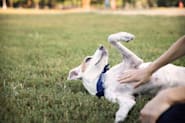
Our dog has been biting and licking excessively at his paw, usually only his front left one. He started limping and we noticed that his left paw pad had a tear in it. We've been putting antibacterial cream on it and wrapping it with gauze and he isn'
My labs have red spots on their paws like nickel size spots. Could this be from excessive licking and/or food allergies. We got up to feed them this morning and this is when we noticed the red spots. The girl lab has them on her back side also
Hey so I had my dog in a few weeks ago for a full check up and blood work and she’s healthy but she did have a hot spot problem and itching and has sores but that’s finally gotten way better. However she does have this sore on her paw and it’s a ball
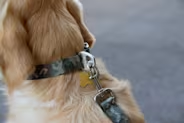
My dog has tiny round sores on top of his paws. They may have been from ticks being pulled off. Can I wrap them? He won't stop licking
My dog has lick her paw, to the extent removing her fur, what causes this?
My shihtzu has a small sore on his foot that I believe is from excessive licking. The sore looks like a red bubble like. Its not open nor does it seem to harm him Im not sure what to do for him. I don't have a vet that I go to. Any help?
My lab has a red soar on the top of his left paw, he has had for about two months it's not getting bigger but he will not let us clean it and he keeps licking it some days it's way red some days it's a light pink color.
I️ just noticed this on my rescue baby’s hind paw. He constantly licks and chews his paws but never noticed this before until two days ago. He allows me to touch the area for very short period of time.
Book an appointment with the pros – our expert vets are here to help.
