


Is it safe to remove the black surface of my dog's lick granuloma?
Updated On September 23rd, 2025
Pet's info: Dog | Doberman Pinscher | Female | spayed | 72 lbs
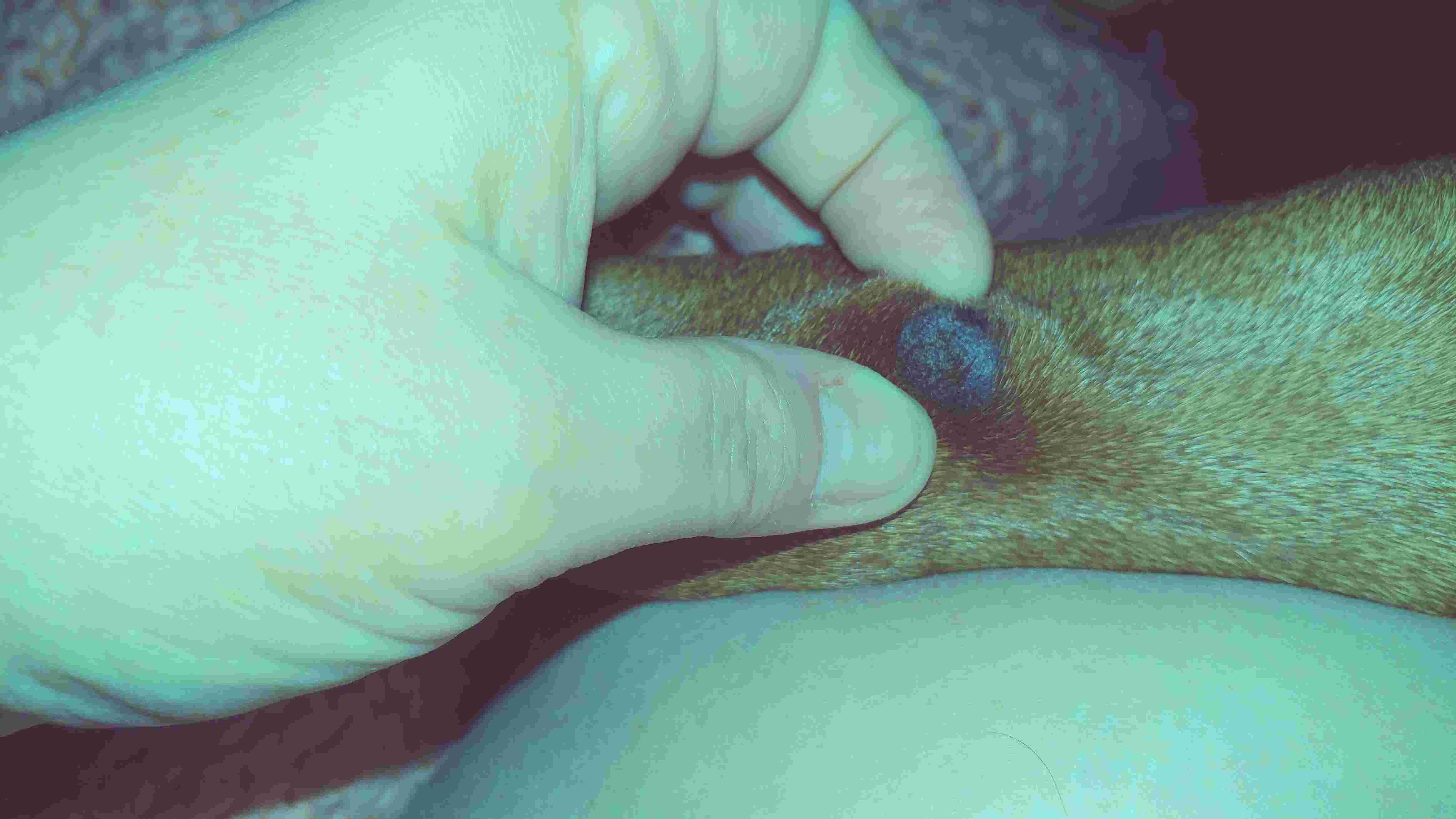
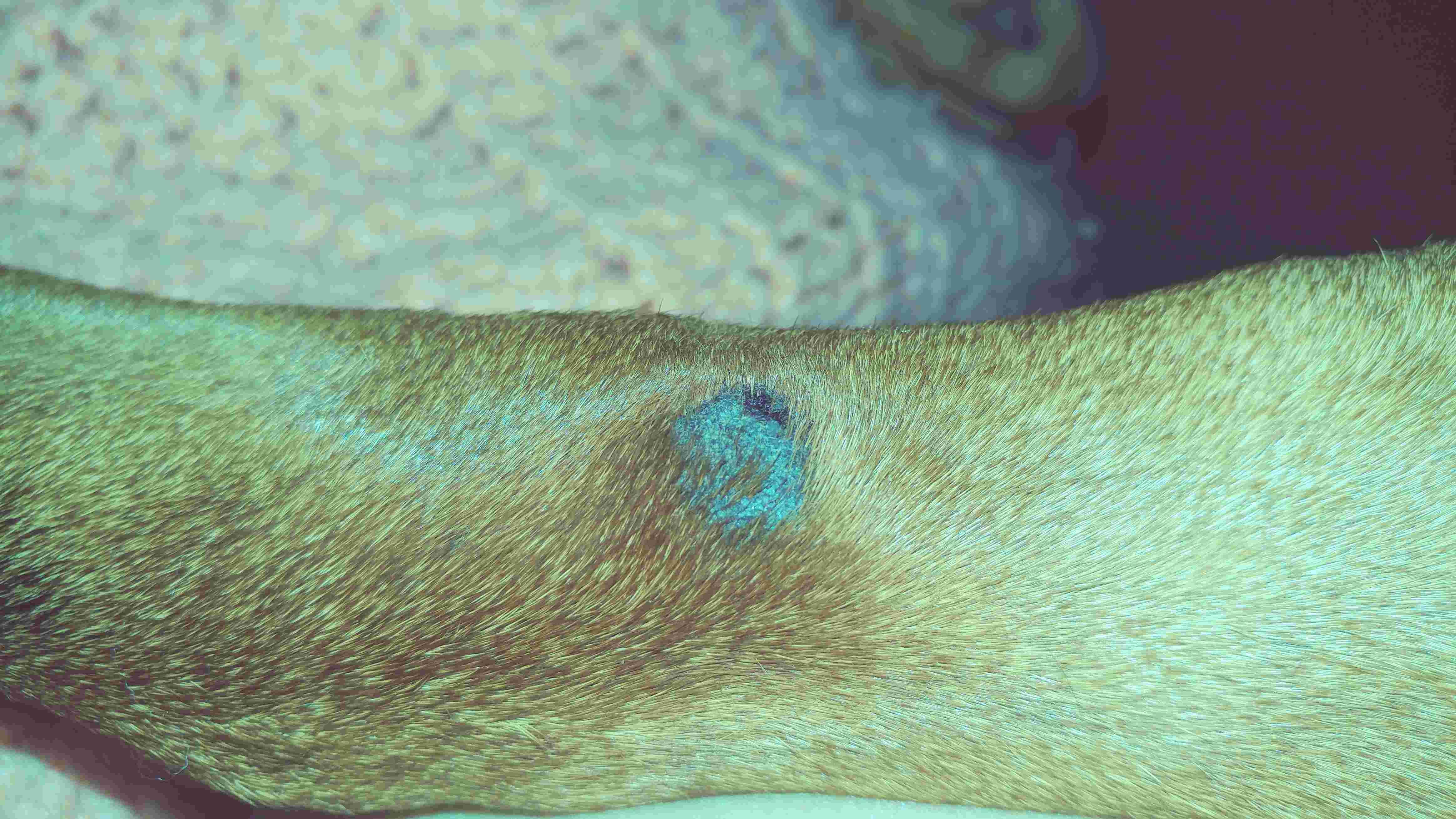
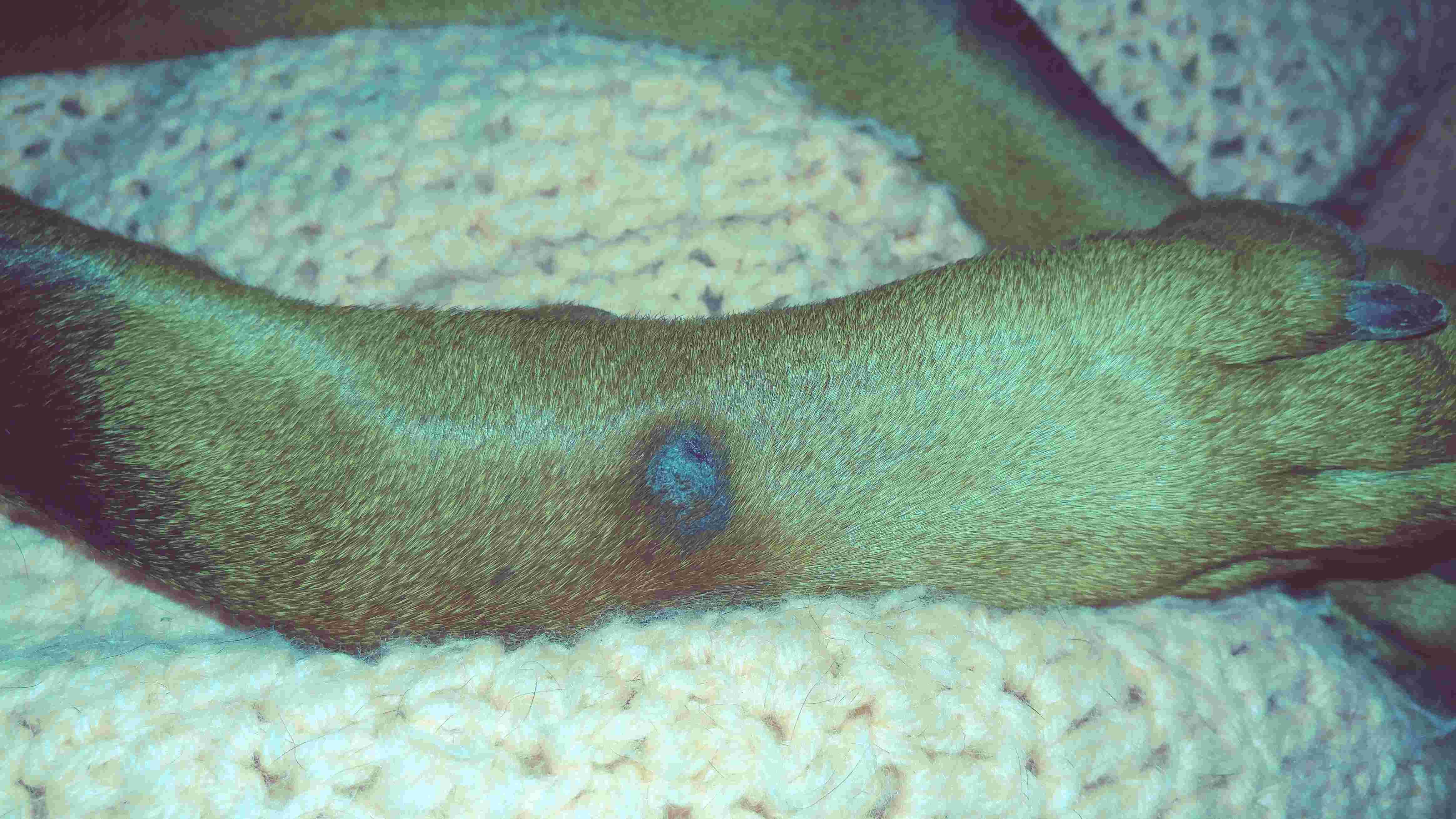
Hello. Dog has lick granuloma on foreleg. A little smaller than a dime. It started as a staph infection from digging in soil. Now treating with Miconosol 1%. Fur is starting to grow back. Vet wrapping when I'm not home to stop licking. Subcutaneous base is hard, deep and wider than surface area. Question: would it be helpful to remove some of the black suface area to allow frainage of any remaining fluid or infection? Thank you very much. Lisa


1 Answer
Most Helpful Answer

Published on January 21st, 2018
In general, the thick dark base of a lick granuloma is simply thickened tissue. There isn't any fluid or infection to be drained. Removing dried or calloused tissue will make the licking worse and can turn a lick granuloma into something that will never heal. If there is an overgrowth of malassezia (yeast) your vet may recommend topical miconazole, but often once the area is dry, it is best to not apply anything that may contribute to the licking, but instead keep it covered to prevent licking and allow healing. Once the source of irritation (licking) is removed, the body will slowly allow the thickened tissue to thin out and return to normal. Good luck! I hope that was helpful and answered your question. Thanks for using Petco Pet Education Center, formerly Petcoach.

2Pet Parents found this answer helpful
Update on the red lump on my dogs front wrist. I'm pretty sure it's a lick granuloma. I've had to put a bandaid with polysporin on it as my dog wouldn't leave it alone. The swelling is finally going down, and it's stopped bleeding and leaking. She do

I think my dog has lick granuloma we have been trying to keep it clean bandage his wound but he just keeps getting the bandage off. We are very worried about infection possibly happening what can i use to keep it clean?? Please help

This started with one sire, he's always tryibg to lick it. Cleared up some, then 3 to 4 spits came. Now its appears to be clearing up. I put a lil peroxide on it, then googled that and stopped using it. What can i do to treat this, please help.

My dog got this random red bump under his hair... I don't know what it is .. any suggestions before I take him to the vet ? I shaved the hair down around it too see if maybe it had a white head but I don't see any puncture marks nothing... he will li
Hey so I had my dog in a few weeks ago for a full check up and blood work and she’s healthy but she did have a hot spot problem and itching and has sores but that’s finally gotten way better. However she does have this sore on her paw and it’s a ball
Hi my dog has a sore on its leg and it's been there a while it's not getting any better all he's doing is licking it all the time. Had him to the vets today and she was not sure what it was but she gave him some cream anyways so I decided to do some
I feed one stray dog who got cut in his leg few days back now it looks like it’s healing and he always lick that wound but I also see dark color of skin so what is it ? Is it because of licking continuously or some other severe issue kindly see that
Dolly, Pomeranian dog, 9 years 4 months, has a brown colored skin lesion on right hind leg, there is hair loss. She is not allowing to touch that area and is licking it. Not able to notice any discharge. Please tell the reason for this and treatment.

Distal dorsal side of lefr hind legs had 1.5 inch long and .5inch wide hairless redened spot that now seems to have shrunken in size but is black and hardened. Dog does not bother with the area. Also noticed hard round area over ankle bone? on same l
My has taken up to licking his leg and paw. Mostly leg. I've tried deep moisturizer conditioner. And he still continue. If I spray that bitter apple or put on a cone he will not lick. As long as he is distracted he will not do it. Is there somethin

Book an appointment with the pros – our expert vets are here to help.
