


My cat keeps scratching his ear raw, is it his grain-free food?
Updated On September 23rd, 2025
Pet's info: Cat | Russian Blue | Male | neutered | 2 years and 8 months old | 12 lbs
My cat keeps scratching behind his ear. Has been to the vet 2x, once prescribed Tresaderm (didn't do anything), and the 2nd was given Covenia Injection & single dose of Revolution. A few days later he has reopened the would so I'm at a loss of what to do. Could it be his food? We adopted him and in the last few weeks changed him from a cheaper grain food to one that's grain free. I just want him to leave his ear alone :(
4 Answers
Most Helpful Answer

Published on December 13th, 2016
This is probably due to a severe allergy, although it could also be fleas or mites. First of all, in order to rule out skin parasites, high quality flea treatment is given. It sounded like your veterinarian has done it already. The next step is to treat the allergy symptomatically and try discovering the cause of the allergy. Food can be indeed one the most common cause of it. Some medications can be given by the vet in order to stop the chewing and repair the skin lesions (steroids and antibiotics usually). There is also a nice topical spray available, it's called Cortavance and you can get it at the vets. Hopefully you will see some results after all this, if not you and your vet should consider starting on a long term allergy treatment.

1Pet Parents found this answer helpful
Related Answers from Veterinarians
-
Published on November 15th, 2017
This sounds very potential for allergies. It could be food or environmental allergies. If the licking and itching doesn’t start to improve then I would talk to your vet about starting a food trial and getting him on some allergy medicines like apoquel. You could also try Benadryl twice a day to see if This helps. I have included a link below for more information on Benadryl. Scabies is USUALLY extremely itchy. Also if the ears are not improving, he may need a stronger antifungal or antibiotic for the ears if he has an infection. I hope this helps! https://www.petcoach.co/canigive/dog/benadryl/
1Pet Parents found this answer helpful
-
Published on September 14th, 2019
I recommend to call your vet again. When pets begin to have chronic itching, things like allergies are suspected. The vet will need to check again to make sure there is not infection. Be sure the doctor checks for bacterial or yeast infections as well. You may also also the vet about getting a special ear cleaner that will help avoid itchiness. I hope this helps and please feel free to post any additional questions.
1Pet Parents found this answer helpful
-
Published on April 29th, 2019
Ear infections can be caused by bacterial or fungal infection, or parasitic infections (like ear mites, as you mentioned) or a combination of these, and can be associated with dietary or environmental allergies or sensitivities, immune system disorders, or a combination of the above. Daisy needs to see a vet to have an ear swab done. Your vet can look at the sample under the microscope and treat appropriately based on what is found. Your vet will also need to examine the ear with a scope to see if the ear drum is intact, as some medications cannot be used safely if the eardrum is ruptured. Ear infections can be very painful, and can sometimes progress to include the middle or inner ear, where they can cause neurologic signs or permanent hearing loss. Please book an appointment to have Daisy seen as soon as possible to help get her feeling better.
1Pet Parents found this answer helpful


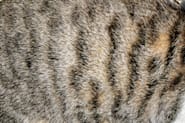
Hi there! I have adopted a cat around three months ago. About a month ago he started scratching his ears, neck, and chin. He’s a black kitty who fur too dense to see skin. I’ve been feeding him the same kind of food since adopting him so I don’t thin

My cat is constantly scratching at her ears right above her eyes and is always bleeding and has scabs. She is an indoor cat and doesn’t have mites or fleas. She is about 12 and we adopted her 2 years ago- a Siberian cat. She eats Blue Buffalo food. P
My cat scratches at her ears to the point she bleeds two different vets have said food allergies and we've tried the foods they suggested but it don't help. It clears up if we keep a cone on her but always comes back this last time it came back we no
My cat started scratching and licking his back leg, hip area and he has made it raw, I do not see any bugs on him. I sprayed pet antibiotic spray on it assuming he had hot spots. It's back again and he appears to be loosing weight. However he is eati

Mellie has been scratching the area above her hips close to the abdomen for several months. She has no hair on the right side. The patch is 3" x 3" approx. Her food has not changed since the day we got her. She does not have any "bugs". We went to th

Cosmo is a 3 yrs old Male cat. Recently he began to scratch his ear and neck until all is bloody and raw looking. Also these places have lost fur. He is in pain. I gave him Benadryl tonight and is sleeping well. What products or home remedy can I use

13yo indoor male cat with hx of seasonal allergies, vet says not treatable. He has been scratching just in front of his ears off and on for years, but tonight I noticed that he has significant scratches/scabs (not oozing) on R side. We have 3 indoor

There is a stray cat outside that is scratching itself raw, so bad that it bleeds and there is no hair. I tracked it and took it into a vet and we have tried many things and nothing is working. Any suggestions

My cat who is 1 year old has scratched one of his ears so much the hair has come off and the ear is raw and bloody. I have put a cone on him but as soon as he takes it off he scratches it raw again

What’s wrong with my kitty? He’s a year and 8 months old :(

Book an appointment with the pros – our expert vets are here to help.
