


Why is my 7-month-old indoor cat sneezing but has no other symptoms?
Updated On September 23rd, 2025
Pet's info: Cat | American Shorthair | Female | unspayed | 5.5 lbs
My cat is about 7-month old now but she keeps sneezing these days. She has no fever or other problems. Also, she got all vaccines as an insider cat. Could you give me some thoughts on this? or should I visit Petco on Saturday?
4 Answers
Most Helpful Answer

Published on November 28th, 2017
Hi and thanks for using Petco Pet Education Center, formerly Petcoach! Sorry to hear about Bunny. Sounds like she is suffering from a mild upper respiratory infection. Not sure how old she is but both kittens and adult cats suffer from these infections. Kittens get infected from their mothers who start shedding the viruses thus infecting the kittens. Many cats live their whole lives carrying these viruses. They will occasionally develop signs of upper respiratory infections during times of stress at any point in time. We vaccinate for a few of these upper respiratory viruses but we still see many many cases. The vaccines should provide some protection and usually adult cats develop very mild signs. Signs range from sneezing, runny eyes, runny nose, coughing, fever, lethargy, decreased appetite, decreased water intake, etc. Treating these infections can range from very simple to very complex cases that take weeks to months to improve. If signs remain mild, monitoring is sometimes appropriate. If the signs progress to not eating, lethargic, thick discharge from the nose and/or eyes, then you should get her evaluated by your veterinarian. They can gather a history, perform an exam, and advise you on possible diagnostics and treatment. Treatment can involve antibiotics to protect or treat secondary bacterial infections, antiviral medicines, a good deworming program, and vaccination program, eye drops/eye ointments if the eyes are involved, nose drops, a nutritional supplement called L-lysine added to his food may help, and probiotics are all things to try. Sometimes kittens have a nasopharyngeal polyp which can present as chronic upper respiratory disease which doesn't respond well to treatment. This is a polyp in the nasal passageway and back of the throat. These can be found by using sedation/anesthesia and evaluating the back of the throat and thus removed if found. Good luck.

1Pet Parents found this answer helpful
Related Answers from Veterinarians
-
Published on August 7th, 2017
Hi and thanks for using Petco Pet Education Center, formerly Petcoach! Alley is beautiful. Upper respiratory infections in kittens are extremely common. Most of the time this is caused by viruses. Kittens get infected from their mothers who start shedding the viruses thus infecting the kittens. Many cats live their whole lives carrying these viruses. They will occasionally develop signs of upper respiratory infections during times of stress at any point in time. We vaccinate for a few of these upper respiratory viruses but we still see many many cases. The vaccines should provide some protection and usually adult cats develop very mild signs. Treating these infections can range from very simple to very complex cases that take weeks to months to improve. Sometimes no treatment is required as long as the cat is eating, drinking, and acting normally. Antibiotics, anti viral medicines, a good deworming program and vaccination program, other eye drops/eye ointments, nose drops, a nutritional supplement called L-lysine added to her food may help, and probiotics are all things to try. Also, providing humidified air is good to moisten the respiratory tract in addition to any fluid ingested with food and by drinking water. Run a hot shower and shut the bathroom door while letting the room steam up. Put Alley in the room for 5-10 minutes so she can inhale the moist air. I hope this helps and she gets better soon.
1Pet Parents found this answer helpful
-
Published on September 12th, 2017
Hi and thanks for using Petco Pet Education Center, formerly Petcoach! Poor Ty Lee, but lucky her for being found by you! Respiratory infections in kittens is one of the most common illnesses we see year round, usually due to viral causes and less often from bacterial causes. Being older and immunosuppressed (having a weaker immune system, especially post surgery) will leave your pet susceptible to respiratory infections as well, especially if not current on vaccinations. While it is likely not an absolute emergency at this very second-i recommend taking both of your kitties in to see your vet as soon as you can-they both are at a state of compromised immunity-the kitten is very young and your other is elderly and also post-surgical. It is good that your pet is already on antibiotics, but it may not be the "right" kind for what is going on with the respiratory infection. Best to be seen and nip any possible complications for either as quick as you can. I hope both your fur babies get well soon!
1Pet Parents found this answer helpful
-
Published on July 6th, 2019
Hi, and thanks for your question. Despite vaccination, this sign could be compatible with an upper respiratory tract inflammation/infection or possibly to a rhinitis (inflammatory, allergic, infective). A clinical examination at your local veterinarian is essential to confirm these clinical suspicions and treat appropriately. Antibiotics may be needed. Hope this answer was helpful, but please do not hesitate to contact us again on the forum or by requesting a consultation if you have any more questions or to discuss it any further. If this answer was helpful please let us know, this will be used to improve our service!
1Pet Parents found this answer helpful


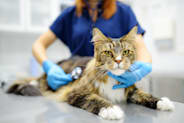
My cat Alley has started sneezing, snoring in her sleep, and making weird noises in her sleep. We have changed litter but this was weeks ago and this showed up this Saturday

We just adopted a 8 month old female cat, she was supposed to be indoor only so the people had not vaccinated her, she has started to sneeze suddenly and for no obvious reason, I assumed that it was a respiratory infection, but I see no discharge fro
My cat has been sneezing on and off today. No discharge of any sort. No discharge around the eyes. Appetite is fine. Bathroom is fine. Any suggestion?
Cat keeps sneezing a lot. No runny nose or mucus
my 3 female cats have all been sneezing a lot lately. no other symptoms i hoped it was allergies. but now annie’s sneezes are really wet- when she sneezes clear snot shoots out of her nose. almost like water. she seems to be sleeping a little more al

my 2 month old kitten is sneezing like crazy
Frida has been sneezing recently. There’s no eye boogers no booger’s no wheezing just sneezing. My allergies have been extra bad so I wonder if she has allergies too? Is there anything I can do?
Both of my cats are sneezing. They are both eating and drinking fine and are full of energy. They aren't sneezing all of the time, just more than usual. The kitten has a wet nose, but the adult doesn’t. I was wondering if this could be due to dust a

My cats started sneezing and coughing within a few days of each other. It sounds as though they're congested, but after a sneeze or a cough, their breathing goes back to normal. I'm not sure if it's related to a new kind of litter I bought, or if the
My 14 week old kitten is having his vaccination course but recently has been sneezing lots and other then that he is healthy he is kept indoors should I worry?
Book an appointment with the pros – our expert vets are here to help.
