


My dog just had puppies, she's malnourished. How to feed her & pups?
Updated On September 23rd, 2025
Pet's info: Dog | Mastiff | Female | unspayed | 1 year and 3 months old | 65 lbs
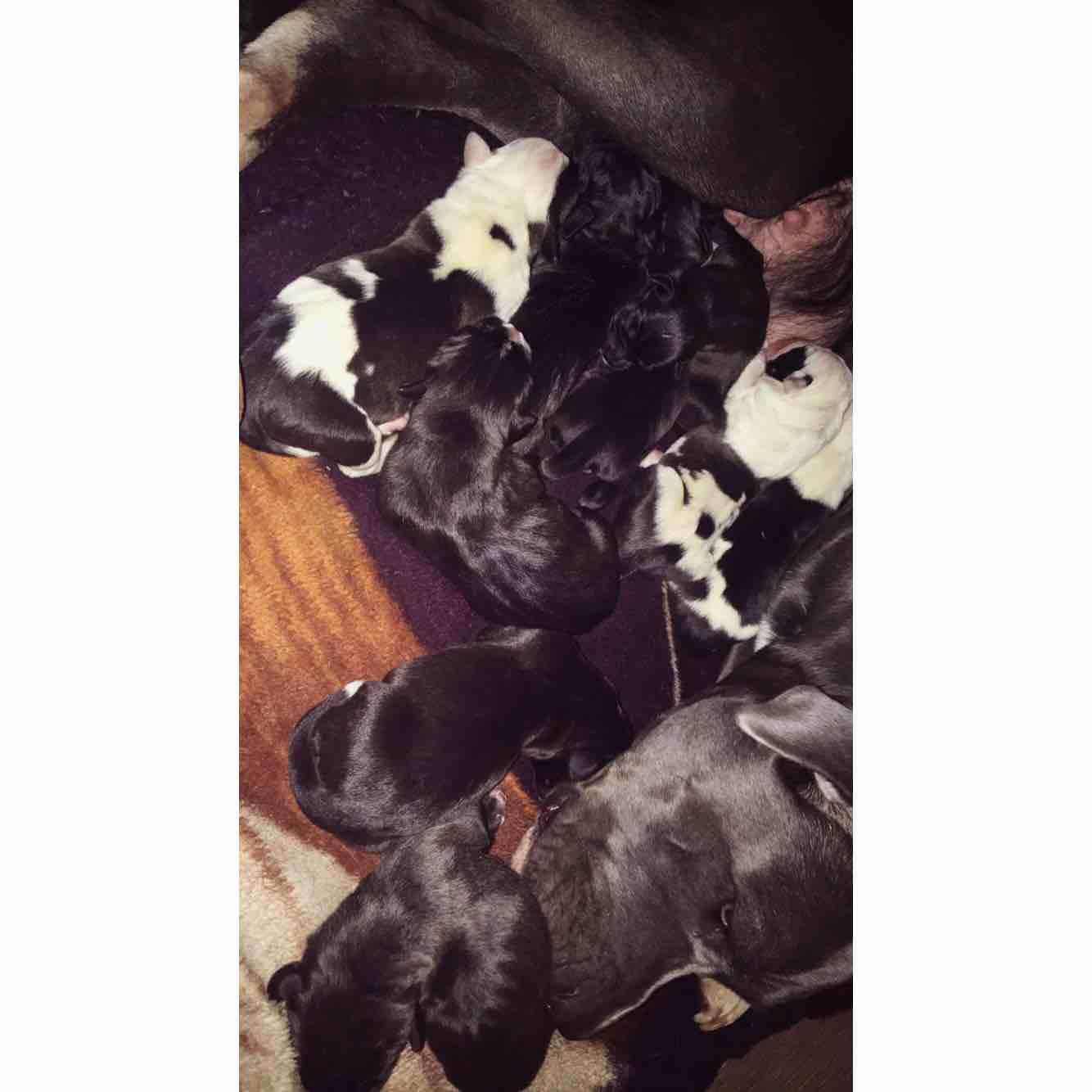
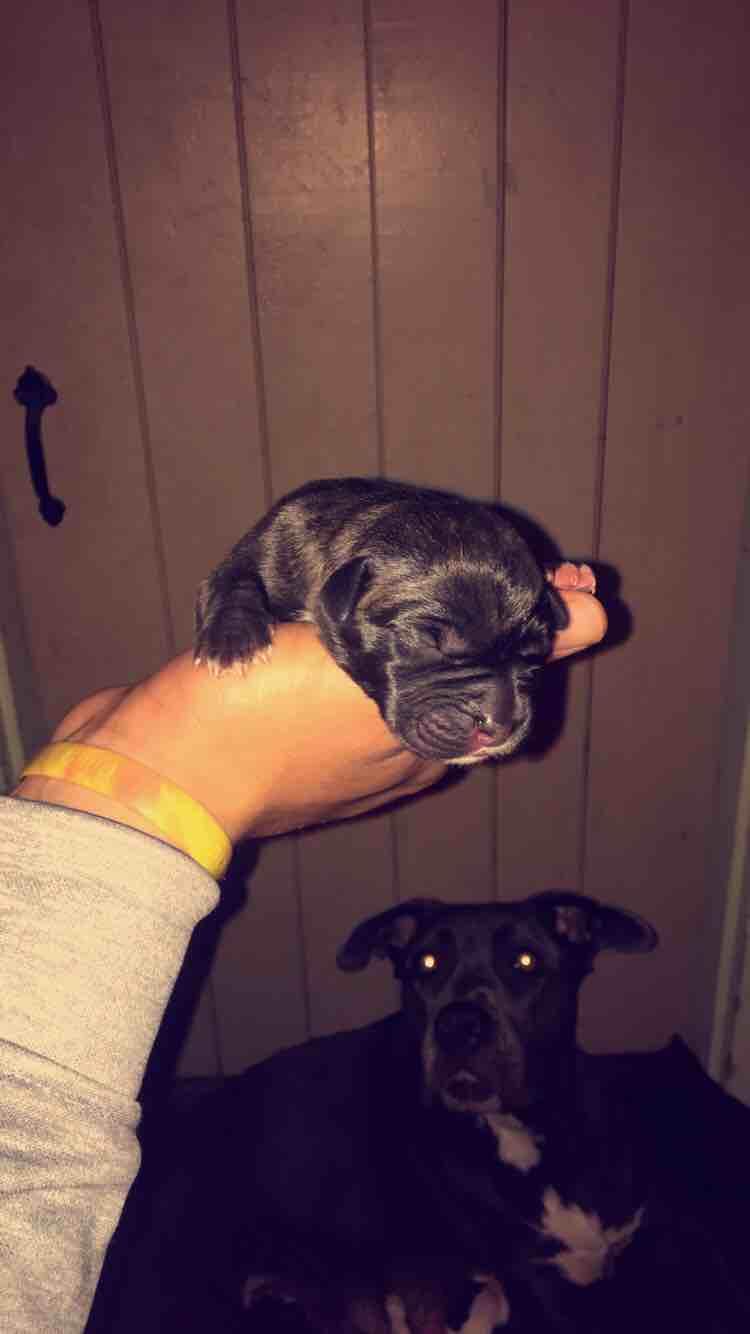
Nova and all her puppies made it out safe and healthy she is although looking alittle malnourished what can I feed her to help she’s not taking her everyday food & the puppies are on day 2 of being born but I wanna know for ahead preparation when can I step in with the bottle and formula to help her feed the pups how many days or weeks do I gotta wait ? & also what can I do to get her back in good shape and get her weight back



2 Answers
Most Helpful Answer

Published on November 13th, 2017
3. Socializationperiod:threetotwelveweeksofage • A puppy’s sensory systems and learning abilities become more developed during this time. They begin to eat solid food and show more independence. Approximately two months of age is generally the ideal time to begin housetraining, although the earlier owner’s start the better! Some experts say that housetraining can be started as early as six weeks. See the housetraining handout for more tips on maximizing housetraining success. • Puppies are very interested in novel objects and interact with their littermates, mother, and environment at this time. They start to show predictable responses to a variety of stimuli and begin to form relationships with other animals. • At between two to three months of age puppies begin to show signs of fear. This is a critical time for owners to continue safely exposing their puppy to as many new sights, sounds, environments, animals, and activities as possible. These interactions must be made as positive as possible to decrease fear and increase confidence and pleasure in new situations. Please refer to the socialization handout. • The socialization period is also an ideal time to begin basic training to teach puppies good manners and boundaries. Using positive-reinforcement training techniques will make training fun and help form a healthy bond between owner and puppy. • Many veterinarians and dog trainers offer puppy socialization classes that are designed to introduce puppies to new sights, sounds, and smells in a safe and controlled manner. These classes alone will not provide enough socialization but they can be an excellent way for puppies to safely play with other healthy dogs, and for owners to have questions answered about puppy problems they encounter. It is important to make sure that these classes are run by experienced trainers who use lots of rewards and treats. 4. Juvenileperiod:twelveweektosexuallymaturity(6-7monthsofage) • Basic learning abilities are fully developed and the speed of learning decreases. • Puppies continue to explore new environments and objects but may show avoidance behaviors (such as avoiding new situations or people) if not adequately socialized. • As they approach sexual maturity, puppies may begin to show mating behaviors and an increased interest in the opposite sex. At this time owners should consider spaying or neutering their puppy if they have not already done so. 5. Adulthood:aftersexualmaturity • The onset of adulthood varies amongst puppies but is usually around 7 months in males and 6 months in females. At 18 months of age most dogs are considered to have reached sexual and social maturity. It is important to continue training using positive reinforcement techniques for rules and boundaries without developing fear or aggression. Owners can also use these positive reinforcement to teach their dog fun tricks, and can participate in exciting games with their dog, such as flyball, agility, tracking, and rally obedience. Raising a puppy is a fun and rewarding experience. It can also be confusing and frustrating if owners don’t know what to expect or how to handle normal puppy behaviors that are not appropriate in the household. It is important that puppies visit their veterinarian on a regular basis for checkups, necessary vaccines, and alteration. It is also crucial to make training a lifelong activity that the whole family participates in. When choosing a trainer, it is important to research the trainers in the area, sit in on a class, check credentials, and make sure that the trainer uses reward based methods. If you follow the above guidelines, you will be well on your way to raising a well behaved dog who is loved by your whole family.

1Pet Parents found this answer helpful
Related Answers from Veterinarians
-
Published on
Hello, congrats on your new puppies. You can feed her as much as she will like to eat and you may even offer her puppy food. Ensure Nova has plenty of water readily available and you can even try canned food to supplement her water intake. Ensure the puppies are nursing every 2-4 hours to keep her milk production, avoid milk fever, and keep the puppies growing. The following are some tips on nursing you puppies. Hope this helps and best of luck. Congratulations on your new puppy! Having a puppy is a lot of fun but it sure can be a lot of work! A good understanding of the developmental stages of puppyhood can help you predict what behaviors to expect from your puppy at certain ages and how to prevent and treat undesirable behaviors while still enjoying your puppy’s youthful exuberance. It is important to realize that the age cutoffs listed below are an approximation and that developmental stages frequently overlap and can be influenced by the mother, littermates, and human family members. Each stage is unique and can be both fun and challenging. Following the basic guidelines below will help your new puppy develop into a friendly, well-adjusted, and polite adult dog. 1. Neonatalstage:birthtotwoweeksofage • Newborn puppies are most influenced by their mother. They spend most of their time nursing and sleeping, and have limited motor abilities. • Eye and ear canals are closed at birth and open at approximately two weeks of age. Therefore puppies are not heavily influenced by their environment during this time. • Puppies in the neonatal stage are susceptible to the effects of handling, so exposing them to short periods of gentle handling can help them become more confident and emotionally stable. 2. Transitionalstage:twoweekstofourweeksofage • During the transitional period puppies start to develop independence. Their eyes and ears open and their brains are rapidly developing. Puppies begin to learn how to walk and start to display some patterns of adult behavior. • Puppies in the transitional stage begin to play more with their littermates. This playtime helps them learn important socialization skills such as bite inhibition, which teaches puppies to use their mouths gently while playing. • During this stage it is a good idea for owners to begin safely exposing their puppy to new and different stimuli, especially a variety of noises, people, and environments. Making these novel interactions a pleasant experience will help puppies be well adjusted and enjoy different situations that they will encounter later in life.
1Pet Parents found this answer helpful


My puppy is 4 weeks old and was taken from her mother and littermates at 30 days old exactly. Her mother got sick and was unable to keep caring for them so they were given away. I heard this can cause major problems (behavior and health) down the lin

I have puppy's I got from a friend I just found out they are 4 weeks old it is safe for them to be away from mother they can eat soft dog food and canned dog food.
I am a new puppy pet parent, what tips can you give me to raise them right?
I just got a new puppy i wanted to see what i could feed her how often i feed her if i use potty pads or take her out how often i take her out to potty and when do i give her 1st shot and can i get more info on how to take care of her please

I bought a puppy but i think she was taken from her mom to early how to i care for her

Hi my puppy is only 4 weeks old and I'm having trouble getting her to eat. My puppy has not got her vaccinations yet, would it be okay to bring her around 2 7 year old dogs that my parents own to socialize her and hopefully get her to eat or should I
Hey i am so confused about my dog. Am little new to take care of dogs. My puppy is 22 or 23 days old his mother is missing now so i have to take care. I daily feed him milk. And some water. He always pee on my bed. I don't want that but as my home fl
What should I look for in choosing a food for my new puppy?

Hello there, I would like to know these questions: when do puppies eat solid food/wet food? When can I take my puppy before it gets it’s shots? When do dogs wean off there mother and do we help them do It? Can dogs have puppies multiple times? Thx th
What quantities should I feed my 4.5 months old puppies? And should I feed them for 2 or 3 times per day? Their food is Mera junior 2 12.5 KG. (Also any clue when will I need to reorder the 12.5kg, for how long will it last?). Thanks in advance!

Book an appointment with the pros – our expert vets are here to help.
