


How to care for a new baby ball python and ensure she's healthy?
Updated On September 23rd, 2025
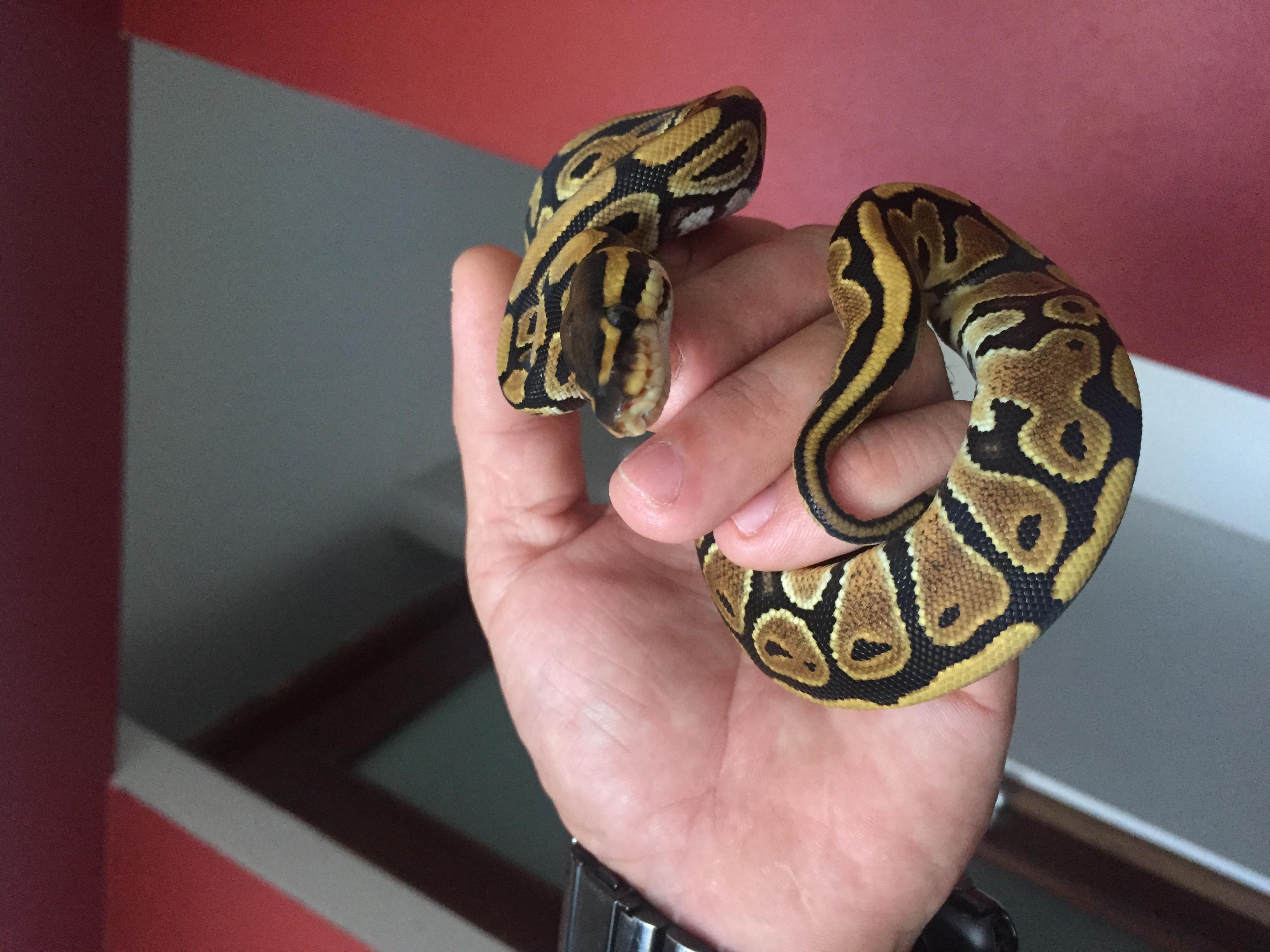
I just bought a Female Ball Python who is aprox 1 month old. How can i be sure she is healthy and great care/feeding tips? Thanks.


3 Answers
Most Helpful Answer

Published on November 13th, 2017
She is stunning. The best way to confirm good health is to have her examined by an experienced herp veterinarian. Submit a stool sample to diagnose intestinal parasites. In the meantime, make sure she is active and alert. Look for missing scales or injury along the length of her body. Check in and around her mouth for discharge, redness or swelling. Offer appropriately sized prey. At her age, she is probably eating hopper or weanling mice depending on her weight. When feeding any reptile, it is important that the temperature is species appropriate. A cold snake will not eat. If you feed pre killed, be sure to completely thaw it and allow it to warm to at least room temp. Some owners choose to feed in a container other than the enclosure. A snake should not be handled after feeding to prevent regurgitation. Follow the link below for more information regarding care. http://www.anapsid.org/ball.html

1Pet Parents found this answer helpful
Related Answers from Veterinarians
-
Published on October 10th, 2018
Ball pythons are notorious for their hunger strikes. Check the temperature in the enclosure. Low temps can affect appetite in reptiles. If you feed frozen/thawed, be sure it is at room temp (at least) before offering it. A python will not eat cold prey. Make sure it isn't too big also. You can scent it with some used gerbil bedding. Survey the area in and around the cage for any negative stimuli. This may include loud noises, strong vibrations, bright lights or strong drafts. Reduce or eliminate any if found. If she won't eat, have her examined by your veterinarian or a vet experienced in treating reptiles to diagnose and treat any infection or injury.
1Pet Parents found this answer helpful
-
Published on November 17th, 2017
Check enclosure temperatures. Low temps can affect appetite in reptiles. A cold snake will not eat. Once that is done, survey the area around the cage for any negative stimuli. This could be bright lights, loud noises or vibrations or lots of traffic. Eliminate or reduce any negative stimuli if possible. Offer prey at dusk or early evening. Cover the cage afterwards for added privacy and security. If you feed frozen prey, be sure it is thoroughly thawed and warmed before offering. If he still won't eat, carefully check in and around his mouth for signs of injury or infection. This includes swelling, redness, bleeding or discharge. See your veterinarian if any of these signs are observed.
2Pet Parents found this answer helpful

I'm going to buy my first ball python what are healthy signs of a python?
My baby ball python won't eat by herself we have to get her force fed what can we do to help her eat my herself?
Hi, my girl is a ball python and it's been a week and 4 days since she has last ate. I have had her for 5/6 days now. she hasn't ate yet & worried .. she looks good chunky but I've read baby python suppose to eat at least once a week to keep up there
Hello, so I got a new snake with this wounds, and i want to know what you guys think caused them and what treatment is the best for her.. Also the person who gifted her to me, said she hasn’t been eating for about 5 weeks, and when I tried today she
I have a ball python about 1.5 years. She was such a good eater and now I’m lucky if I can get her to eat every other wk. she doesn’t appear to be loosing weight and seem healthy but I don’t know why she isn’t eating much. She also hasn’t shed in a m
My ball python won't eat. When I got him from the store 5 weeks ago, they said they get him every Monday. I tried to stuck to that schedule but he didn't eat the first Monday but ate the second Monday and now it's been three weeks and he still won't
Hi. I purchased a ball python a few weeks ago and he won’t eat. I have been trying to feed him frozen-thawed fuzzy mice that I heat in hot water for a while. He won’t show any interest in them. Help please. I keep his temperature gradient around 90 d
My Ball Python has not eaten in about a month and she has lost a lot of weight and refuses to drink water and she is extremely weak. She does have a vet appointment scheduled but I'm just hoping to maybe find some answers before then. Before this pas
My new juvenile ball python has refused food for almost a month. She is loosing weight and I can see her spine. I have tried live and F/T. She has no noticeable external parasites. Hot spot temp is 88 F, humidity is 65-70%, ambient temp is 75 F. Shou
Hi! I recently got a ball python and was wondering if the breaths should be seen. I see her body move every single time, and she has trouble shedding. Possible problem with lungs or something?

Book an appointment with the pros – our expert vets are here to help.
