


My dog is limping with a paw mass. What causes intermittent lameness?
Updated On September 23rd, 2025
Pet's info: Dog | Mixed Breed Medium (23 - 60lb) | Female | spayed | 6 years and 9 months old | 60 lbs
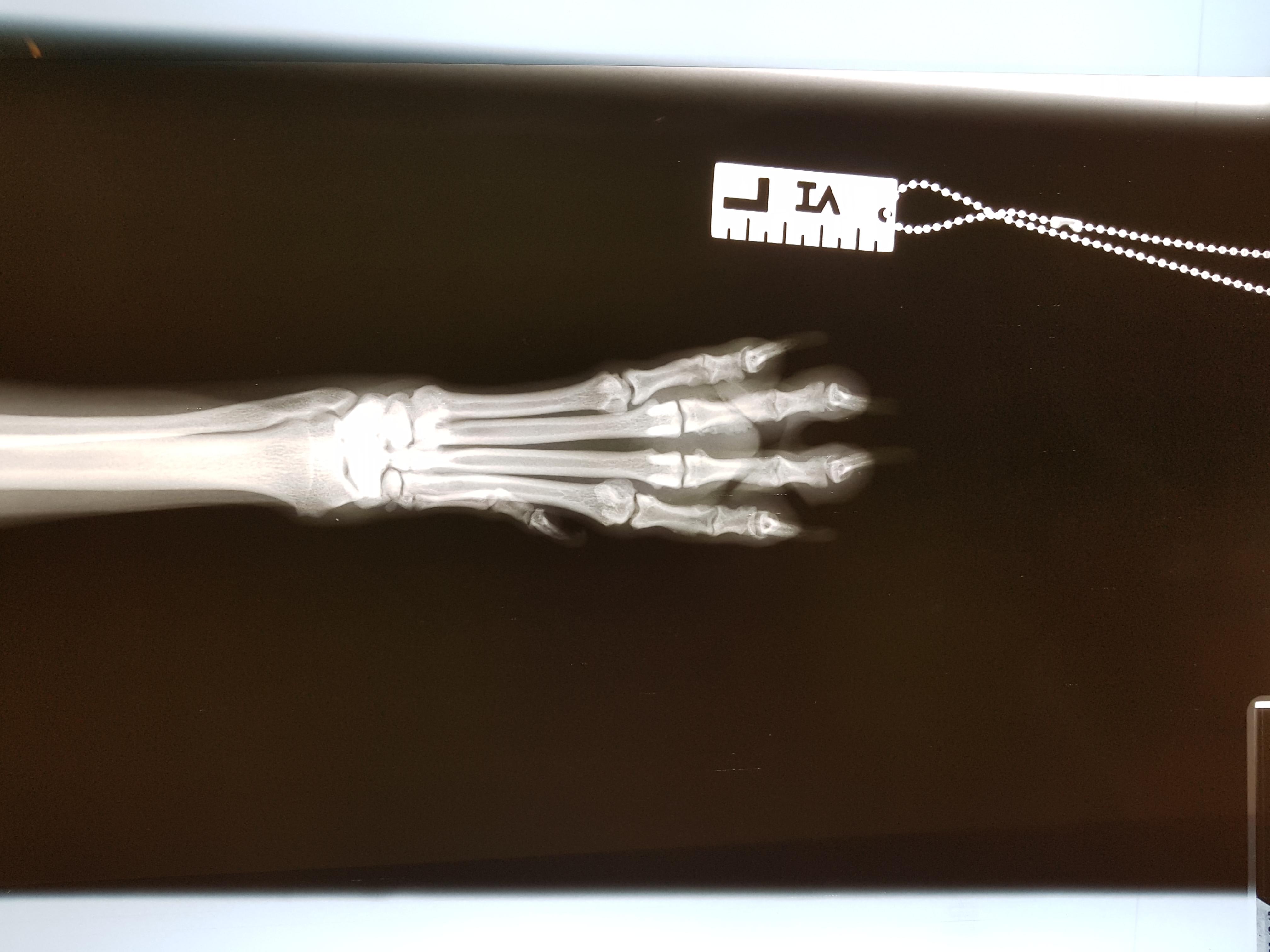
Hello. I have a 6year old female boxer lab wippet mix. She started limping while being on sea side in august. First I thought she hit her paw in a rock under the water while jumping around. Now is october and she is still limping on and off. If we go for a longer hike then she limps. Otherwise she is ok. I took her to the vet and we did some xrays. There is a mass on 3 of her toes. We are concern it's tumor. I also talked to 2 ortho vets and they both said it's exostosis. Lungs xray is ok.thanks


2 Answers
Most Helpful Answer

Published on October 27th, 2017
If this turns out to be a non-surgical problem, you should look at the following supplements to aid in healing and maintenance of the joints. http://www.vrshealth.com/canine-products/?petcoach=1977951 Osteo TruBenefits and Canine Omega Benefits Again Good luck

1Pet Parents found this answer helpful
Related Answers from Veterinarians
-
Published on
Hi and thanks for using Petco Pet Education Center, formerly Petcoach! Sorry to hear that Brooklyn is having intermittent lameness problems. Bone tumors, when present are usually solitary lesions involving one area of bone. So since this is in multiple places, I would highly discount any neoplastic problem. This may just be incidental findings. I would be more interested in what the hips and knee joint looks like on that leg. One very common injury that dogs encounter is an injury to the anterior or cranial cruciate ligament, much like athletes suffer. Whenever I hear intermittent lameness or non-weight bearing on a rear leg, this is the most common injury to investigate. A complete tear of the ligament usually leads to non-weight bearing and a partial tear usually results in intermittent lameness problems. But there are other causes of lameness which should be considered including hip or other joint problems (arthritis, degenerative joint disease), trauma, puncture wounds, fractures, soft tissue injuries to tendons/ligaments, muscle injuries, tick-transmitted diseases, etc. ACL injuries usually occur when dogs are chasing squirrels, cats, birds, etc across the yard. They are fine and then they return lame, holding up the leg or bearing partial weight. That ligament when examined microscopically is undergoing a degenerative process in almost all of the cases. The strain on the ligament eventually tears or rips it completely. That same process can occur in the other knee and that's why this is so important to diagnose properly. Some dogs tear one ACL, get it fixed and then tear the other one. There are multiple ways to fix an ACL rupture or tear and I would discuss these with your veterinarian. Some of the newer techniques are specialized procedures only certain vets perform and they require that hardware (plates, screws) be put into the area to stabilize the knee joint. One older technique is called the lateral imbrication technique and I still think it works well if an experienced surgeon does it. It is much cheaper also compared to the newer procedures. There are some braces out now also for dogs that are unable to have a surgical repair done but I don't have any experience with those. So I would advise taking Brooklyn back to your vet or another vet for a second opinion if this condition persists, worsens, or other signs develop. They can evaluate her again, gather a detailed history, and then make a diagnostic plan, and eventual treatment plan. A physical exam may include sedation/anesthesia and more x-rays to fully assess the leg. Good luck with Brooklyn.
0Pet Parents found this answer helpful


I / every vet I've visited with my Black Lab/ Pitbull mix, can't figure out what's wrong. My dog (Alpha) went hiking with me and sprained his front right paw. He got better and was doing fine, then started limping on his back paws. The limp doesn't s
Hi. I have a 6 year old boxer who has about a 3/4 inch black mark on his right paw and a small bump within it. He is limping on it but not whining or anything even when he hobbles on it.

My dog has a pea sized ball-like hairless, skin colored lump on the top of his front paw. He has been limping on it for quite some time.

Hi In march I also asked about a thing our local Vet help her and she is doing good. She loves to exercise and we always go for walks and play fetch. I started noticing a she was limping because of a lump/bump. I did some research and there is a lot
My dog is a Shepard mix and is about 10 months old. A couple of days ago I noticed that she started limping a little I checked her paw and she had nothing so I figured it would go away. I noticed the limping has gotten worse but there is nothing on h
My 4 year old Maltese (8lbs) has started to limp on her front foot. These hard callous looking things are growing out of her middle paw pads...both front feet! One foot is slightly red and swollen as you can see from the picture.
In the past 24 hours my 13-year-old lab mix has gone from running and playing to limping with his front paw not coming all the way forward when he's walking. This causes him to fall over and I can't see anything wrong with his paw on the outside.
Any advice on this pink cauliflower type lump i just discovered on my 14 year old, long haired English terrier x he is limping slightly on his front right paw, and he just lost his best mate to bone cancer this week
70 pound shepherd/lab mix has been limping for a couple days. Don't remember an injury but right front paw is puffy and swollen. He can walk but can't put much weight on affected paw.
Hazel was shot in her shoulder about 2 years ago, and got treated for it. She had surgery. Yesterday I noticed she was limping, so I felt around her paw and everything seemed fine until I seen her shoulder, it has a huge lump over it. Is the lump aff

Book an appointment with the pros – our expert vets are here to help.
