


My kitten has liquid, discolored poop but is still active. Why?
Updated On September 23rd, 2025
Pet's info: Cat | Domestic Shorthair | Male | unneutered
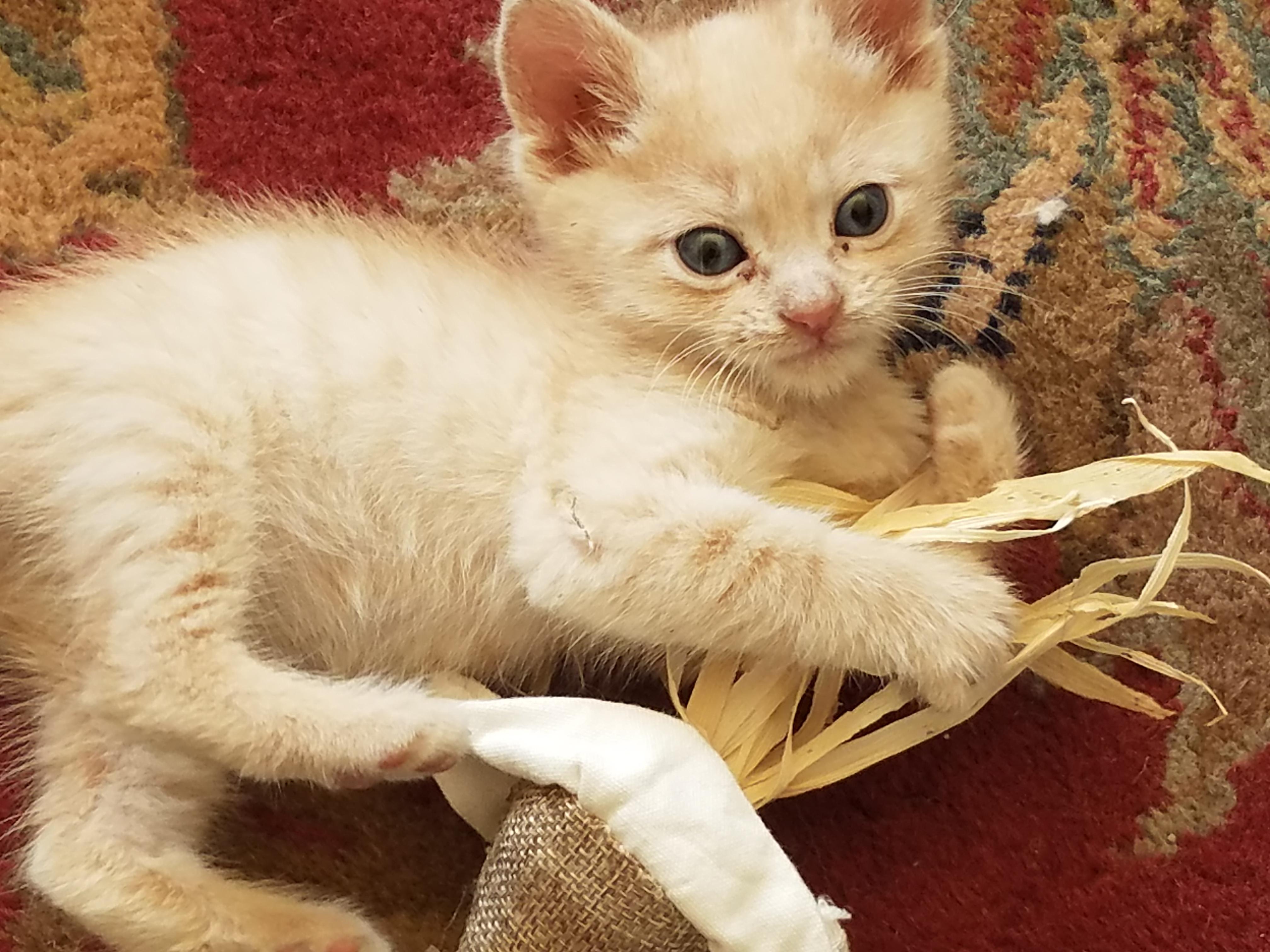
We found a 3-4 week/old kitten. He's passed liquid stools since we got him; initially brown then yellowish then white. He's full of energy nevertheless! He's been on a diet of kitten formula and soft food. Pink gums. I'd attach photos of the stool, but the smell of it has forced us to immediately remove it.


4 Answers
Most Helpful Answer

Published on October 18th, 2017
Hi there and thanks for posting! Diarrhea or loose stools can be common in kittens with intestinal parasites. I would recommend running a fecal test at your veterinarian's office to rule out parasites as cause. Falcor may need to be on medication and may need a few more deworming treatments and a recheck fecal test to help treat him and be sure he is negative for parasites. Be sure to wash your hands well after touching his feces during little box clean up or if he has an accident on the floor. Hope this helps and thanks for using Petco Pet Education Center, formerly Petcoach!

1Pet Parents found this answer helpful
Related Answers from Veterinarians
-
Published on June 16th, 2017
There are some types of G.I. parasites that do not respond to routine deworming, even with panacur. Also it could indicate an issue with his intestinal tract. If your veterinarian has not done so already doing a fecal exam to check for those abnormal parasites would be the next step. Another option might be to try him on a food trial and see if a diet with either a different protein and/or fiber content would be helpful.
2Pet Parents found this answer helpful
-
Published on November 21st, 2017
Hi there and thank you for using Pet Coach to address your concern! I would recommend continuing the current diet you recently switched to as it may take 3-4 weeks to see a change in the stool. I would also add in a probiotic such as Purina Fortiflora. If there is no improvement after this food trial or the stool becomes more loose, I would bring a sample of stool in to your vet to have it checked for intestinal parasites. This may be a food allergy and a novel protein may be needed (a protein he has never had before such as Salmon or Venison if he has never had this). I hope this helps! Please let me know if you have any other questions or concerns.
1Pet Parents found this answer helpful
-
Published on December 23rd, 2017
I'm glad to hear that Shadow is still eating and active despite his diarrhea. In a young kitten, parasites are one of the most common causes of diarrhea, but other causes could include viruses, an upset stomach due to sudden diet changes, among others. Ideally, I recommend taking Shadow to his vet for a physical exam and fecal flotation test to check for parasites. You can also give him deworming medication, such as pyrantel pamoate (available at most pet stores), which may treat roundworms and hookworms. It is important to note that not every parasite is treated by every dewormer, so it would be best to test his stool to determine if/which parasite(s) are present. You can also try offering a bit of boiled white meat chicken as a bland diet for a few days, then gradually mix the bland diet with Shadow's normal kitten food over another 5-7 days. Avoid offering any treats, milk, or table foods, as these could exacerbate his diarrhea. If he becomes lethargic, stops eating and drinking, or beings to vomit at any point, Shadow will need to go to the vet for further evaluation. I hope this helps and that all goes well for Shadow!
1Pet Parents found this answer helpful


I rescued a kitten about ten ago hes about eleven weeks old, & hes recently started pooping himself several times daily. Hes still eating & playing. The only issue is his poop is runny. What should i do for this?
My cat and the babies of my 2 years old cat mommy keeps on pooping anywhere, its like a liquid poop. The babies are just going 2 months this month. Is it normal for them? Or did day get it from their mother since Nathalie the mother also poop like th

A three month old male kitten. Vomited white color long worms once in April when he was still 2 months and gave a quarter of pyrantin tablet as advised by a vet. The issue is when ever he poops it is runny. He doesnt poop always like diarrhea but his
Hi, my kitten who is 7 months old is having very loose and watery stool, she isn’t eating human food, just organic kitten food. This has been going on for about 3-4 days! I’m not sure if this is something I should worry about or not, but if you could
I’m really worried. My kitten who is 14 weeks has had diarrhea for the last two days. I can’t see a vet right now due to financial reasons. Otherwise she seems fine. She’s playing with the other cats and jumping around and eating and drinking. Is the
My kitten (mostly notice at night) has really bad diarrhea and gas when he goes poop. She I be changing his diet?

Just adopted two new 8 week old kittens. The male is having loose stool but otherwise healthy rambunctious playful eating a ton etc. I have him solely on wet kitten food but it’s different from the fosters brand. Could this just be from change of die
I have three kittens. Two are four months old and we have had them for about two weeks. Their poop isn’t solid, which I know is unusual. It is a reddish brown clay colored and close to diarrhea. What could cause this? They eat dry food and drink plen
Found a kitten that is very weak and all he does is sleep. He doesn't want to eat so I'm having to force feed him..he's old enough to eat wet food but won't so I'm giving him milk replacer but he doesn't seem to be getting any better. He has trouble
I have an 8 month old kitten who has been leaving soft solid poop for almost 2 weeks, but last night left very watery, smelly diarrhea. He's otherwise happy, healthy and active. No change in his behaviour or eating patterns. Not sure if we need to ge
Book an appointment with the pros – our expert vets are here to help.
