


My 15-year-old cat has lumps. Are they serious? When to see a vet?
Updated On September 23rd, 2025
Pet's info: Cat | Russian Blue | Male | neutered | 18 lbs
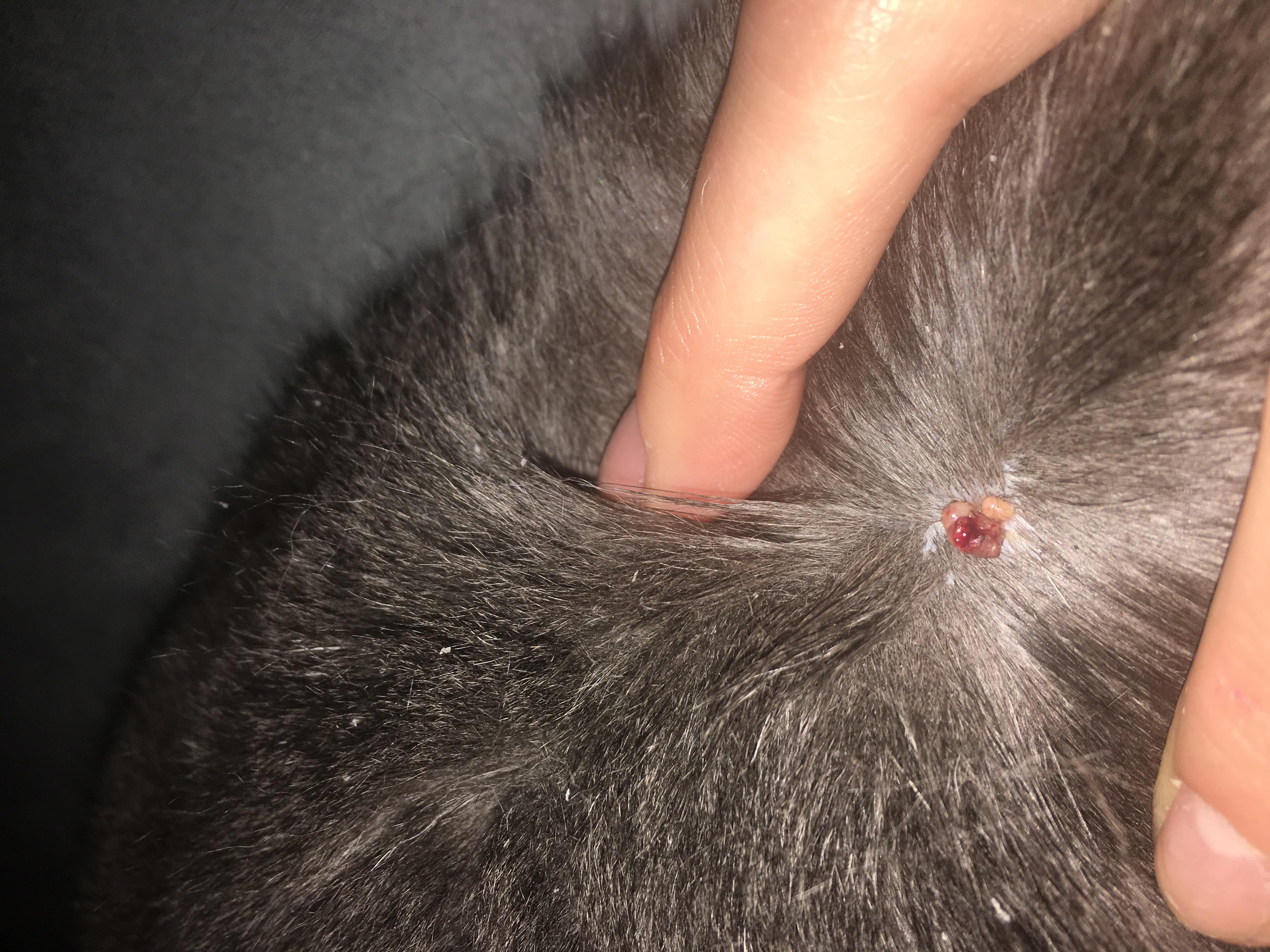
My cat is 15 years old.. about a year ago I found a small lump that looked almost like a wart on his back between his shoulders. He also has a lump on his front leg that is more under the surface and has a dark spot in the center... Should I seek treatment? He is otherwise a happy healthy old boy


5 Answers
Most Helpful Answer

Published on October 7th, 2017
Thank you for providing a picture of the lump on Beaju's back. It could simply be a wart, but there is always a chance that any lump on a senior cat could be malignant. Same for the lump on his front leg. Any suspicious lumps should be examined by the vet. The vet can perform a test called a fine needle aspirate on it. To do this, the vet sticks a small needle into the lump to get a sample of it's cells, and examines the cells on a slide under a microscope. It's usually painless to the animal, and relatively quick to perform. I would take him into the vet on Monday to have these lumps examined and diagnosed so they can be treated as needed. I hope this helps!

5Pet Parents found this answer helpful
Related Answers from Veterinarians
-
Published on July 31st, 2020
Thank you for contacting Petco Pet Education Center, formerly Petcoach with your question about Sox and for providing pictures, they are very helpful. This is could just be a benign growth, but without seeing him in person, I can't say for certain. Any suspicious lumps should be examined by the vet. The vet can perform a test called a fine needle aspirate on it. To do this, the vet sticks a small needle into the lump to get a sample of its cells, and examines the cells on a slide under a microscope. It's usually painless to the animal, and relatively quick to perform. Once the cause of the lump is diagnosed, the vet can discuss treatment options if needed. Give his vet a call to make him an appointment. I hope this helps!
1Pet Parents found this answer helpful
-
Published on May 4th, 2017
Thank you for providing a picture of Candy's bump! In a senior cat there is always a chance that any bump could be a malignant tumor, but it could also be a benign tumor. Any suspicious bumps should be examined by the vet. The vet can perform a test called a fine needle aspirate on it. To do this, the vet sticks a small needle into the bump to get a sample of it's cells, and examines the cells on a slide under a microscope. It's usually painless to the animal, and relatively quick to perform. I would have Candy seen by a vet in the morning to have this bump examined and diagnosed so it can be treated if needed.
1Pet Parents found this answer helpful
-
Published on April 24th, 2021
That's quite a big lesion and I'm concerned in a cat Cricket's age, that could be a cancerous tumor. It's quite alarming that it's getting bigger and worse. This needs to be checked out by a vet asap. Any suspicious lumps should be examined by the vet. The vet can perform a test called a fine needle aspirate on it. To do this, the vet sticks a small needle into the lump to get a sample of its cells, and examines the cells on a slide under a microscope. It's usually painless to the animal, and relatively quick to perform. Once the cause of the lump is diagnosed, the vet can discuss treatment options if needed. Please take her into a vet this weekend. Best of luck.
1Pet Parents found this answer helpful
-
Published on September 22nd, 2017
Please keep in mind that without seeing Gizmo in person, there is no way I can tell you what the lump is for sure. It could be a cyst, an abscess, a benign tumor, or a malignant tumor. Any suspicious lumps should be examined by the vet. The vet can perform a test called a fine needle aspirate on it. To do this, the vet sticks a small needle into the lump to get a sample of it's cells, and examines the cells on a slide under a microscope. It's usually painless to the animal, and relatively quick to perform. I would have Gizmo seen by a vet in the next couple of days to have the lump examined and diagnosed so it can be treated as needed. I hope this helps!
1Pet Parents found this answer helpful

What is this tiny cluster of black lumps on my cat's skin?

My female 17+ year old cat has this bump on her back. It doesn't seem to bother her, doesn't scratch it or anything. Any idea wut it could be? Thanks
I find a lump under mine cat leg can u till what it could be and should i take her to the vets and could it be some think to worry about as she is 6 year old thankyou
Hello, My cat has a ball of skin hanging from the bottom of his head, under the lower jaw. What is it? And is it removable?
My cat has a small bump akin to a human mole where her shoulders are. She doesn’t seem bothered when we touch it or examine it. However, it is new. Should I be concerned?
Hi there. I have a male cat who is about 12 years old. I feel a couple of lumps -- one seems fatty, the other is definitely attached to something inside. He's losing weight but other than that, nothing to note. I don't want to take him in because
I have a 12 year old Blue Lynx Point Siberian cat. For the last couple of months, I have found some small hard bumps around her neck. They're almost cyst like. She hasn't been to the vet in a while but is still eating and drinking. She is not as acti
My cat has a small lump on her back leg that has grown under her fur. It is solid and doesn't move around. She is an indoor cat that rarely, if at all, goes outside. She is very small and going on 10 years old. The lump doesn't seem to cause her any
Hi as you can see from the attached photo, my cat has a soft-ish lump on her back. It's white with some visible veins on it. I just wanna know if its potentially dangerous or not? (Ive been poking the lump and she is not in any pain whatsoever)
Content Warning: Really gross lesion on a cat butt My cat has this lesion that has been growing bigger over the last month. I have applied antibiotics however it only seems to be getting worse. She does not seem to be bothered by it at all. I clean i
Book an appointment with the pros – our expert vets are here to help.
