


My cat is licking his belly and losing fur. Is it an allergy?
Updated On September 23rd, 2025
Pet's info: Cat | Domestic Shorthair | Male | neutered | 2 years and 11 months old | 15 lbs
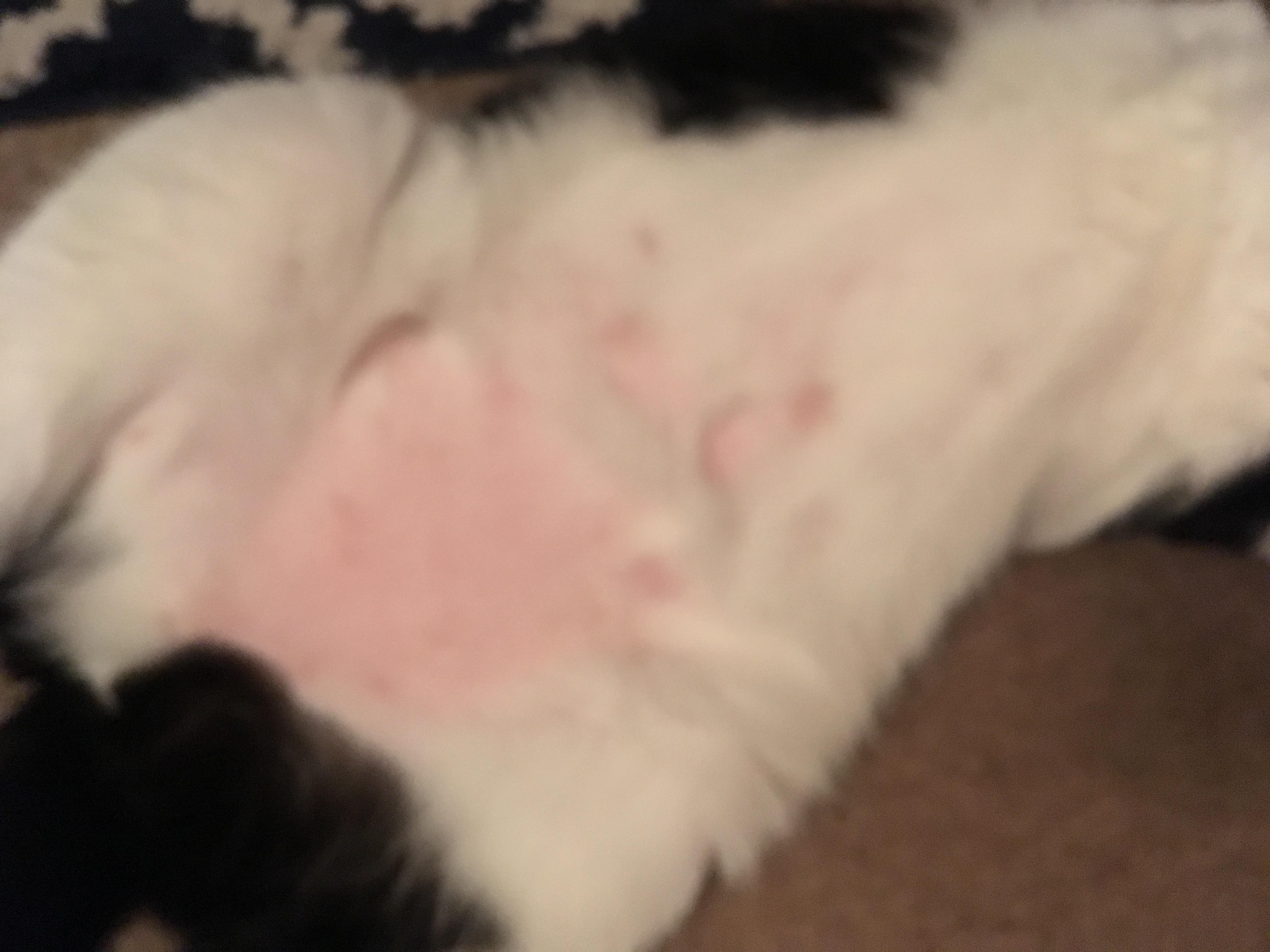
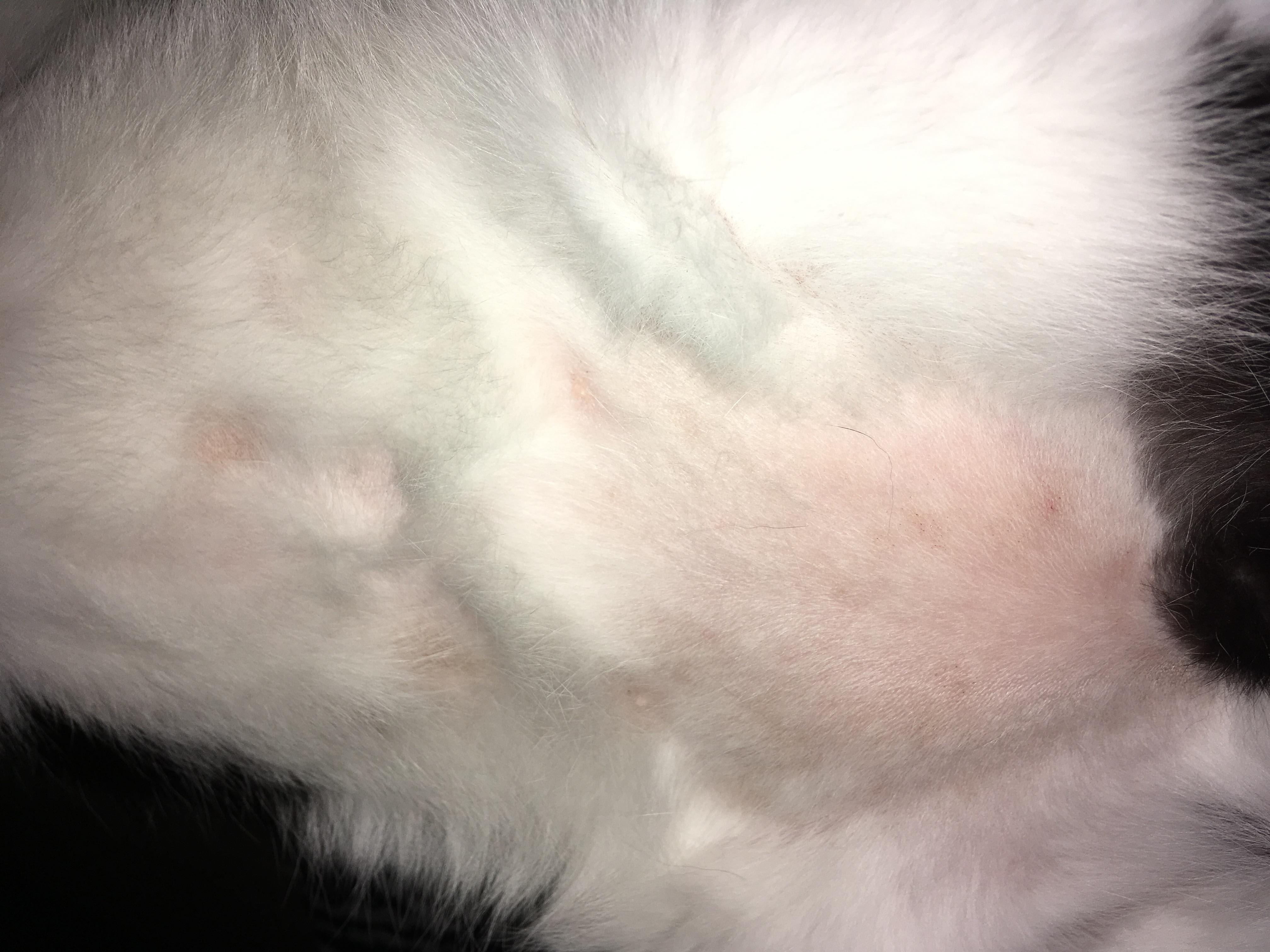
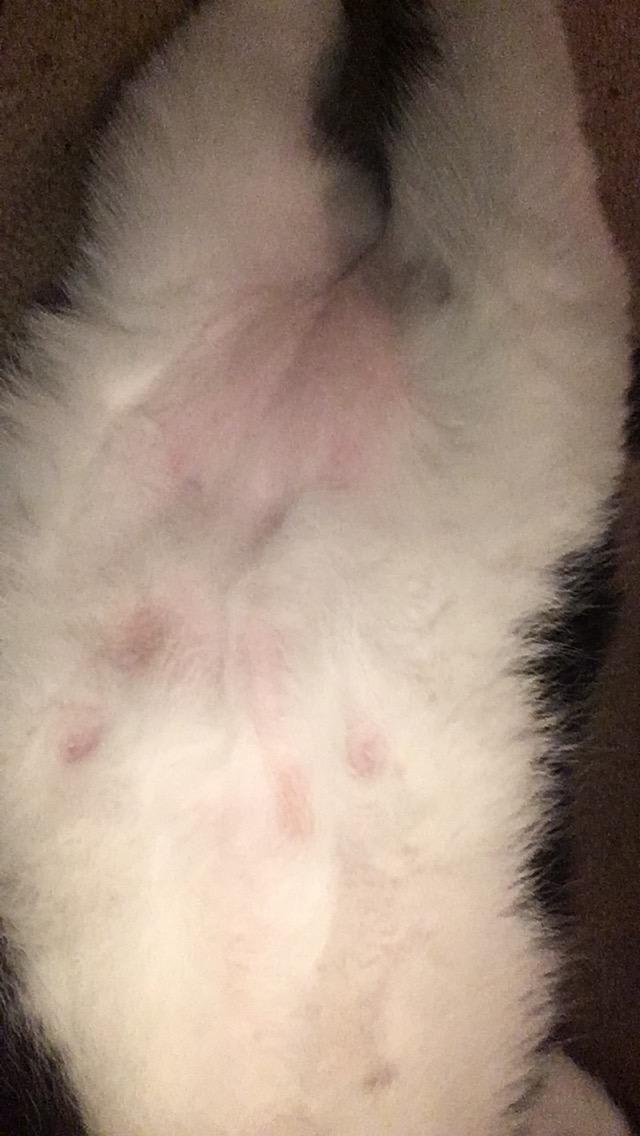
My obese cat all of a sudden keeps licking his belly and I've noticed that he has lost a lot of fur on it so it only looks like peach fuzz on him now and there are other spots near his nipples that are losing fur. He is three years old and has no new life changes or food changes and has always been on purina gentle chow. Does seem to be in any pain but I have noticed him bite his paws once or twice and I'm not sure if that's related. Wondering if it's an allergy? no fleas as well


4 Answers
Most Helpful Answer

Published on September 16th, 2017
It could be an allergy or food sensitivities. It may also be behavioral or boredom. Place an e-collar (cone) on him to prevent further licking. Have your veterinarian examine Astro to diagnose skin infection (bacterial or fungal) and to discuss allergy testing, hydrolyzed diets and food elimination trials. Consider interactive toys to keep him distracted and pheromone products such as Feliway spray or plug in diffuser to decrease any anxiety.

5Pet Parents found this answer helpful
Related Answers from Veterinarians
-
Published on June 20th, 2018
I am so sorry to hear about your kitty! This sounds like a very frustrating problem. If it was responsive to steroids then I suspect an underlying allergy may be the root of the issue. I would consider asking your vet if they think allergy testing may be helpful in confirming this. There are some medications besides steroids which can be helpful in allergy cases and this include Atopica and Apoquel (though this drug is labeled for dogs it is used off label in cats occasionally). Other options could include anthistamines in combination with fatty acid supplements. You can read more about itch control at https://veterinarypartner.vin.com/default.aspx?pid=19239&id=4951477
3Pet Parents found this answer helpful
-
Published on September 9th, 2020
Allergies can be caused by food, fleas, or environmental allergens. It’s possible he has an environmental allergy in addition to the food allergy. You could talk to your vet about using allergy medications to see if that helps. You could also take him to a dermatologist for allergy testing. Pulling out fur can also be a sign of anxiety so you could also try a Feliway diffuser and see if that helps.
1Pet Parents found this answer helpful
-
Published on December 3rd, 2017
Thanks for using Petco Pet Education Center, formerly Petcoach! This is possibly due to allergies. You could consider bathing him with a medicated shampoo you could can find at your local pet store. However, of the primary cause of the rash or infection is not dealt with, it will just reoccur. It really comes down to figuring out what is causing his allergies so that they can be treated or the specific allergen avoided. There are many things that can cause allergies though in most cases they can be broken down into 3 big categories: flea, food and environmental allergies. Allergies are usually worked up in a stepwise fashion starting with flea allergies as this is the easiest and cheapest to take care of. If not on a flea preventative, then it would be a good idea to get started on one. If already on one then it would be a good idea to change to something else (there are many new products out in the market). If not improved in 1-3 months then it is time to move on and check for food allergies by switching to a novel diet (new protein and new carbohydrate). If that does not seem to be the issue then you are left out having to check for environmental allergies which require blood and/or skin tests. Allergies can be very frustrating to deal with at first but so rewarding at the end when we are able to treat them effectively!
1Pet Parents found this answer helpful


My cat is licking her stomach a lot and there is almost no hair around her nipples. There is some rashes where she is licking.

We have a 19lb large DMH NM 2.5 year old cat who has been excessively licking a spot on his belly for two years. He has been on Prednisolone, Prozac, Reactin, Surolan and several other medications to no avail. He can lick around all 5 cones we ha

My baby boy Brant is a Healthy 8 yr/old Russian Blue. He's energetic, playful and above all he's cuddly. He also one of the sweetest cats. Lately he's been constantly licking the lower half of his body. It's been about 5 months of him licking himself
My cat sometimes has fleas and because of that he started biting his belly, that plus the fact that when he washes himself he also bites it, he now has no fur on that place. We've tried putting a collar on his head so that he couldn't reach his belly
Hello, my cat has skin allergies. She keeps licking at her belly causing open wounds, what can I do to help her?

Why is my ten year old car missing all the hair from her belly and inner thighs? Im pretty sure she’s licked it all off, shes bald! Theres a couple spots on her front legs missing hair too but she’s fine on her face, chest, and back. she’s spayed,
My 11 year old female cat has very sore almost eczema/dermatitis sores on her tummy. She eats normally and is as active as you would expect from an 11 year old in the winter! Could this be food intolerance or stress or perhaps something else?
Hello. My kitty, Aurora seems to have a skin irritation on her lower belly region. She kept licking her belly so I examined where she was licking amd saw this. My babies are everything to me and even the tiniest thing scares me. Aurora is a very anxi
Can you help me, my cat isn't itchy just licking his belly a lot. I thought he may have been stressed but it's gotten worse.
My cat is licking himself so bad he is going bald and have raw spots on his stomach back of his legs his sides I have tried benedryl he has on flea meds no signs of fleas

Book an appointment with the pros – our expert vets are here to help.
