


My cat has bald spots & scabs. Antibiotics failed. What can I do?
Updated On September 23rd, 2025
Pet's info: Cat | Mixed Breed | Female | unspayed | 5 lbs
Our cat she is only 5, she has bald spots forming from her ears to her eyes, with blood scabbing up in the spots. I have given her antibiotics it seemed to work at first, but now it isnt, we are unsure what is going on. And don't have funds o take her to the vet.
4 Answers
Most Helpful Answer

Published on November 18th, 2016
Poor Missy. If the scabs improved at first then it is likely you were on the right track with the antibiotics. You may have to give the antibiotics for a longer period of time. Some pets require 2 weeks or more consecutively to clear up infections on the skin. You can also add in a topical treatment. I highly recommend the Duoxo seborrhea shampoo, if this appears to be a sebborhea problem. Duoxo also carries other medicated shampoos for different skin conditions. The component Chlorhexidine is a good overall antiseptic. If you suspect a fungal component, then you want to go with an anti-fungal ingredient such as Ketoconazole. You can also look into low cost clinics in your area, if you are still unable to control the skin well. http://petvet.vippetcare.com/ Here are some financial resources that also may prove helpful for you so that you can get Missy the care she needs: www.carecredit.com redrover.org Best of luck to you!

1Pet Parents found this answer helpful
Related Answers from Veterinarians
-
Published on November 7th, 2019
Hi, and thanks for your question. This presentation could be due to a trauma or localized spot of skin infection (likely to be caused by bacteria). A check up, appropriate disinfection and possibly antibiotics (oral, topical or in a shampoo formulation) are needed to solve the problem. Disinfection may be started at home with very diluted hibiscrub or betadine or salted water baths. Buster collar may be useful as well to avoid any licking/scratching (if any). Hope this answer was helpful, but please do not hesitate to contact us again on the forum or by requesting a consultation if you have any more questions or to discuss it any further. If this answer was helpful please let us know, this will be used to improve our service!
2Pet Parents found this answer helpful
-
Published on October 1st, 2019
This presentation could be due to a trauma or localized spot of skin infection (likely to be caused by bacteria). A check up, appropriate disinfection and possibly antibiotics (oral, topical or in a shampoo formulation) are needed to solve the problem. Disinfection may be started at home with very diluted hibiscrub or betadine or salted water baths. Buster collar may be useful as well to avoid any licking/scratching (if any). Hope this answer was helpful, but please do not hesitate to contact us again on the forum or by requesting a consultation if you have any more questions or to discuss it any further. If this answer was helpful please let us know, this will be used to improve our service!
1Pet Parents found this answer helpful
-
Published on March 11th, 2017
Poor kitty! Unfortunately, it's difficult to use topical medications in cats because they normally groom them off and ingest them. You could put an e-collar (plastic cone) on your cat to prevent him from being able to reach the spot, and use a pet-safe topical hydrocortisone spray if you want to try this - just make sure any product you use is labeled for cats, since they are very sensitive to the chemicals in many topical meds designed for dogs and other animals. Most of the time, prescription medication such as a steroid and/or an antibiotic is required to effectively treat skin problems like this, so I would really recommend taking your cat to the vet for an exam as soon as you are able to. Your vet can do some simple skin tests to help determine what is causing the problem (allergies, fleas, a bacterial or fungal infection, etc.) and get him started on appropriate medication to treat it.
2Pet Parents found this answer helpful



My cat she gets flea medicine every month sents we've had her which is 10 years she's always had scabs on her body if you pet her she bites herself she didn't have scabs when we got her & she didn't have her sneezing problem she sneezes all the time

Hello, would you have an idea what my cat has: over the past four months she has had three skin lesions, like holes in her skin, that turn into nasty scabs. One had a fairly large pocket of pale pink clear liquid that came out with some blood clotts

Hi! I’ve noticed 3 bald spots on my cat. 1 on his stomach, 1 under his neck, & 1 b/w his fingers on his front paw. The one on his stomach has a little pimple in the middle of the bald spot, the one under his chin looks like a small pimple that has sc

Hi! I noticed a bald spot with some scabbing on my cat's neck this morning. Is this something that needs vet attention right away? Are there any home remedies that would be useful? Thank you!

Used spot on, on the cat a few fays back and i think she's had a bad reaction, it's went scabby and a tad yellow, should i take her to the vets? Or is there a cheaper option that i can maybe buy?
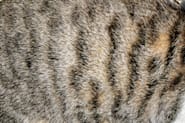
My cat is covered in scabs from scratching and sge is losing her fur from incessant grooming. I can't get her to stop and I can't afford a vet right now. What do I do?

I took my cat to the vet last week bacaise of a patch of missing fur and some redness on his leg. He was given antibiotics and wipes. Now , the patch of missing fur seems to have gotten bigger and another spot has appeared. He’s scratching his head m

On the 1st of November, there was a bald spot on his head and we thought that wasn’t anything big so we left it and it slowly spread to the left side of his head and i’m starting to realise there are like flakes? I brought him to the vet and they sai

My cat started scratching her face and ears until she was bloody and scabbed. A trip to the vet was no help. I started her on Cetirizine 5mg daily, and her face and ears healed well except for the area under her chin. For some reason that area is sti
I recently moved to Costa Rica and there are a lot of stray cats here. Most of them are healthy and seem happy but there is one who sometimes comes to my house who has scabs on her legs and back. They’re really big and crusty. The last time she came

Book an appointment with the pros – our expert vets are here to help.
