


My cat has scabs, hair loss, and open wounds. What's the cause?
Updated On September 23rd, 2025
Pet's info: Cat | Domestic Shorthair | Male | neutered | 3 years and 4 months old
Cat has small scabs all over body, small open wound on back, also hair loss on back of legs.
2 Answers
Most Helpful Answer

Published on August 28th, 2017
Here is some information from a veterinary only website- Miliary Dermatitis Becky Lundgren Cats can get a condition called miliary dermatitis, which is the descriptive term used for a cutaneous reaction pattern of focal (localized) or generalized small papules (bumps) or crusts. Miliary dermatitis is not a specific disease. It is secondary to many other diseases. Causes of miliary dermatitis include insect (flea, mosquito, ear mite, etc.) bite hypersensitivity, atopy (sensitivity to aero-allergens such as pollen, mold, house dust mites, etc.), adverse reaction to a food, bacterial superficial folliculitis (inflamed skin follicles), dermatophytosis (fungal disease), feline scabies, mast cell tumors, and pemphigus foliaceus. Flea hypersensitivity is the most common cause of miliary dermatitis. Diagnosis of the root cause of miliary dermatitis may require cytology, skin scrapings, insect control trial, elimination diet, fungal culture, and biopsy. Treatment is based on eliminating or treating the root cause of the miliary dermatitis. Here's a client information guide from Univ of FL veterinary school https://vetmed-hospitals-smallanimal.sites.medinfo.ufl.edu/files/2011/09/Skin-Diseases-in-Cats-client-guide.pdf Good luck with Ollie

1Pet Parents found this answer helpful
Related Answers from Veterinarians
-
Published on
Hi and thanks for using Petco Pet Education Center, formerly Petcoach! Sorry to hear that Ollie is having some problems. Small scabs all over his body are indicative of a condition known as Feline Miliary Dermatitis. The causes are many including fleas, ticks, mites, allergies, skin infection, etc. I would advise that you take Ollie into your vet for a thorough history and evaluation (physical exam). Your vet can then advise either diagnostics (lab tests, skin tests including skin scrape, etc, or any over test that is appropriate) and/or treatment for this condition. This condition is treated with steroids (often by injection, long acting), antibiotics, other allergy medicines, good flea/tick products, and many others depending on what your vet thinks is the inciting cause. Good luck with Ollie. I am treating my own cat right now for it.
1Pet Parents found this answer helpful


My cat is starting to get scabs and places where he's losing hair. They're mostly on his legs, and there's some on his neck. I don't know if it's from being itchy or something else, thought he does scratch and groom himself a lot. What could this be?

I recently went to my fathers house and noticed that his cat is suffering horribly. She is long haired. Her hair is falling out, she has bloody scabs, weight loss and she itches/licks excessively. There are flakes in her fur, and it is very red and r
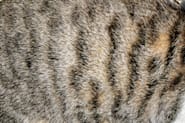
Cat has scabs all over no hair loss and absolutely no fleas. He does have an ear that is gooky and you can hear the stuff that is in it. Any ideas? Food is no grain.

My cat Lily has red bumps and scabs going from the middle of her back and going down her spine to her tail. I have never seen this before in the 10 years since she kidnapped me and moved herself into my apt. I don't see any fleas but her fur is extre
My cat has hair loss around ears, crusty scabs on feet and under neck. Had some matted hair I got off. Has dandruff but I don't see anything else. She has been staying outside mostly for about a month. Any ideas on natural treatment? Thank you! Jess
My cat is scratching himself making bald irritated spots and need to know what to do and what is causing this.

Not sure what’s going on. I have an indoor cat, with no contact with any other animals. One of the spots is on her neck/shoulder area and the other is underneath her. I also posted a pic of the chunk of hair I found on the floor. Any help would be gr
Hello there, my cat has several bald patches, in which one is scabby. The pictures attached doesn’t show the largest patch and my cat moved as I was taking the photo
My cat keeps getting these scabs on face, head and neck for past 3 months now. He has had flea, tick and heart worm treatment along with skin scraping for mites. All negative. He has been given Prednisone and antibiotics. He has lost only about 1
my cat keeps getting patches that start with a sticky place, the hair comes out, then scabbing then the hair comes back. but it keeps happening. what do I do?

Book an appointment with the pros – our expert vets are here to help.
