


My dog has recurring skin infections from allergies. What helps?
Updated On September 23rd, 2025
Pet's info: Dog | Mixed Breed Large (61lb +) | Female | spayed | 11 years and 7 months old | 185 lbs
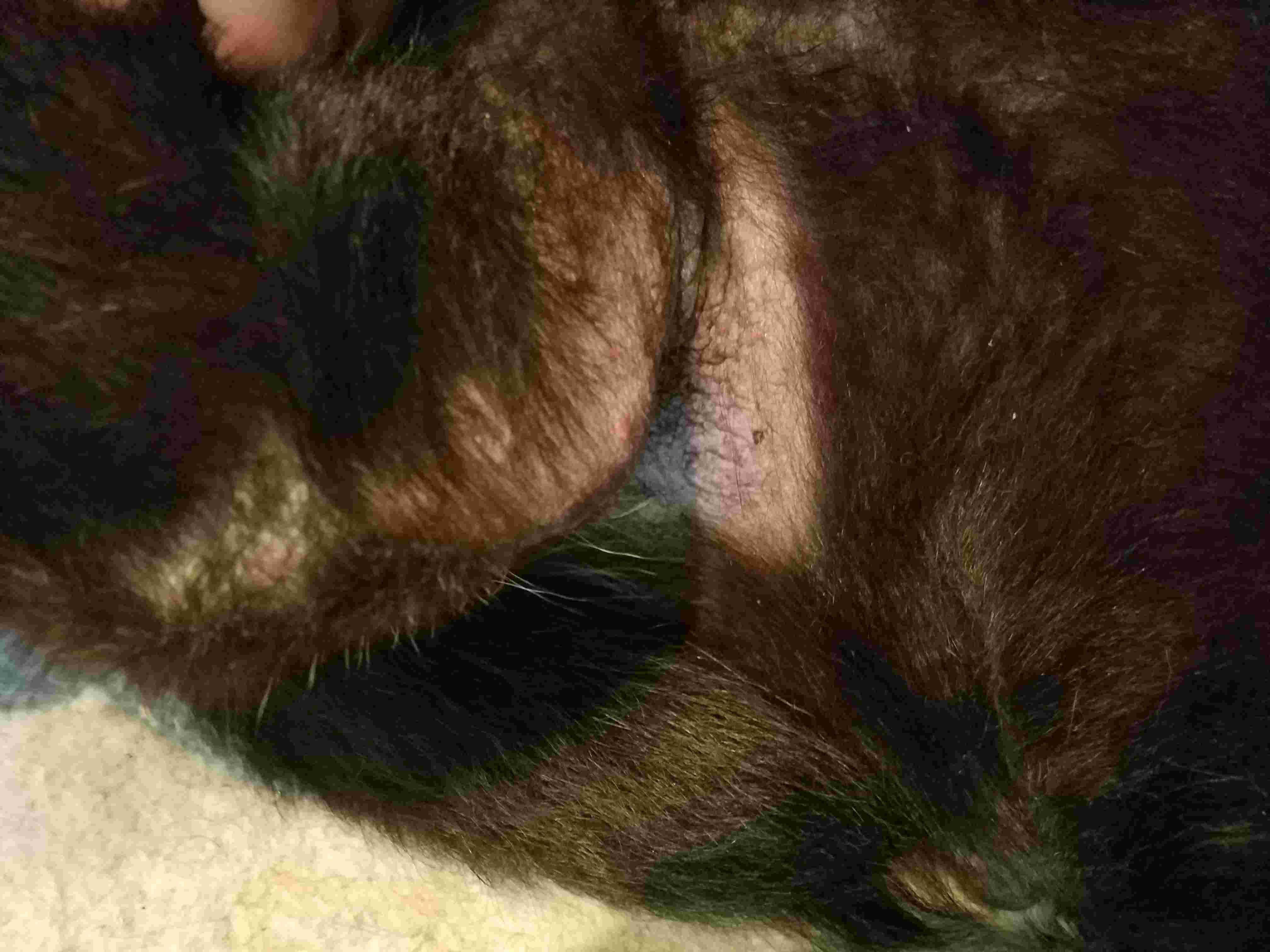
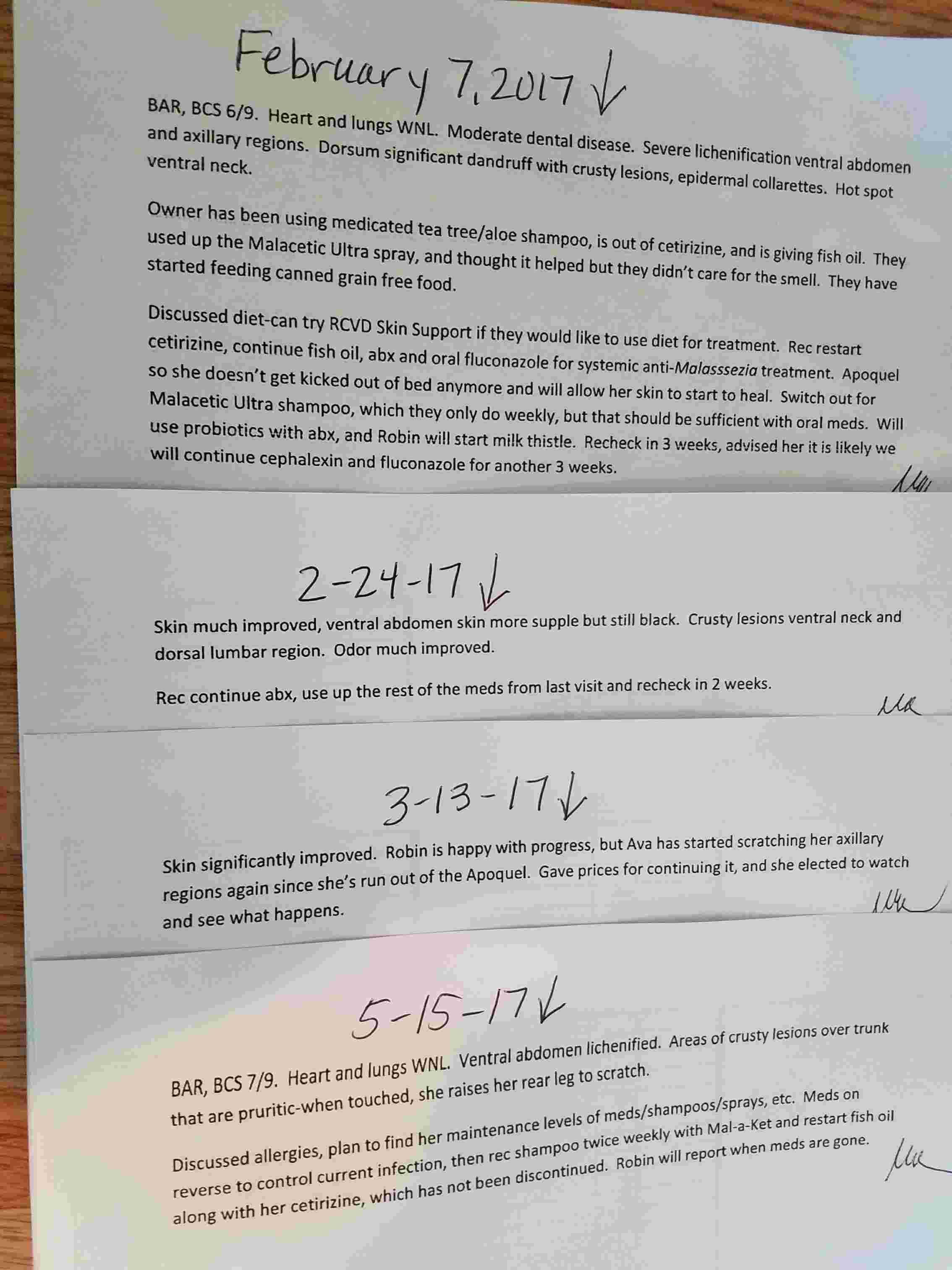
What is the best treatment plan for bacterial and fungal skin issues in dogs with allergies. My dog has had three rounds of antibiotics, antifungal and itch suppressing medications. The dog has been on citerizine continuously since March 2017. I need some other options to discuss with my vet . I am looking for a solution that will clear the skin infection for good.



1 Answer
Most Helpful Answer

Published on August 17th, 2017
Hello, sorry to hear about AVA. Allergic skin disease can be very stressful and frustrating for owners, pets and veterinarians. As you probably know by now, allergies in dogs can arise for 3 sources. However, one must rule out non-allergic causes for itchiness such as mite infestations and ringworm. Flea allergy dermatitis (FAD) is one that causes very severe itchiness over their back and tail base. Ava should be on strict, monthly flea preventative and your environment should be treated with insecticide at least once monthly especially during the spring and summer months. Remember, you don't need to see fleas on your dog in order for her to have FAD. A single flea bite can produce enough flea saliva to induce an allergic reaction. About 75% of the dogs that do not have FAD, have an allergy to something in the environment. i.e pollen, grasses, cat dander, human dander, trees, house mites, flies, etc. These are the hardest to diagnose and typically involve doing an expensive allergy test. There is a blood allergy test and skin allergy test for this. Once we have obtained results for this test, we typically recommend following up with desensitization injections which work by injecting a small dose of the allergens AVA may be reactive to with the goal of creating immunity so that she no longer responds with an allergic reaction. Treatment for this may last up to 8 months and the success rate is about 60-70%. The remainder 30% have also shown reduce degree of an allergic reaction. The last category involves food allergies. These are typically the least common kind of allergy in dogs and require a food trial with a novel protein diet (something your dog has never beed offered such as rabbit, duck, lamb, venison, or kangaroo) or a hydrolyzed protein diet. Diet trials should be administered for a period of 6-8 weeks without any other food source. (no treats, table scraps, or different kinds of food). Clearly, determining which kind of allergy your dog may have can take severe weeks to a few months. Therefore, in the interim, allergic pets should again be on strict flea preventative, allergy medications such apoquel, atopica, steroids, Cytopoint injections or antihistamines. Any secondary yeast or bacterial infections should be treated as well with antibiotics and anti-fungals. Best of luck and hope this helps.

3Pet Parents found this answer helpful

My baby is getting skin infection for more than 6months. Although we called vet for the care, the vet just gave injection for 3 days. After 3 days injection, the infection relieved with dark pigmentation. However, it appeared after 2 to 4 weeks. Now,
Hello gud morning sir my dig is suffering lot by this allaurgy so kindly sujjest me the medicines

My dog is having a skin infection. NOw iam in a town where dog medicines and hospitals are not available please help to know about the disease and its cure

Dog continues to get scabs that turn red when picked off. He also keeps having bacterial infections on his skin. He takes allergy meds everyday. No fleas. I take him to the vet and they will find bacteria and white blood cells. I bathe with sensitiv

My dog is having a hard time with skin issues for a month. Tried using shampoo, anti tick soaps, and finally a medicine called clinar (diluted) was applied on her. Still skin issues are not decreased :(. Can you suggest what medicine should i give h

Does anyone know anything about dogs skim problems? I have posted pictures, can any vet help with identifying the problem!?! Thank you!!!!

What course of action do you recommend for a Labrador 6 years old with abscesses, skin irritations, lesions etc. it's sporadic if it's not on his feet it's under chin or one foot or all them it's like cat and mouse. I don't know what to do. I don't w
Hello, My self Mriganka Bain, having Saint Barnard. she was well but in the last few days, she is suffering from skin disease. She is just 3 years old. Can you please suggest me any medicine.
A vet gave my shih tzu mix dog medicine for a skin infection but the bumps and itchy patches came back a week after finishing the medicine. He has a big hard bump on his back that he has scratched and is now bleeding. Bumps and patches are all over h

Hi we have a 3 year old lab. He is constantly scratching and gnawing at his skin, he has bad hair loss, scabs and sores especially between his legs and a large lump has now appeared on the side of his face, his ears are also very dry, irritated and s

Book an appointment with the pros – our expert vets are here to help.
