


My dog's leg gives out occasionally, but he shows no pain. What's up?
Updated On September 23rd, 2025
Pet's info: Dog | Mixed Breed Small (up to 22lb) | Male | neutered | 2 years and 1 month old | 10.5 lbs
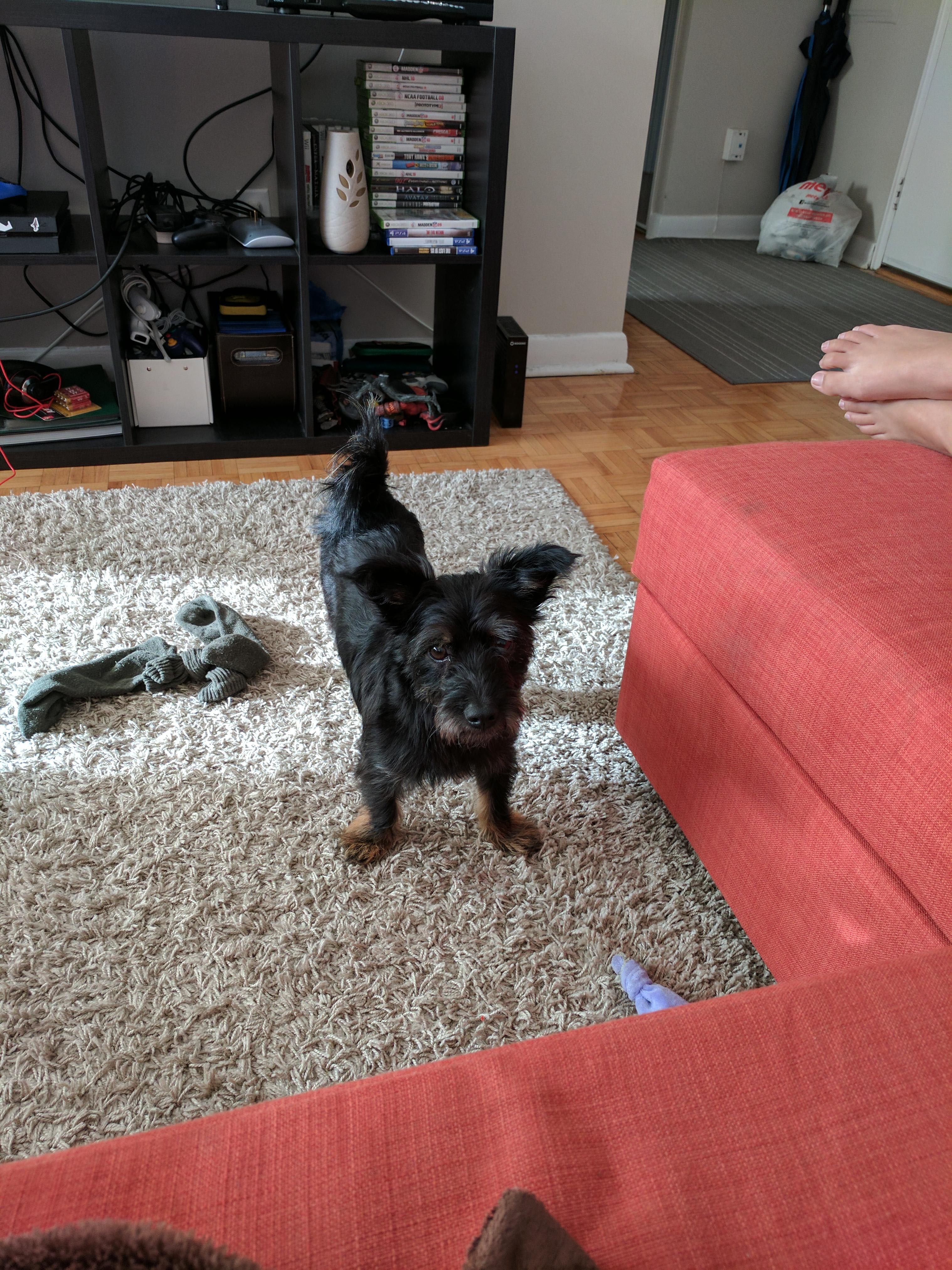
6 days ago my dog was caught in my cousin's legs while playing outside. He tried not to use his leg then after about 15 minutes he started to walk on it with a limp. After 2 hours hours he was completely back to normal. Since then the leg has given out on him twice and I notice that he sits/lays down sticking out his leg. His behavior is normal and he uses the leg like new. When I stretch it out or feel it there is no pain resistance. Could something be wrong without signs? Before: 3 After: 1+2




2 Answers
Most Helpful Answer

Published on August 9th, 2017
Most serious injuries to the leg would cause more consistent limping. It's possible that he has a luxating patella - a condition where the knee cap pops in and out of the joint. This does not cause pain because could cause the leg to 'give out' occasionally and then go back to normal. Your veterinarian would be able to diagnose a luxating patella during a physical exam.

1Pet Parents found this answer helpful
Other Answers
-
Published on
What a sweet dog! Assuming the leg in question is a rear leg, Roopy could be having issues with one of his knee caps (kneecaps can move out of their groove and cause intermittent limp). There are ligaments within a knee joint that can be torn and damaged, and this also can cause a limp. Hip joins can also suffer injuries and mimics the signs you are describing. I would suggest you see a veterinarian for a detailed physical exam and possibly some x-rays.
0Pet Parents found this answer helpful



Book an appointment with the pros – our expert vets are here to help.
