


Why isn't my leopard gecko eating when tank conditions are normal?
Updated On September 23rd, 2025
My leopard gecko hasn't been eating for 3 days. The temperature is normal, she is not shedding, the humidity is normal, and the type of food is normal. What should I do?
4 Answers
Most Helpful Answer

Published on July 25th, 2017
Kota may have an impaction. The main cause of impaction is sand or other loose substrate (Gravel, walnut shell, quartz, ect.) that your gecko might ingest during feeding. The ingested substrate doesn't digest like the rest of the food in its stomach, and either forms a mass in the stomach, or passes into the intestines and creates a blockage. This blockage prevents the gecko from pooping, and the gecko will stop eating. The sick leopard gecko will grow weak, and eventually die if not treated. Early signs of impaction are lethargy, failure to eat or poop and a bloated belly. A warm soak and a drop of olive oil or mineral oil in the mouth may help the gecko to pass the impacted matter. I recommend a warm soak for 5 minutes twice a day. You can give one drop the oil by mouth to see if that will help the impaction pass. DO NOT force the oil down the throat as you may cause her to aspirate the oil into the lungs and that would be disastrous! Just put the drop right inside the mouth. If the impaction isn't passed, the gecko will develop a thin tail as it loses weight, barely opened eyes, increasing lethargy, and a dark blue spot on his/her side. If any of these more extreme symptoms occur, rush your leopard gecko to a vet IMMEDIATELY. Impaction CAN KILL YOUR GECKO. On rare occasion, there are other things that can cause impaction. Sometimes, part of an undigested mealworm or other hard-exoskeleton insect can get lodged in your gecko's intestines. Sometimes a cyst will form inside your gecko's stomach or intestines and cause a blockage. However, that is an extremely rare occurrence. I hope this helps. Best wishes.

2Pet Parents found this answer helpful
Related Answers from Veterinarians
-
Published on October 19th, 2018
Thanks for reaching out regarding Scoot. First and alway, investigate environmental conditions including heat support and temperature, humidity, UV exposure and nutrition. Intestinal infections or parasitic problems can manifest for years prior to becoming symptomatic. This is probably not a change in behavior, but clinical signs of illness and should be investigated by a veterinarian, if no husbandry deficiencies can be identified.
1Pet Parents found this answer helpful
-
Published on February 22nd, 2017
Gastrointestinal infection or inflammation, eventually gastrointestinal impaction are possible and a check up and physical examination are needed as soon as possible to determine the underlying cause of it.
1Pet Parents found this answer helpful
-
Published on February 21st, 2019
Thanks for reaching out about Meesha and including a photo. She does appear thin on the photo. Intestinal parasites are fairly common in many reptiles. High parasite loads can cause regurgitation, hypermotility (thereby poor digestion) and anorexia. Intestinal infections or ingested foreign bodies are also possible. A veterinary visit is recommended for a fecal evaluation to determine which type of parasite (if any) are present. This will determine which medication might be used. Good luck.
1Pet Parents found this answer helpful


My leopard gecko hasnt eaten willingly in about a month or two. I'm pretty sure he is not impacted. After being suspicious of it being impaction I switched him to a paper towel substrate and gave him mineral oil, soaked in warm water and massaged hi

What is wrong with him? He’s about 8mo this old/ has not been eating for a week or two but still passes fecal matter- I’m pretty sure he is male. I don’t remember seeing this mark before today
Hello, I have a 3/4 year old leopard gecko. He hasn’t been eating too much recently and looks like he is getting underweight. He hasn’t opened his one eye in two days despite me gently rubbing it with a damp Q-tip. I have tried to give him a couple d
I just adopted a leopard gecko three days ago. She has been fine until today. Lethargic, hasn't defecated since I brought her home, but eats regularly. Right now she is laying on the floor of her tank, not moving. Typically she hides in her cave unle
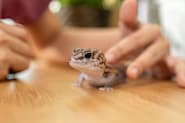
My leopard gecko has a black belly, hasn’t been eating much, or pooping a lot either. Don’t have money to take to vet though
My seven year old leopard gecko hasn't eaten for a couple weeks now. I don't notice any weight loss and she is just as mobile as always but she isn't as friendly as usual. I tried soaking her in warm water and pidialite and it didn't help. What shoul
leopard gecko not eating, throwing up, and being lethargic very thin. whats wrong?
I have a male leopard gecko, probably about a year old. Recently he's just stopped eating. Won't eat any worms or crickets. I've tried giving him a calorie supplement, nothing. Tried honey, calcium, he just wipes it off. His tail is way too skinny, b
my leopard gecko is not eating. she seems to be pooping normally (in very small amounts) but seems bloated and miserable. she drinks normally and licks calcium too
I adopted a sick Leopard Gecko from a local pet store. The pet store doesn't take good care of Leopard Geckos. They have dried Mealworms, no calcium, no humidity, and their all crowed in one hide. My Leopard Gecko Geo wasn't eating Mealworms or Crick

Book an appointment with the pros – our expert vets are here to help.
