


My kitten has a dry nose, puffy eye, and fur loss. Is it ringworm?
Updated On September 23rd, 2025
Pet's info: Cat | Domestic Mediumhair | Male | neutered | 2 months and 17 days old | 2 lbs
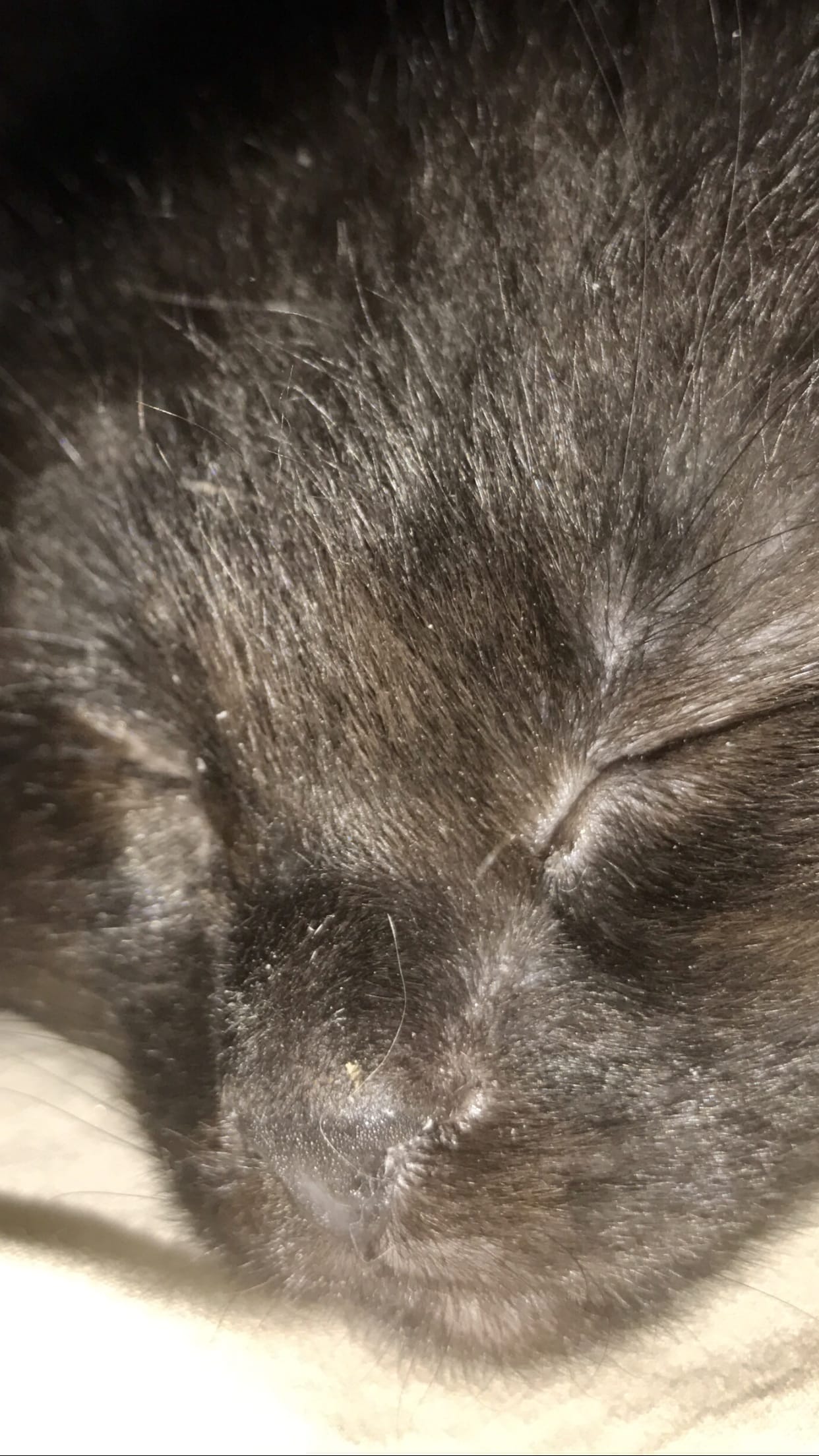
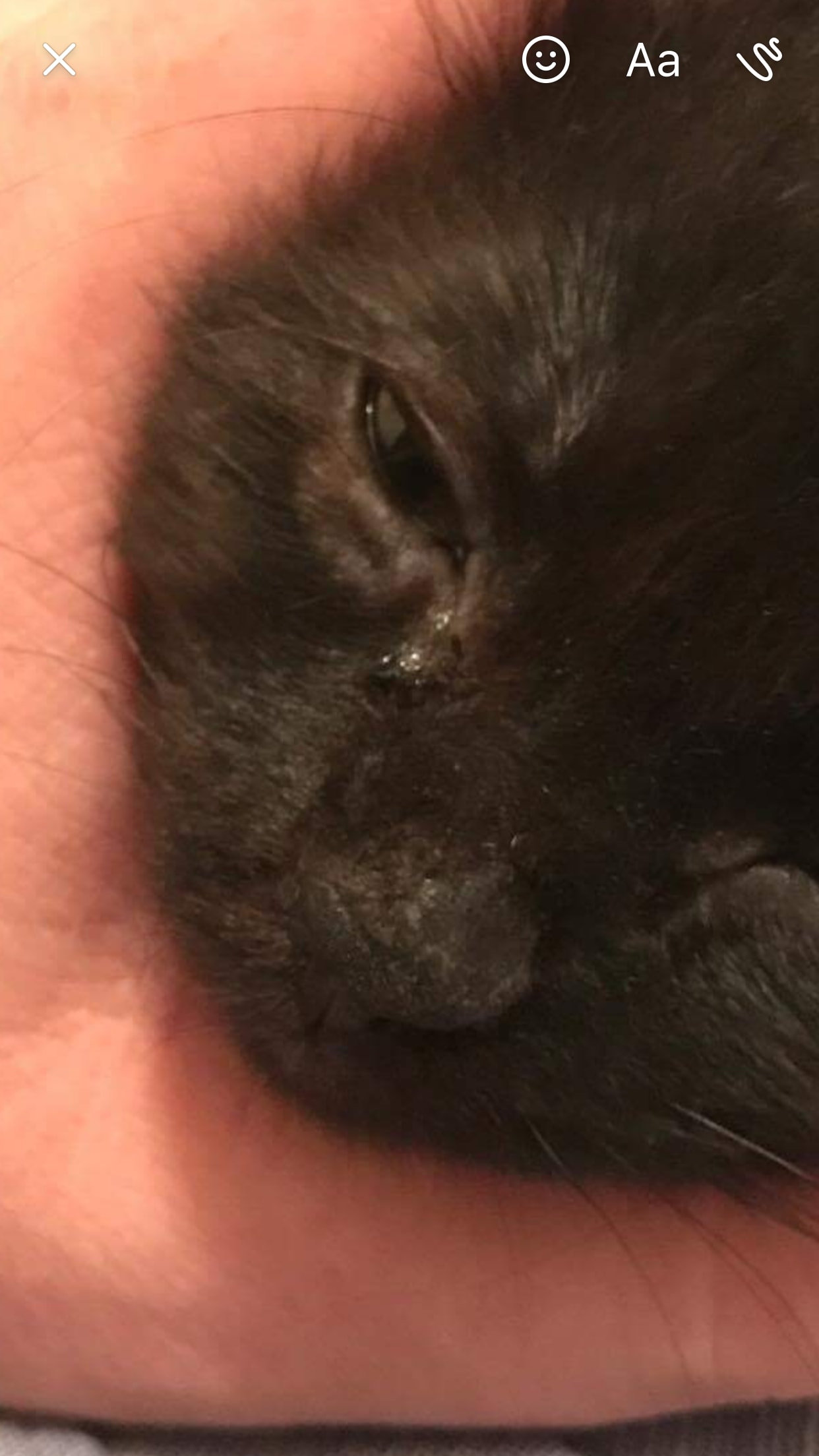
We recently got a new kitten. I have noticed his little nose is always dry and crusty. He is a black cat with a black nose so it is hard to see what it actually looks like. I just took a warm wet white washcloth and cleaned a dark colored scab or something came off of it. And it looks as though under his one eye may be a touch puffy and maybe missing a little fur. Looking this up I came across ringworm. Is there other symptoms I could look for to know? 1st picture is a few days ago 2nd is now


4 Answers
Most Helpful Answer

Published on July 11th, 2017
The hairloss area beneath the eye could certainly be a dermatophyte (ringworm) lesion, but it is also possible that it could be due to excessive tearing/discharge from the eyes that is resulting in irritation in the area. This could also be contributing to the nasal crusting. Upper respiratory infections (URI) are common in young kittens and can cause ocular (eye) discharge and nasal discharge, with intermittent sneezing and/or coughing. Ringworm lesions are typically itchy but not always. Be on the lookout for any additional hairless or crusting lesions to appear elsewhere on the body, and also if any similar lesions appear on any humans in contact with Rayder, as ringworm is highly contagious. It would be best to have him visit his veterinarian for a thorough physical examination to rule-out a potential URI and perform a dermatophyte culture if indicated.

3Pet Parents found this answer helpful
Related Answers from Veterinarians
-
Published on December 2nd, 2017
It is really difficult to tell much from the photos - they are a bit fuzzy. That being said, it does not appear to be normal from what I can see. There are three very common reasons for hairloss in kittens: ringworm, mange or fleas. There are others but they would be less likely: pyoderma (skin bacterial infection), pemphigus, injury, underlying endocrine disease, etc. Ringworm is the number one rule out in kittens and that is my best guess at this point. Since ringworm is contagious to humans and other animals I suggest you get Pernell to your vet for an exam and to talk about testing and treatment options. Many skin diseases will look similar in presentation so testing is important. You need to know what you are dealing with so the proper treatment can be instituted. Ringworm and mange have different treatments, as do most other skin diseases on the list. So, try to get him in to your vet for an exam ASAP. At 11 weeks of age he should have already had some vaccinations, if not , he is definitely due for those (should have had 1st set at 8 weeks of age, 2nd set would be at 12 weeks of age and final set at 16 weeks of age). In the meantime, wash your hands very well after handling him so that if it is ringworm, hopefully you won't get it. Hope this helps. Best wishes.
1Pet Parents found this answer helpful
-
Published on August 24th, 2019
Unfortunately, to determine what is causing it, you would need to bring your cat into your vet. Ringworm can be tested for with a Wood's lamp while other issues such as mange can be looked for under a microscope or with a skin-scraping test. Depending on the cause, treatment will vary but usually includes medicated shampoos, antibiotics, or other medications. As some conditions such as ringworm are highly contagious to other pets and people, keeping all areas cleaned, changing clothing, washing hands, and keeping the kitten separated is best until the cause is found.
1Pet Parents found this answer helpful
-
Published on June 3rd, 2018
This presentation could be due to a trauma or localized spot of skin infection (likely to be caused by bacteria but unfortunately ringworm could be responsible for it as well). A check up, appropriate disinfection and possibly antibiotics (oral, topical or in a shampoo formulation) are needed to solve the problem. Buster collar may be useful as well to avoid any overgrooming. scratching. No emergency seems needed at this stage, but a check up will be required first thing on Monday. Hope this answer was helpful, but please do not hesitate to contact us again on the forum or by requesting a consultation if you have any more questions or to discuss it any further.
1Pet Parents found this answer helpful


HI my cat has what looks like dry skin around one eye but her eye is fine. The fur looks like it's fallen out

I just recently adopted a kitten and I have noticed some dry patches with crust and flakes on the shaft of the hairs on his head and near the end of his tail. There was also a thick layer of dead skin that took away a patch of fur on tail part. He is
There is something on my kitten's nose.it happened suddenly at first I thought it was some kind of dirt but then I noticed that the hair on the nose started disappearing. I was applying Micodom on his nose to treat this . But can I apply 3 mix ointme

I found a kitty (onyx) about 3 weeks ago abandoned and in the cold and took her to the vet immediately to make sure she was in good shape. I was told she had an Upper respiratory infection from the cold outside and she was put on antibiotics and some
Does this cat have ringworm, mange or something else? The would is usually on head or neck area and patches of fur goes missing. This time one of her eyes doesn’t seem to be able to open fully. She has a friend that doesn’t show skin issue but is al
My 6 week old kitten has a little patch above his eye and it hardly has hair. His eyes are watery and are getting gunked up and I just noticed that he has blood on his Iris.
My 2.5 month old kitten just started having what looked like dry hair below his eye today. It came off and left a big patch. Could this be ringworm? Should I take him to a vet first thing on Monday or should I take him to a vet emergency room?
This kitten is getting worse day by day..it has this dry patchy skin on its head and its eyes is barely open now..it closes its eyes all the time..I feel it senses things and walks/acts..one of its legs shakes when it lifts it and its overall body al

My 11 week old kitten is showing signs of hairloss above both eyes. He is not itching that area and does not appear red on his skin or his eyes. Hes eating and drinking great. Playing a lot still. All stool and urine looks normal. Is this normal?
Hi my new born kittens skin is a flaky and dry and the ears and eyes are all yucky stuck together ect
Book an appointment with the pros – our expert vets are here to help.
