


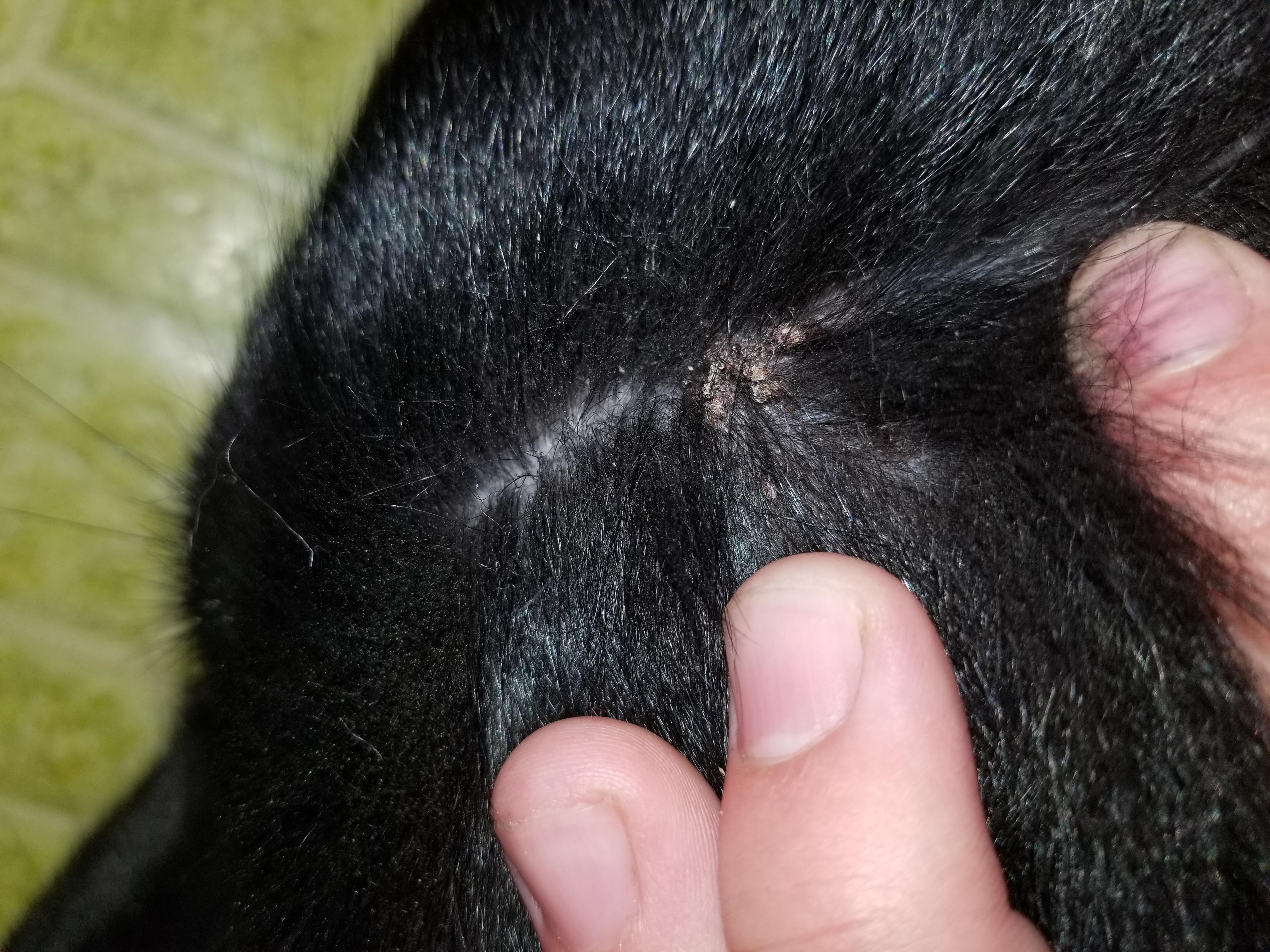
My dog has hard brown bumps on his head, but they don't bother him?
Updated On September 23rd, 2025
Pet's info: Dog | Mixed Breed Large (61lb +) | Male | unneutered | 1 year and 9 months old | 80 lbs
My dog has raised bumps or wounds on top of his head. They are really hard, and it doesn't seem to bother the dog. They look to be brown or gray should I be worried, and what is it?


4 Answers
Most Helpful Answer

Published on June 23rd, 2017
This is probably due to an allergy, although it could also be infection or mites. First of all, in order to rule out skin parasites, you will need to treat with a high quality flea treatment (advocate or advantage), then ask the vet to perform a skin scrape - this might reveal an infection or a mite infestation. If all of those came back negative, the next step is to treat the allergy symptomatically and try to discover the cause of the allergy. Three main type of allergies are usually affecting pets: food allergies, flea and parasite related ones and environmental type (allergens coming from trees, pollens, dust etc etc). Some medications can be given by the vet in order to repair any possible skin lesions (like steroids and antibiotics). Please do not hesitate to contact us again on the forum or by requesting a consultation if you have any more questions or to discuss it any further.

31Pet Parents found this answer helpful
Related Answers from Veterinarians
-
Published on January 23rd, 2018
This is probably due to a severe allergy, although it could also be fleas or mites. First of all, in order to rule out skin parasites, you will need to treat Kane with a high quality flea treatment (e.g. advantage), then get him to the vet to perform a skin scrape - this might reveal an infection or a mite infestation. If all of those came back negative, the next step is to treat the allergy symptomatically and try discovering the cause of the allergy. Some medications can be given by the vet in order to repair the skin lesions (steroids and antibiotics). simultaneously you should start him on a prescription hypoallergenic diet for at least 2 months. Hopefully you will see some results after all this, if not you and your vet should consider putting him on a long term allergy treatment (Atopica or Apoquel).
1Pet Parents found this answer helpful
-
Published on August 27th, 2018
This is probably due to an allergy, although it could also be infection or mites. First of all, in order to rule out skin parasites, you will need to treat with a high quality flea treatment, then ask the vet to perform a skin scrape - this might reveal an infection or a mite infestation. If all of those came back negative, the next step is to treat the allergy symptomatically and try to discover the cause of the allergy. Three main type of allergies are usually affecting pets: food allergies, flea and parasite related ones and environmental type (allergens coming from trees, pollens, dust etc etc). Some medications can be given by the vet in order to repair any possible skin lesions (like steroids and antibiotics). Hope this answer was helpful, but please do not hesitate to contact us again on the forum or by requesting a consultation if you have any more questions or to discuss it any further.
1Pet Parents found this answer helpful
-
Published on February 19th, 2017
This is probably due to a severe allergy, although it could also be fleas or mites. First of all, in order to rule out skin parasites, you will need to treat with a high quality flea treatment (advocate or advantage), then get him to the vet to perform a skin scrape - this might reveal an infection or a mite infestation. If all of those came back negative, the next step is to treat the allergy symptomatically and try discovering the cause of the allergy. Some medications can be given by the vet in order to stop the chewing and repair the skin lesions (steroids and antibiotics). There is also a nice topical spray available, it's called Cortavance and you can get it at the vets. Hopefully you will see some results after all this, if not you and your vet should consider starting on a long term allergy treatment.
3Pet Parents found this answer helpful



My dog developed these bumps on his head. They’re not itchy, no discharge or anything. He doesn’t seem to mind them. No changes in his diet, exposure to new environment. These bumps just appeared this morning. What could these possible be? Thank you

My dog keeps getting spots(like bumps), last time I took to vet was given an injection and cefabactin. All cleared up but after another month they seem to come back again. Giving him a wash with a medicated shampoo as well. He suffers from environmen

My pitbull has bumps all over her skin. They don't seem to itch her but still very concerned. Please help!
My dog has bumps in her fur started off just on her back now they have grown everywhere. She just had puppies and one of them have some in his coat as well. Just wondering on what I should get them?
My puppy is having so much bumps all over the body what's the cause of it.. Its not getting cured
These cyst like bumps have recently started appearing on my 4 month old puppy. I would like to maybe have a general idea of what they may be and what should I do?
Hi I’m reposting this post with photos included please let me know how the bumps look like. My dog has a red lumps under her neck. It doesn’t discomfort her but the lumps feel like it’s hard and hairless, I’m planning to wait and see & she did have s
I recently took this dog from someone who wasnt taking care him he almost bald itches constant till blood brwn stuff from ear and bump on his upper gum i asked previous owner they said dr says it just allergies i dont think so it bad

My german shepard has three little pimples about 8 inches apart on his back that he scratches they don't look red

Hunter has had these red bumps for about 2 days. Doesn’t seem to bother him, I’ve tried home remedies to calm them down as far as oatmeal bath, apple cider vinegar nothing seems to help it. I’ve also looked for ticks and fleas don’t seem to see any
Book an appointment with the pros – our expert vets are here to help.
