


My cat's losing fur, has red scabs on her back. Is it ringworm?
Updated On September 23rd, 2025
Pet's info: Cat | Mixed Breed | Female | spayed | 7 years old | 10 lbs
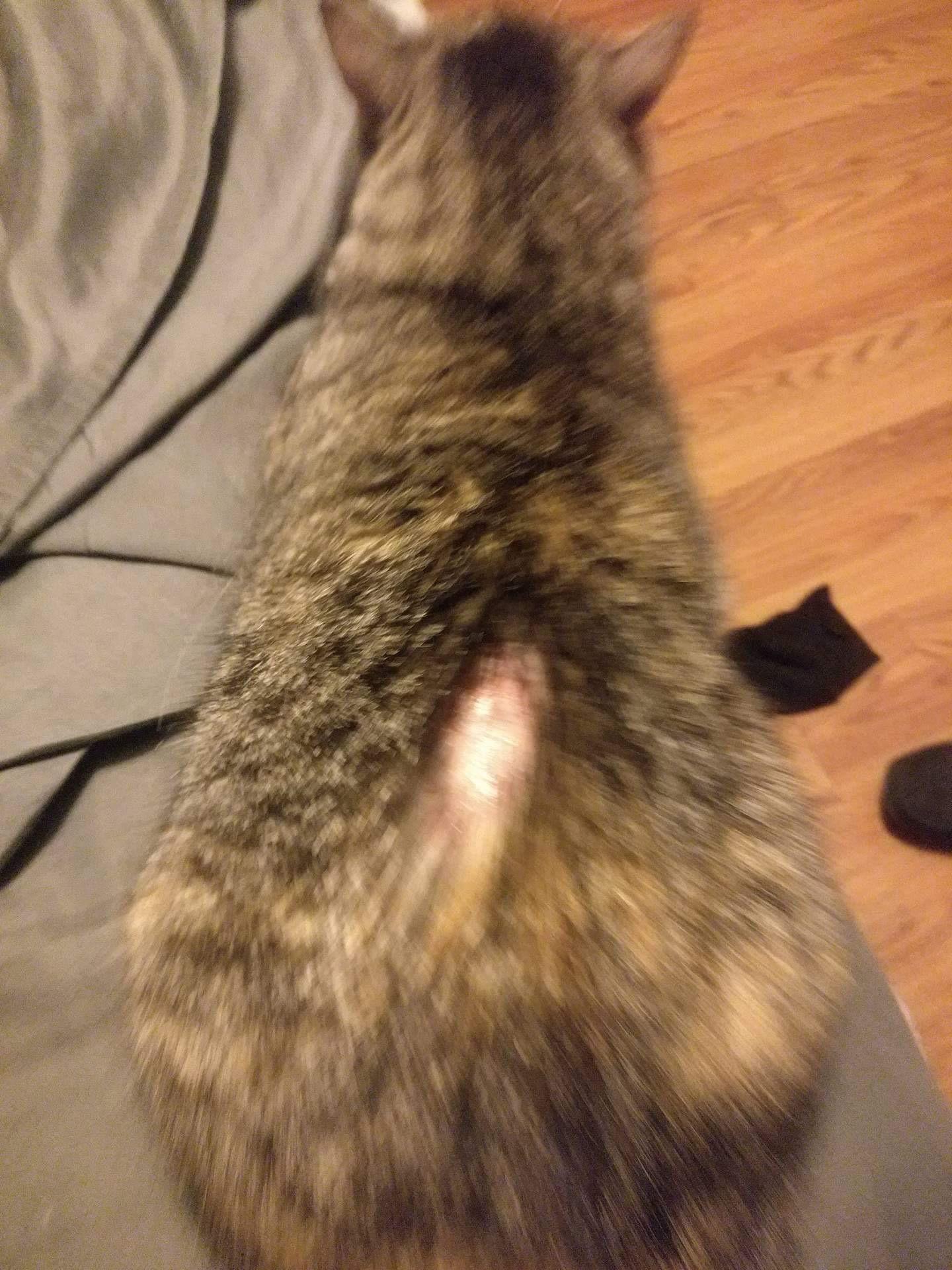
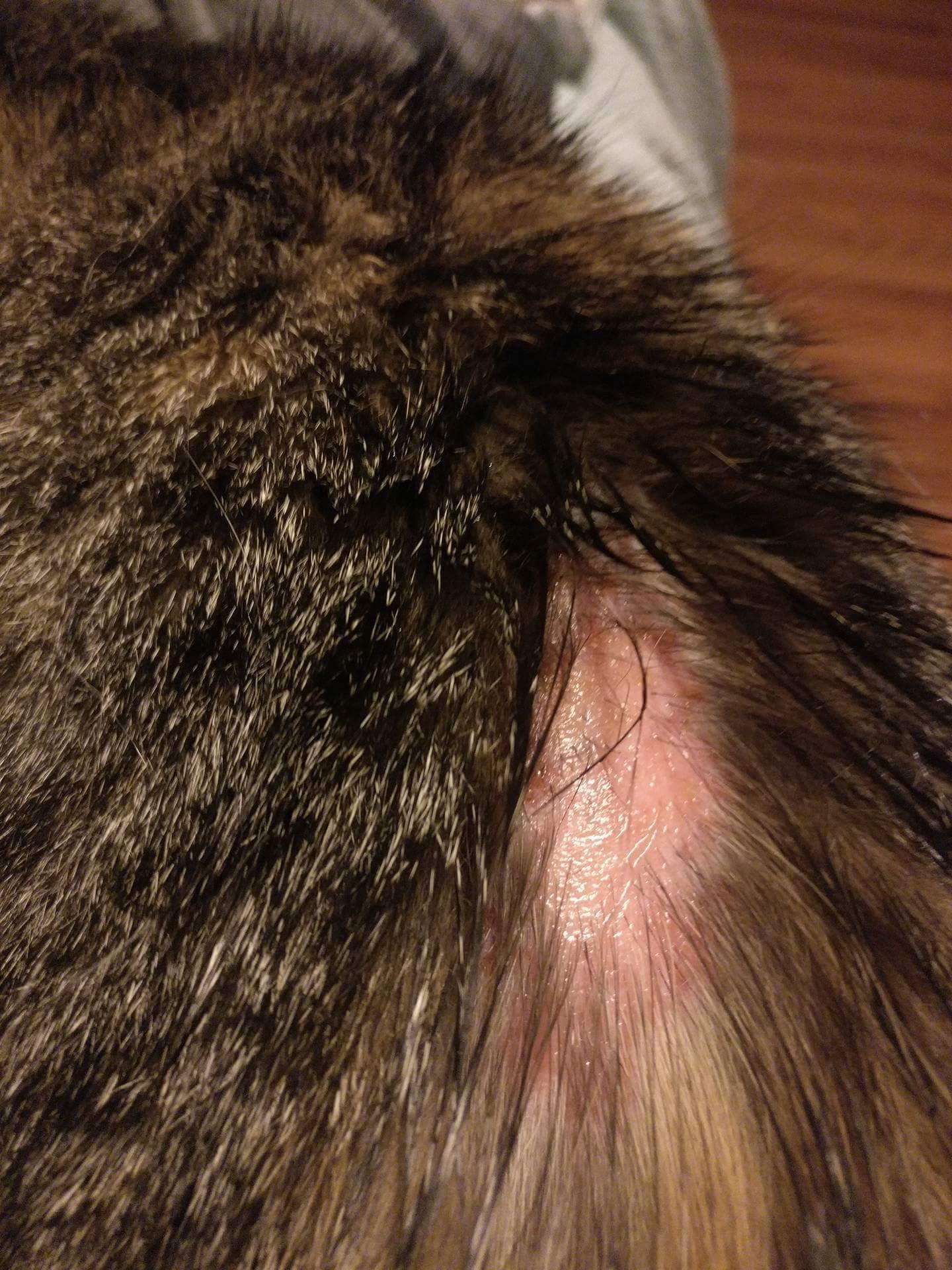
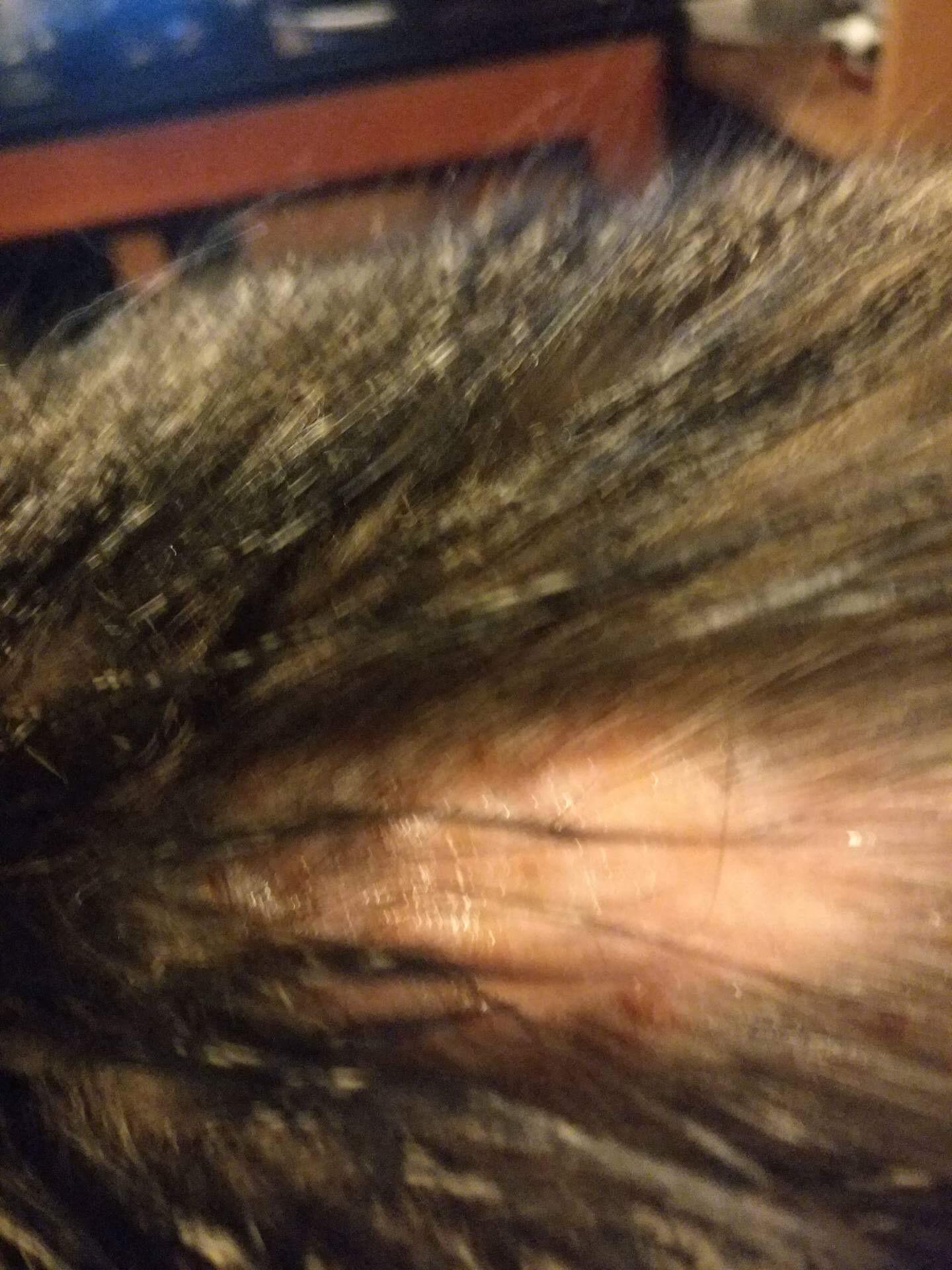
My cat is losing fur and her skin is red with scabs on her lower back. She's also twitches in the area. I've been told it's possibly ringworm. I would appreciate any help.


4 Answers
Most Helpful Answer

Published on May 11th, 2017
Ringworm typically presents as lesions on the head and face. This area looks more indicative of a flea allergy or stress related licking. Cats with fleas will often develop an allergy where they start to lick and chew at the area on their lower back. This condition usually requires the cat be treated for the fleas and medication to reduce the itchiness. This could also be compulsive licking or another type of skin infection/allergy. I recommend having her seen by a veterinarian when possible for an exam and treatment. You may want to put a cone on her if she is licking the area to prevent her from further irritating it.

16Pet Parents found this answer helpful
Related Answers from Veterinarians
-
Published on January 9th, 2018
Poor Gitch! It is difficult to say for sure from just a picture whether or not this is ringworm. Unfortunately, local bacterial infections and hot spots can look very similar. Ringworm is usually crusty and raise along the edges. If it looks like that, you could try an anti-fungal cream on it twice a day to see if it improves. You may need to place a cone collar on her to prevent her from licking. If she has multiple lesions or it isn't improving, I would have your vet take a look at it. Your vet will be able to see whether or not it is actually ringworm and whether she needs oral anti-fungals, antibiotics or stronger allergy medicine. In the meantime, you can give her benadryl twice a day to help control the itching. See link below. Also, make sure you wash your hands thoroughly after handling her as ringworm in cats is contagious to humans. I hope this helps! https://www.petcoach.co/canigive/cat /benadryl
1Pet Parents found this answer helpful
-
Published on January 7th, 2018
Poor Taba! These look like severe hotspots which are ulcerated area caused from excessive scratching. She likely is having a bad reaction to fleas, allergies, or it could have just been a small wound that has progressed due to her messing with them. This could also be secondary to mange. It doesn’t look like typical ringworm which is usually really crusty. I would put a little neosporin on those areas and if she will let you, put a cone collar on her to prevent her from licking/scratching those areas. I would also try to confine her to an area so the cone collar doesn’t get hung up somewhere and so the wounds stay clean. I would not use hydrogen peroxide again as it will slow healing if used continuously. You can try giving her Benadryl to help reduce the itching. See link below. Your vet will be able to get her a steroid shot and antibiotics to help these area heal. Your vet will also be able to look for the cause and see if she needs to be on a high quality flea preventative or other long term allergy meds. I hope this helps and she starts to feel better soon! https://www.petcoach.co/canigive/cat/benadryl/
1Pet Parents found this answer helpful
-
Published on July 18th, 2019
Shima could have a condition called ringworm which can spread to humans. There could also be something like an abscess beginning to form or she could have somehow injured that area. I do recommend to have her examined by the veterinarian as soon as you can get her there. Otherwise you do need to prevent her from licking the area since this will make it worse. Have her wear an Elizabethan collar at all times. I hope this helps and please feel free to post any additional questions.
1Pet Parents found this answer helpful



My cat (10yrs) has a bald patch on her upper back (lower neck), the size of a thumb finger and it’s only getting redder. Her red exposed skin also appears wet. what could this be? She’s not on any medication and I’ve searched for fleas

My cat has red moist lesions on her face, side neck. And one on back of neck. She is 10 years old. I was looking at ringworm pics. But they don't look like what she has

Hi My adult cat just had some fur fell of on her skin near her eye. She scratched it off I think but I saw no flakes or redness that shows the signs of ringworm, what should I do?

Hi! I've noticed kitty has a small scabby patch near where her collar was. She was adopted from the pound about 2 weeks ago. The scabby area started dime-sized but has doubled since. Its not bloody but dry and flakey, she doesn't have large amounts o
My cat has been scratching his face alot lately. He scratches once in a while and will get a few cuts but today i noticed a round dry scabby patch. There is no missing hair from it. Can this be a ring worm? I have another cat and a dog that show no s

My cat has a few red scabby spots specifically one big one on her neck about the size of a quarter with some Bald area around it. its not moist and doesn't appear to be hurting her what should I do?

Shima is my foster cat and we can't get her to the vet till next week she had this worrying red patch on her back yesterday which isn't red anymore but I would like to know what you think it could be. There is no swelling or bumps or spots it just l

My female cat has just dropped a litter of 3 kittens. She has some kind of rash on her neck mostly, but it seems to be spreading just a little. It is red and itchy patches , of what looks like flaky skin. I have treated her for fleas, but it's still
Our kitten had this scab for about less than 2 weeks and there was no way to remove it. I couldn’t see it, only feel it and it kept getting bigger by the day. So I was just able to with a baby wipe and observe her and noticed she’s missing a patch of
My cat has a quarter size patch of fur missing from his neck. This is the second time in a year it has happened. What's wrong?

Book an appointment with the pros – our expert vets are here to help.
