


My dog is licking paws and chest with a rash. Benadryl isn't working.
Updated On September 23rd, 2025
Pet's info: Dog | Mixed Breed Small (up to 22lb) | Female | spayed | 6 years old | 15 lbs
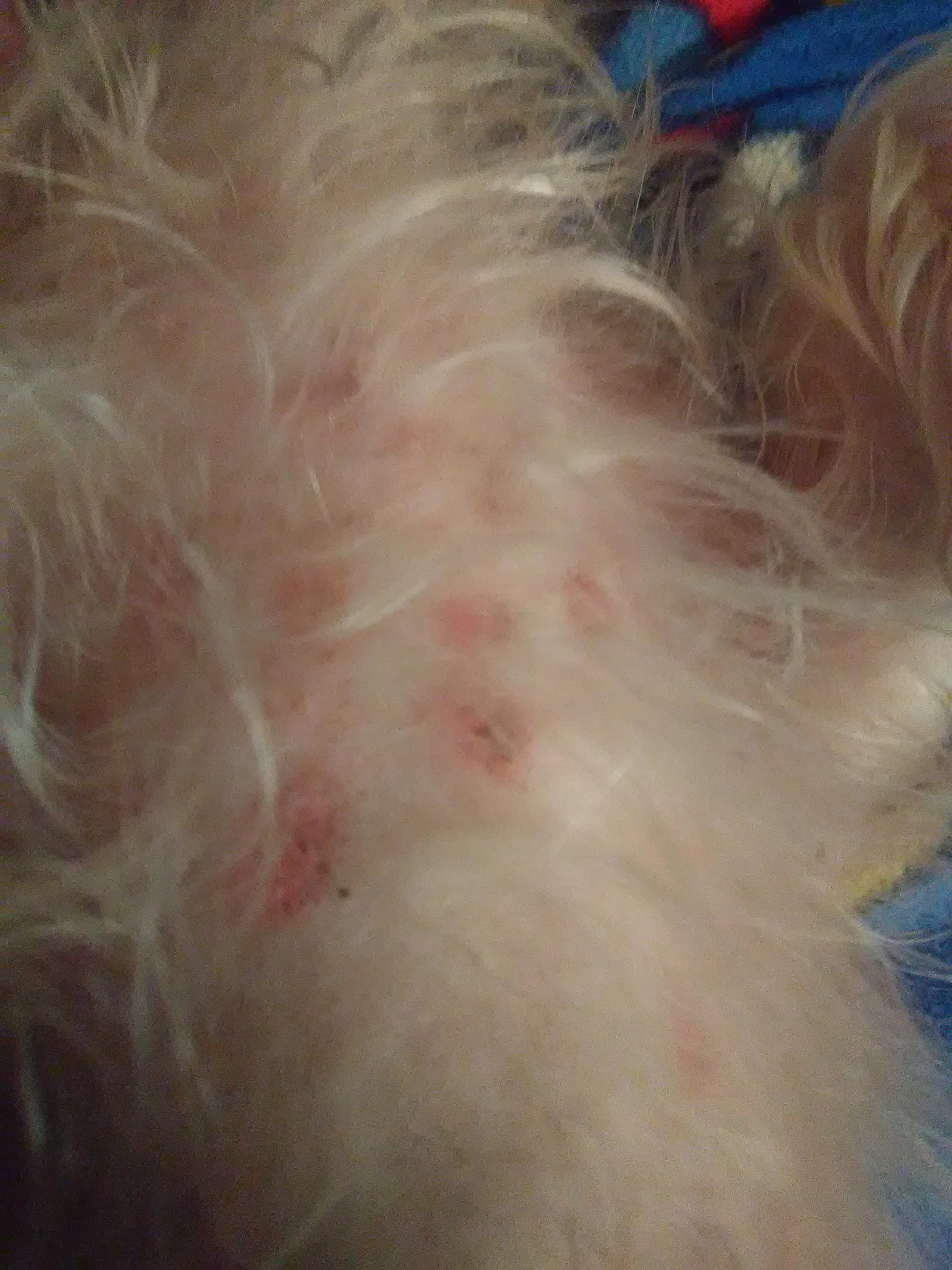
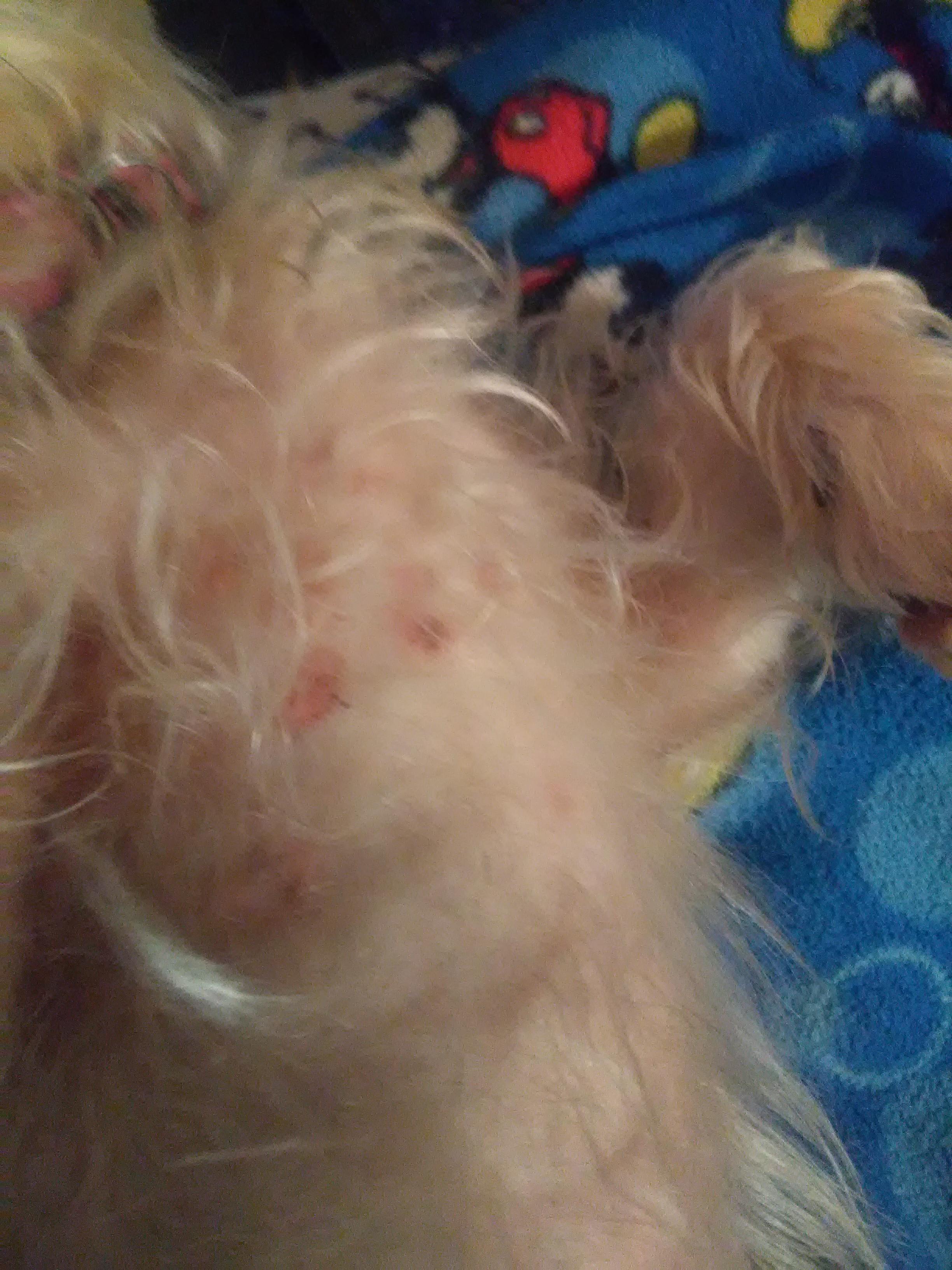
Hello. Our dog has been licking her chest and paws a lot. I believe it's allergies. We have given her benadryl for a few days but her rash is still there and she is still licking it. Could you recommend some treatments for this? I would appreciate it. She is a Morkie and 5 years old.


5 Answers
Most Helpful Answer

Published on May 7th, 2017
Allergies are certainly suspected since Molly has been licking at her paws and chest. The most common underlying causes of allergies are related to fleas, food or the environment. When dogs lick or scratch excessively, they can cause skin infections to develop, which are also itchy and create a vicious cycle. The appearance of Molly's red and crusty skin lesions are suspicious for the presence of a skin infection, which require oral antibiotics for treatment. Make sure that she is receiving a high quality flea preventative (such as Nexgard, Bravecto or Advantix) regularly and take her to the vet for an exam. The vet will be able to prescribe any necessary medications (likely antibiotics and anti-itch medications) to help. You can also try giving her baths in a gentle oatmeal based dog shampoo. Until you can take her to the vet, put an e-collar (cone) on her to prevent further skin damage from licking. I hope that she is feeling better soon!

3Pet Parents found this answer helpful
Related Answers from Veterinarians
-
Published on
Poor Molly! She sounds very uncomfortable. If the Benadryl isn't working, then she needs to see a vet for stronger medications to treat the rash such as steroids. I would take her into the vet first thing in the morning. Tonight, you can give her an oatmeal or Epsom salt bath which may temporarily give her some relief from the itching. I would also put an Ecollar on her to keep Molly from licking at it and making it worse. I will put a link below on how to make one at home: http://dogsaholic.com/care/homemade-dog-cone.html
1Pet Parents found this answer helpful
-
Published on May 16th, 2017
Riley definitely sounds quite uncomfortable. The best medications available to prevent and address itching and scratching are prescription only, but I assure you are much more effective at controlling the issue than Benadryl. Based on the distribution of the scratching, I believe it is possible Riley could be suffering from a food allergy. You should consider placing her on a new diet with a brand new protein. Many of the prescription only diets contain single proteins (meaning there is no by products of any other meats at all). Your veterinarian will be able to provide you with information on these products, and issue you a prescription to the pharmacy of your choice to purchase it. In terms of addressing the itching right away, your vet should prescribe a medication call Apoquel or Cytopoint. One of them is a daily oral while the other is a month injectable. An e-collar might also be necessary at first in order to prevent Riley from causing any more damage to herself. If you choose to undergo a food trial, it should be done for at least 6-8 weeks without feeding ANY other protein. While I understand this is difficult, any small amount of protein that is not the novel one has the potential to throw off the entire trial. Good luck with Riley and her itchiness!
2Pet Parents found this answer helpful
-
Published on April 25th, 2020
You can try Benadryl 1mg per each pound of body weight every 8-12hrs for 2-3 doses. Shampoos are usually not very effective to treat allergic reaction. It is not going to be harmful to use soothing shampoo but do not expect much from that. Please, try to stop Cricket from licking and scratching. You can use head cone or put a small/baby t-shirt on her. If after 24hrs she is not any better, please take her to your local vets.
1Pet Parents found this answer helpful
-
Published on September 7th, 2018
I certainly think it’s worth bringing up to your vet. Licking the front paws can be a sign of a food or environmental allergy, and allergies can develop at any time even if she’s been on the same food. Depending on the severity of symptoms and whether or not Molly has any skin changes your vet might recommend simply monitoring, topical therapy, or even allergy testing or medications.
1Pet Parents found this answer helpful



I just noticed my dogs paws and chest that I can see are all of sudden red or really pink down by his growing area looks a little pinker than normal but not to bad and last night around this time I noticed his chest was real pink but didn't notice it

My dog keeps scratching herself. So bad that she now has patches. I was told to try Benadryl and I also bought a lavender anti itch shampoo and conditioner. Nothing seems to be helping. I have no idea what’s wrong. Please help.

My dog is licking and biting his leg in one spot and it doesn’t seem to be hurting him but now the hair around the area is gone. Do you think it could be an allergy thing and if so can I give him Benadryl until I can get to a vet? He is about 65 lbs.
My dog has a rash on her stomach, legs and armpits. It’s red and blotchy and very itchy, not raised at all. I was instructed by the vet to be giving her Benadryl for seasonal allergies which I started a few days ago once her itching became worse. I’m
My lab/retriever mix (Ellie Mae)has recently shown redness around the eyes, paws and side lips. She scratches a lot. I have given her 50mg of benedryl every 12 hours and it helps, but the redness keeps returning. She eats grain free Merrick cans and
I have a seven year old lemon beagle who's constantly biting scratching and licking all over. Her skin is extremely red, she's lost a good bit of hair, has scaly skin that flakes off and bites and scratches herself until she bleeds. She's also consta
Hello, I have an 11 year old pug who is really itchy. He is constantly licking his paws. This had been going on all winter and since we are in Minnesota it can get really dry. He has a black hairless patch on his left front paw now and underneath it
My dog is itching and chewing around is mouth and genital area. He has bumps and pimple like spots on his mouth and a rash on his thighs,testicles, and a swollen bump on the tip of his penis. He also is licking his paw and it look a like he chewed sk
Ear flapping/scratching and paw licking till stained. No bumps or rashes or scabs. No intense/constant scratching. Took dog to vet and given MalAcetic Otic for ears for infection and revolution in case of scabies. Revolution given on Friday and today

My dog has seasonal allergies that I can usually control with benadryl and washing him once a week but he seems to be having a bad bout. I added omega 3 supplements to his diet and have been spraying him with "veterinary formula clinical care antisep

Book an appointment with the pros – our expert vets are here to help.
