


Why are my intact female dog's nipples big like she's nursing puppies?
Updated On September 23rd, 2025
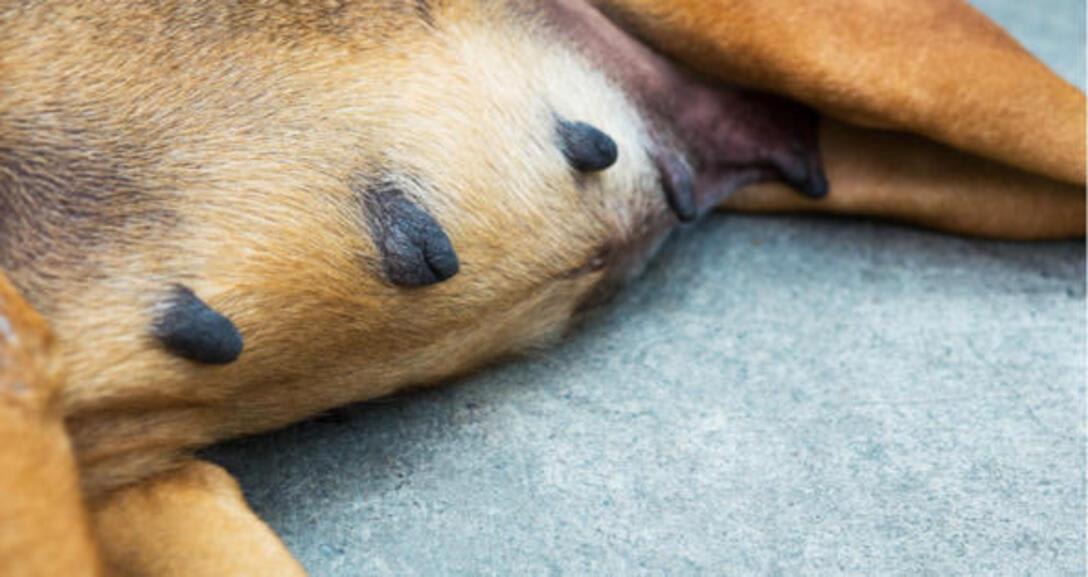
I have a female dog who has very enlarged teats. She looks like she is nursing a litter of pups. She has never had a litter and is an intact female.


5 Answers
Most Helpful Answer

Published on April 15th, 2015
[False pregnancy](https://www.petcoach.co/article/false-pregnancy-in-dogs), or pseudopregnancy, is a term used to describe a common condition in a non-pregnant female dog that is showing symptoms of [pregnancy](https://www.petcoach.co/dog/condition/pregnancy/), lactation, or nursing, without producing puppies. The affected female dog shows these symptoms about a month or two after her estrus (heat) is over. A hormonal imbalance is thought to play a central role in affected female dogs. Depending on the severity of problem, the symptoms may last for more than a month. Unless symptoms persist, treatment is typically unnecessary. Otherwise, your veterinarian may recommend hormonal supplementation or spaying to prevent further episodes. To reduce mammary gland secretions, your veterinarian will advise you on using cold or warm packs to minimize the stimulation that promotes lactation. An Elizabethan collar (cone) can also help prevent the self-nursing or licking behavior that can stimulate lactation. In some patients, reducing the daily food intake can help to reduce the production of milk. If you are not planning to breed your dog and do not want her to reproduce in the future, [spaying](https://www.petcoach.co/article/5-great-reasons-to-spay-or-neuter-your-pet) is recommended for preventing future episodes of false pregnancy behavior. The overall prognosis is good and most dogs improve within two to three weeks, even without treatment.

49Pet Parents found this answer helpful
Related Answers from Veterinarians
-
Published on May 16th, 2015
She could have a false pregnancy. False pregnancy, or pseudopregnancy, is a term used to denote a common condition in a non-pregnant female dog that is showing symptoms of pregnancy, lactation, or nursing, without producing puppies. The affected female dog shows these symptoms about a month or two after her estrus (heat) is over. A hormonal imbalance is thought to play a central role in affected female dogs. Depending on the severity of problem, the symptoms may last for more than a month. Unless symptoms persist, treatment is typically unnecessary. Otherwise, your veterinarian may recommend hormonal supplementation or spaying to prevent further episodes. To reduce mammary gland secretions, your veterinarian will advise you on using cold or warm packs to minimize the stimulation that promotes lactation. An Elizabethan collar (cone) can also help prevent the self-nursing or licking behavior that can stimulate lactation. In some patients, reducing the daily food intake can help to reduce the production of milk. If you are not planning to breed your dog, and do not want her to reproduce in the future, spaying is recommended for preventing future episodes of false pregnancy behavior. The overall prognosis is good and most dogs improve within two to three weeks, even without treatment.
29Pet Parents found this answer helpful
-
Published on February 1st, 2017
It could be that Sasha is experiencing another false pregnancy. It could also be that she is pregnant if she has been around an entire male dog. I would have her seen by a vet today or tomorrow to confirm that she is having another false pregnancy or if she is pregnant. Should she be experiencing another false pregnancy, I would recommend having her spayed. It seems to be a continual problem with her, and spaying her would prevent them from happening again. In addition, it would eliminate the possibility of her developing a pyometra, which is a life threatening infection of the uterus. You can speak to your vet about having her spayed.
1Pet Parents found this answer helpful
-
Published on July 23rd, 2021
Hi and thanks for your request bout Bonnie's problem. These signs are typical of phantom pregnancy especially considering lack of mating, presence of enlarged nipples secreting milk (you are right about the milk production just before birth). False pregnancy, or pseudopregnancy, is a term used to denote a common condition in a non-pregnant female dog that is showing symptoms of pregnancy, lactation, or nursing, without producing puppies. The affected female dog shows these symptoms about a month or two after her estrus (heat) is over. A hormonal imbalance is thought to play a central role in affected female dogs. Depending on the severity of problem, the symptoms may last for more than a month. To reduce mammary gland secretions, your veterinarian will advise you on using cold or warm packs to minimize the stimulation that promotes lactation. An Elizabethan collar (cone) can also help prevent the self-nursing or licking behavior that can stimulate lactation. In some patients, reducing the daily food intake can help to reduce the production of milk. If you are not planning to breed your dog, and do not want her to reproduce in the future, spaying is recommended for preventing future episodes of false pregnancy behavior. The overall prognosis is good and most dogs improve within two to three weeks, even without treatment. Blood stained mucous is slightly more concerning though as there may be a uterine infection going on combined with the false pregnancy. In this case I would recommend a check up in this case. Hope this answer was helpful, but please do not hesitate to contact us again on the forum or by requesting a consultation if you have any more questions or to discuss it any further. If this answer was helpful please let us know, this will be used to improve our service!
1Pet Parents found this answer helpful
-
Published on May 31st, 2015
If your dog is intact, not pregnant, she could be experiencing a flase pregnancy. False pregnancy, or pseudopregnancy, is a term used to denote a common condition in a non-pregnant female dog that is showing symptoms of pregnancy, lactation, or nursing, without producing puppies. The affected female dog shows these symptoms about a month or two after her estrus (heat) is over. A hormonal imbalance is thought to play a central role in affected female dogs. Depending on the severity of problem, the symptoms may last for more than a month. Unless symptoms persist, treatment is typically unnecessary. Otherwise, your veterinarian may recommend hormonal supplementation or spaying to prevent further episodes. To reduce mammary gland secretions, your veterinarian will advise you on using cold or warm packs to minimize the stimulation that promotes lactation. An Elizabethan collar (cone) can also help prevent the self-nursing or licking behavior that can stimulate lactation. In some patients, reducing the daily food intake can help to reduce the production of milk. If you are not planning to breed your dog, and do not want her to reproduce in the future, spaying is recommended for preventing future episodes of false pregnancy behavior. The overall prognosis is good and most dogs improve within two to three weeks, even without treatment.
8Pet Parents found this answer helpful



My dog has yellow liquid coming from her teets is this normal

My female pitboxer just went out of heat like a month and half ago and I believe she is going through false pregnancy. Ive noticed that her nipples got really dark, crusty, and saggy. My question is what could be wrong with her? They are definitely a

I have a 10 month old peagle. She got her first period 2 months ago. Recently her nipples swelled and she vomited occasionally. Today I noticed that she has nipple discharge. She was in contact with a male dog but they never mated. Could this be a fa
We recently went to the vet at the end of May because my puppy was scratching a lot and we got medication to control it. The vet noticed she was in heat still. Now its 18 days later and we're wondering what is going on with her breast. They look a li

My dog has started whining non stop and licking her teats. She had a litter 14 months ago, now her teats are leaking milk. She isn't pregnant.

I have a female American red nose pitbull, she is 3 years old and has been nursing off herself for about 2 weeks now. She hasn't come in contact with any other dog except through fencing. I know she's not pregnant so why is she doing this.
My dog was in heat about two weeks ago, now her nipples are harder/bigger and she is restless, and she licks her vulva, could she be pregnant?

I just found my dog sucking on her nipples as if something is coming out. Why is she doing that? Please help.

Hi, we have a 2yr old shihpoo who’s lactating but is not pregnant. We only have 2 female dogs and they’re both inside dogs so we’re sure that it’s possible that she’s pregnant. But our worry is that, the discharge is liquid but a little yellowish/gre
My dog has milk coming from her nipples. Does this mean that she is pregnant? If not, what does it mean? She isn't due to be in heat for a few months.

Book an appointment with the pros – our expert vets are here to help.
