


My senior cat has a black growing scab on her nose. What should I do?
Updated On September 23rd, 2025
Pet's info: Cat | American Shorthair | Female | spayed
My cat has a black growing scab on her nose. She is 14 years old. I do have pictures..
2 Answers
Most Helpful Answer

Published on May 2nd, 2016
Dark scabby areas on the head and necks of cats are often attributable to a complex known as eosinophilic plaques. Many are allergic in origin, and respond to a change in diet (hypoallergenic diets such as those made with "novel" protein and carbohydrate sources or hydrolyzed diets such as Hill's z/d) and treatment with immunosuppressive drugs. Some studies also point to a tie-in with feline herpes virus. Diagnosis is made via biopsy. These lesions can occur on the lips, inside the mouth, just about anywhere on the head or on the pads of the feet. I've also seen them on the abdomen. Again, it's really important to get a biopsy done, because the appearance can mimic some cancers (squamous cell carcinoma) and also some fungal diseases that are quite serious.

8Pet Parents found this answer helpful
Related Answers from Veterinarians
-
Published on
I strongly recommend to get this assessed by a vet as soon as possible and they may wish to sample this with a needle, scrapes orr biopsy. Any skin lumps, wounds or lesions which are growing or changing quickly in size, colour or discharge in older pets are always a major concern
6Pet Parents found this answer helpful

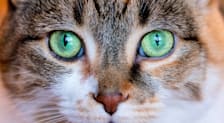
My 14 year old male cat has had a black scab on the end of his nose that hasn't healed in years. Maybe every 3 months it will come off and his nose looks pink and hairless but the scab comes back within a day or two. He was born and raised as a barn

my white cat is 7-8 years old and is out doors all of the time and recently starting showing little scabs all over her nose. and I also just notice she has a large black area on the side of her mouth.

Hi, I have a 14 year old female cat, she has some kind of skin problem on her face (over her nose area) the fur has all gone and its very scabby, I have attached a photo? she had it for quite sometime but has recently got much worse. I intend to ta

My kitty had a tiny knot of the back of his neck that has grown into a huge scab. Very circular. He also has scabs on his nose.

My cat Has black scabs on the side of it's nose that keep coming back. No discharge
Cat has small hard black scab like bump on her nose. Is this symptoms of cancer?tks
Hi, my aunt lives in France and adopted a pair of kitten siblings who are now 10yo. Both started growing scabs on their noses a few months ago, getting much larger past 1-2mo. Both are indoor/outdoor. Female is most pronounced: sensitive to the touch
My white cat, Naomi has a black scab on her nose area. It appeared out of no where, she was fine in the morning & 2 hours later, she was sunbathing & I saw the black scab was already there. Could it be solar dermititis? Or something else? She never h
She had a huge scan on her nose, then when she knocked it off this happened, whats happening to my cats nose
Hello my name is Stephanie, for the past 2 years now (my cat is 3) my cat has been getting scabs on her nose. That cause he nose to bleed and cause fur to come off on her nose. It usually comes and goes but each time it gets worse and worse. I think
Book an appointment with the pros – our expert vets are here to help.
