Toy Group
The diminutive size and winsome expressions of Toy dogs illustrate the main function of this Group: to embody sheer delight.
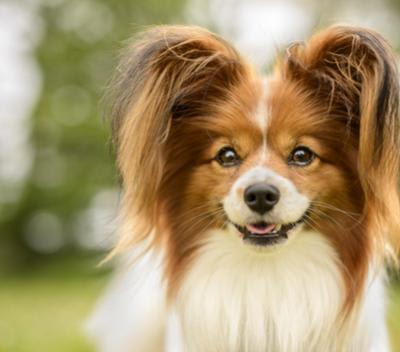

Papillons are an active breed with buckets of personality and a famous history in the arts. The Old Masters loved the toy spaniel predecessors of the Papillon for its obedience and expressiveness – perfect traits for a painter’s model. Today, the Papillon has a loyal following across North America and Europe. Expect a loving companion with a happy and friendly demeanor. Since the breed can suffer from shyness and aggressiveness without proper socialization, it’s important to invest in early socialization and a reputable breeder.
Origin: France, Spain, Belgium Other Names: Butterfly dog, Continental Toy Spaniel, Epagneul Nain, Squirrel Dog

The diminutive size and winsome expressions of Toy dogs illustrate the main function of this Group: to embody sheer delight.
Don't let their tiny stature fool you, since many Toys are tough as nails! If you haven't yet experienced the barking of an angry Chihuahua, for example, well, just wait. Toy dogs will always be popular with city dwellers and people without much living space. They make ideal apartment dogs and terrific lap warmers on nippy nights.
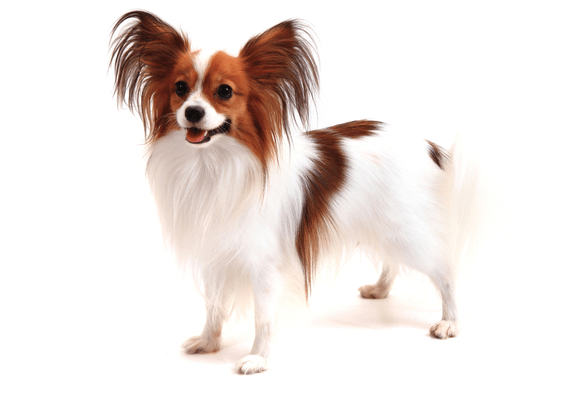
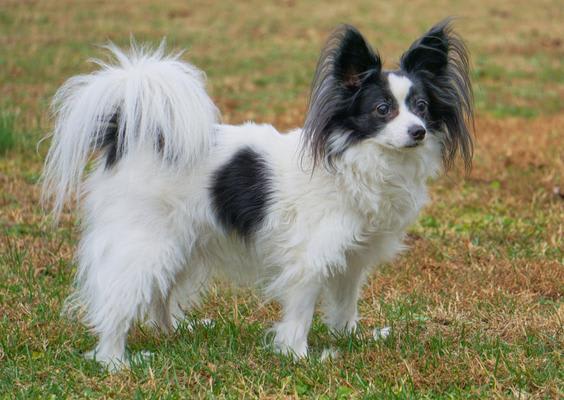
The American Kennel Club (AKC) recognizes 5 coat color combinations. For competition, your Papillon must be white & black, white & lemon, white & red, white & sable, or white, black & tan. Other common colors are pure colors (white, sable, red) or coats with silver, liver or fawn.
The breed takes its name from the French word for “butterfly” in reference to the fringed hair on the ears. With a small head and short muzzle, the Papillon ends up with a well-defined expression of alertness and happiness. The long tail carries high over the body, and they appear small and fragile. Don’t let that fool you – these are robust dogs with a lot of energy and a need for speed.
This breed can be found in a variety of colors. You can check them out below.
Papillon are small dogs. They usually weigh between 7 and 10 pounds at a healthy size. Adult males range in height from 8 to 11 inches at the shoulder.
| Full Grown | |
|---|---|
| Female | 10 in. / 7 lbs. |
| Male | 11 in. / 10 lbs. |
Height is measured up to the shoulders.



Papillon are small dogs. Adult males range in height from 8 to 11 inches at the shoulder.
Papillon are small dogs. They usually weigh between 7 and 10 pounds at a healthy size.
Papillons are active and athletic, but they don’t take up a lot of space. Be sure to take your canine companion out for daily walks. You don’t need a big backyard, but don’t expect to keep your Papillon cooped up all day.
Papillons need a moderate amount of exercise, which is much more than a typical small breed. They have a moderate-sized gas tank and you need to get them out for a long walk or a run around the dog park every day. Without an outlet for their energy, your Papillon might develop behavioral or social problems.
Papillons are one of the most social breeds you can find. They enjoy the company of others including children and other pets. They might act like the boss, but they have a lot of love and affection to give. It’s good to expose them to a variety of people and environments early in life to build confidence and steady nerves.
If you want a fierce guard dog, you are looking in the wrong place. The Papillon is friendly and loving with human companions. They love to be around their family, so you won’t find them waiting at the door to ward off attackers. This is a dog for companionship, not protection.
Papillons are a great breed for families with children and other pets. They are very tolerant and willing to be handled. Very small children and people without dog knowledge should have supervision at first with any dog. The Papillon is gentle and friendly, so it generally makes a good family pet. Use caution if choosing a Papillon as a family pet with very small or overly rambunctious children due to their delicate stature.
Papillons love to learn tricks and please their owners with displays of brilliance and obedience. This breed can be prone to the “small dog syndrome” so it’s crucial to find the time to train and teach your dog proper habits. Early socialization and obedience training are key things to invest in early.
Papillons aren’t big shedders, but you can expect a light dusting of dog hair around your home. They lack an undercoat but those long, silky hairs will show up on carpet and furniture. Regular brushing and the occasional bath will help keep their hair healthy. If your Papillon experiences heavy shedding, it’s worth a trip to the veterinarian to make sure everything is okay health-wise.
Papillons do well in almost every climate. If you live somewhere very hot or very cold, it’s worth keeping a close eye on your dog’s behavior. If they are panting or shivering excessively, it’s time for a break. Papillons can stand up to almost every kind of weather and conditions that you might throw at them.
Papillons aren’t a chatty breed. They don’t often bark unless they are significantly alarmed. Excessive barking and aggressive behavior should be taken as a sign of mental, health, or social problems. If your dog is nervous and barks at everything, it’s time to hit the training books again.
Papillons are friendly and happy to spend time with their human companions. They might think they are the boss, but they are happy to share their love with you and your family. Early socialization and positive reinforcement should help you train your Papillon to respond appropriately to new situations and people.
While they might look fragile, the Papillon loves to be in the thick of the action with your family and friends at the dog park. They are athletic and versatile dogs with a need for speed. With championships on the obedience and agility circuits, the Papillon is an avid competitor and eager student. They don’t do well left alone for too long, and Papillons need a moderate amount of daily exercise to stay healthy and happy.
Papillons aren’t overly chatty with barking, but they will sound the alarm with a quick “hello” now and again. If you can, try to meet the parents or at least one parent of your new Papillon to get an idea what to expect. Early socialization and abundant love are key tools to reduce nuisance barking in your new companion.
Papillons are very intelligent and trainable dogs. It’s best to use positive reinforcement and love to reward the correct behaviors. They are smart enough to figure out what you want without resorting to negative training methods too often. Puppy kindergarten is always a good idea to develop good habits early in life. Papillons respond well to instruction, and they are eager to please their human companions. It’s up to you to develop a good temperament in your dog, so take your training regime seriously. Don’t overdo it with long sessions, but remember to stay on a regular schedule to reinforce good habits.
Papillons might look like purse dogs, but they are fearsome competitors on the track and field. Many Papillon athletes took home prizes in the last few decades of championship agility and obedience events. They love to be held and adored, but you shouldn’t let them go without daily vigorous exercise. Take advantage of their trainability and use their intelligence to make their playtime fun for the whole family. Learning new tricks and playing games are some of the Papillon’s favorite activities.
Papillons love to play with toys, but they can choke if you aren’t careful with your purchase decisions. It’s better to pick hard rubber toys over soft fabrics to avoid those little pieces sending you and your little dog to the vet.
Frisky, energetic breed that is always ready for action

Feeding a balanced diet with properly measured portions and avoiding excessive treats or table scraps are crucial to keep your Papillon at a healthy body weight.
As a toy breed dog, young Papillon puppies that skip meals or are fed infrequently can develop hypoglycemia, or low blood sugar. Be sure to feed your small Papillon puppy at least 4 times per day for the first few months, gradually decreasing to twice daily meals as your puppy ages.
Average daily consumption for an adult Papillon is 1/4 to 1/3 cup

Papillons are prone to developing patellar luxation, which occurs as the patella (kneecap) briefly moves out of place. For the infrequent severe cases of patellar luxation, surgery can be necessary. Since this condition can secondarily lead to the onset of arthritis, fish oil supplements can be beneficial to decrease associated inflammation.
Prior to breeding two dogs, responsible breeders make sure that their dogs have had genetic testing performed to ensure that the genes for neuroaxonal dystrophy and progressive retinal atrophy are not present. If these tests were not performed, you can speak with your veterinarian about having your Papillon tested, if desired.
Several health conditions have been identified in Papillons that are either inherited or occur at an increased frequency in the breed. Compared to other breeds, Papillons have relatively few associated health conditions. These conditions may include, but are not limited to, the following: Patellar luxation, Black hair follicular dysplasia, Congenital deafness, Neuroaxonal dystrophy, Cataracts, Micropapilla and Progressive retinal atrophy.
On average, Papillons live to be 13-15 years old.

The Papillon coat is long and fine with silken hair and no undercoat. Those famous butterfly ears have a delicate fringe to frame their cute face. Their plume tail sits high over the body with a proud posture. Lucky for you, this is a low-maintenance dog. Wash their fur as needed – they don’t commonly develop that classic dog smell found in many other breeds. It’s important to monitor their nails, eyes, ears and teeth for any problems. Small dogs are especially prone to dental problems, so make sure you get in there with a toothbrush daily or as often as you can.
Long

Occasional

Papillons shed a moderate amount, but nothing compared to a larger breed. They were bred to be elegant and cute, so the shedding and drooling are pretty minimal. If you stick to a regular schedule, it’s easy to keep their fur in top shape. Matting and hair loss are not common to the breed.
The artwork of great painters form the early historical record of the Papillon and early toy spaniels. Famous European painters such as Watteau, Rembrandt, Fragonard and Vicelli captured the breed on canvas as early as the 1500s. The Papillon often appeared in the arms of a queen or princess from the French, Italian and Spanish courts. By the end of the 19th century, the name “Papillon” had stuck and it became an iconic dog breed. Never confirmed, a rumor circulated that Marie Antoinette carried her beloved Papillon to the guillotine. The Papillon first earned its American registration in 1935 with official recognition from the AKC and the founding of the Papillon Club of America. It remains a popular breed in the US and around the world.