Working Group
Dogs of the Working Group were bred to perform such jobs as guarding property, pulling sleds and performing water rescues.
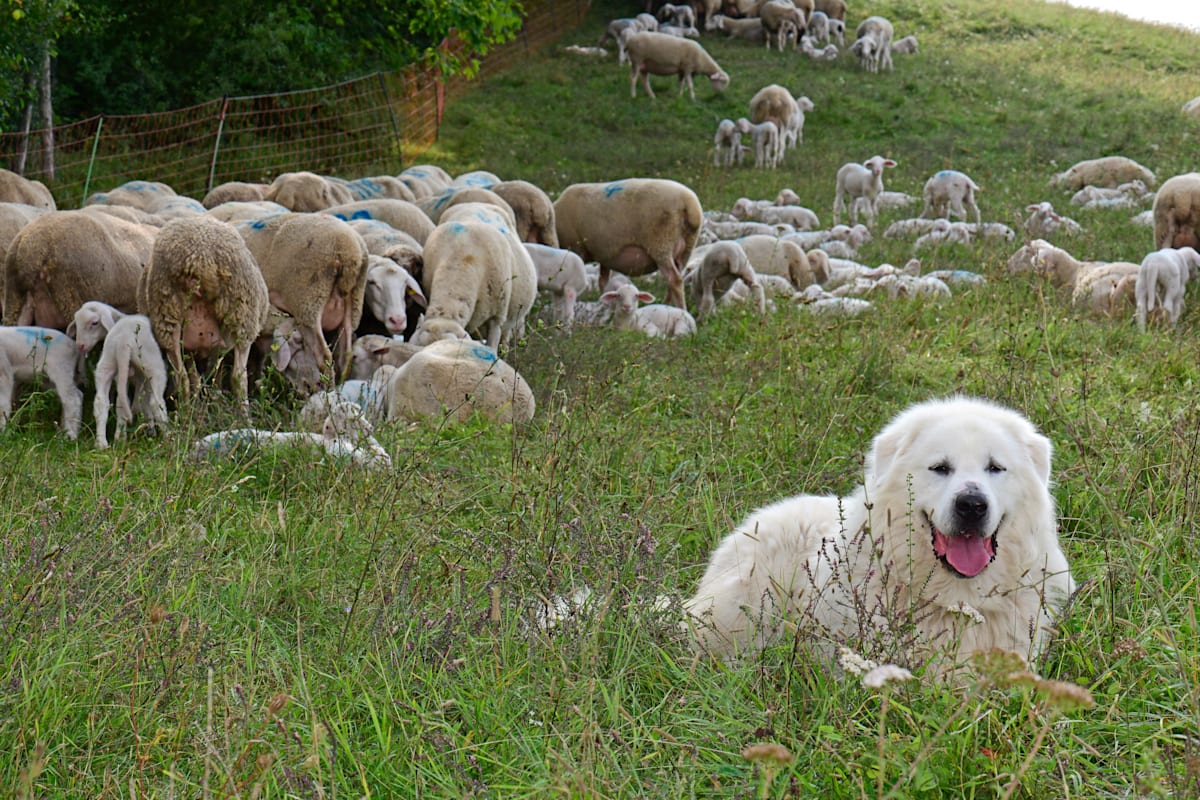
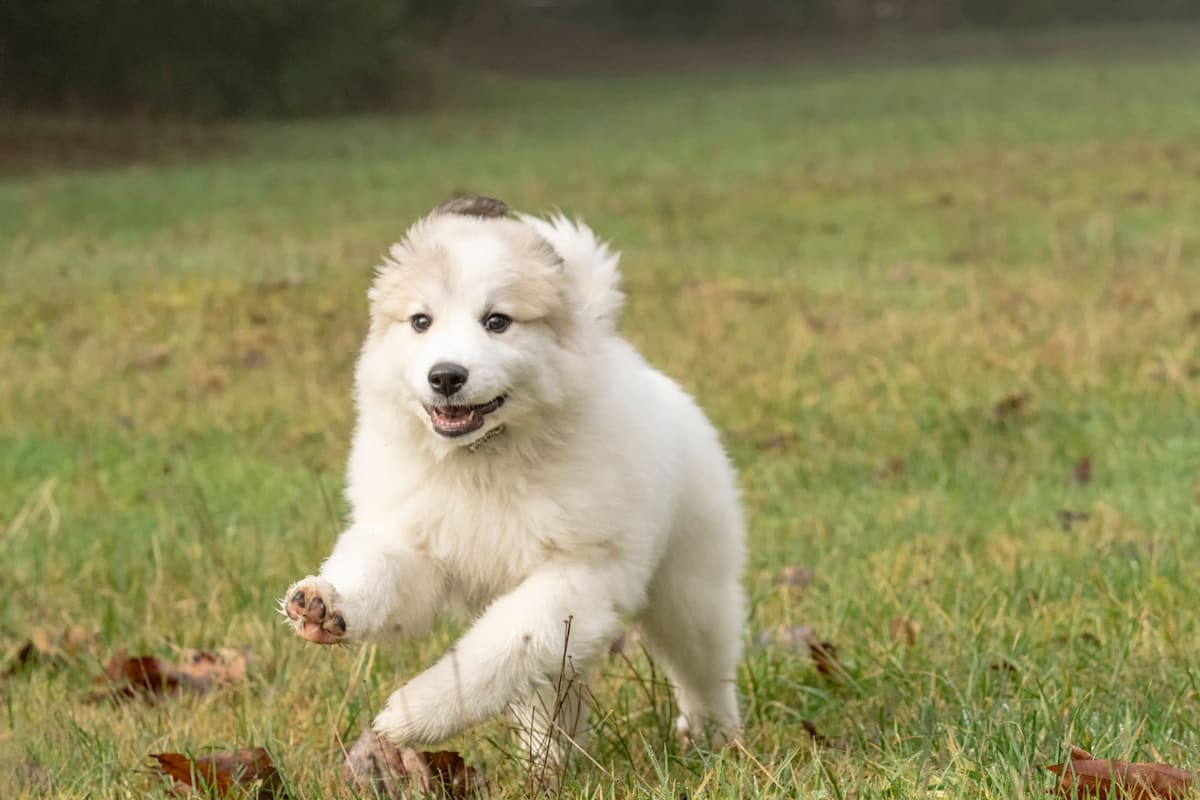
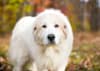
The Great Pyrenees takes its name from the Pyrenees Mountains that form a natural border between France and Spain. The breed originated here as a working dog that roamed the region’s rough terrain guarding livestock. Today, the Great Pyrenees is a popular family dog revered for their affectionate, mellow nature.
Origin: France, Spain Other Names: Pyrenean Mountain Dog, Pyr
Dogs of the Working Group were bred to perform such jobs as guarding property, pulling sleds and performing water rescues.
Working Group dogs have been invaluable assets to man throughout the ages. The Doberman Pinscher, Siberian Husky and Great Dane are included in this Group, to name just a few. Quick to learn, these intelligent, capable animals make solid companions. Their considerable dimensions and strength alone, however, make many working dogs unsuitable as pets for average families. And again, by virtue of their size alone, these dogs must be properly trained.
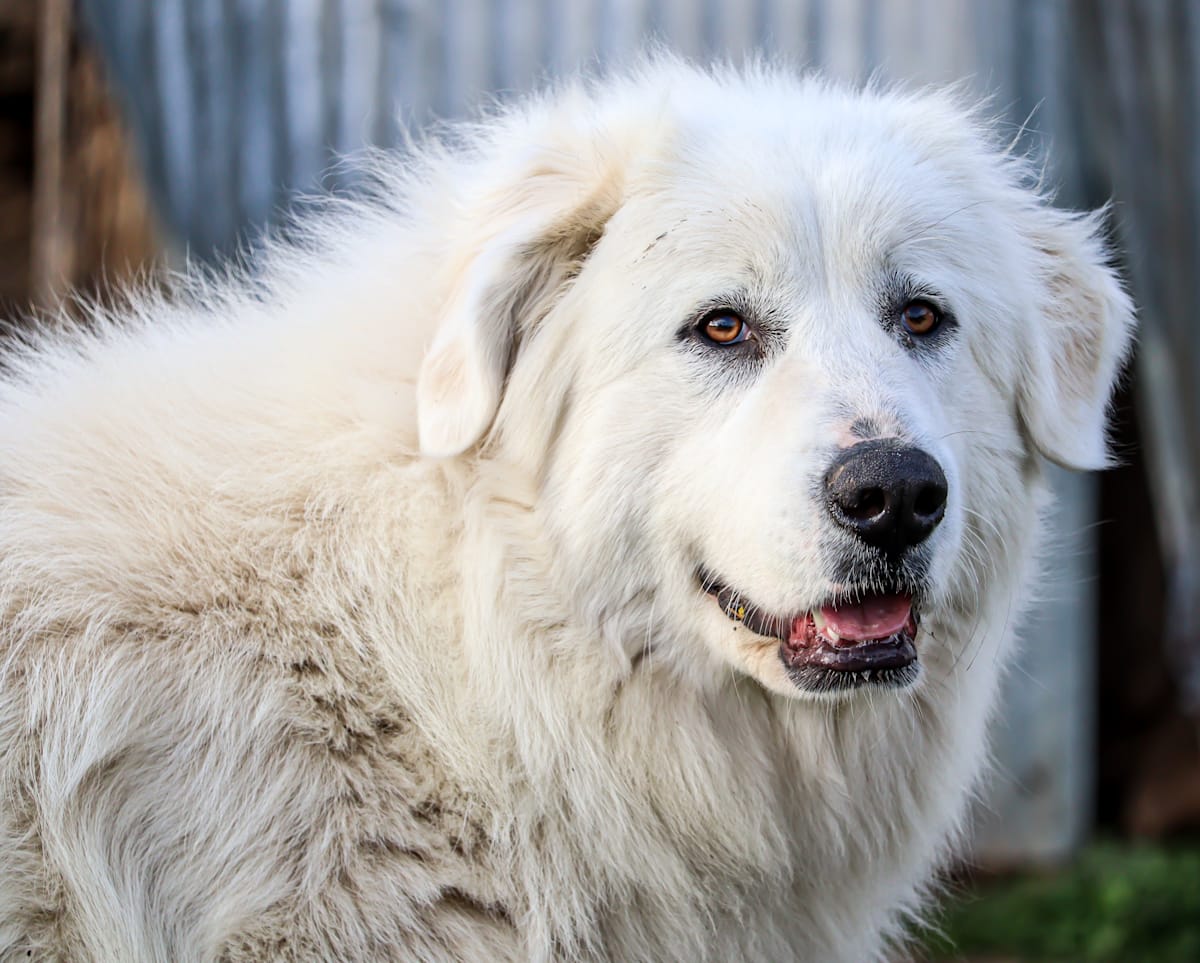
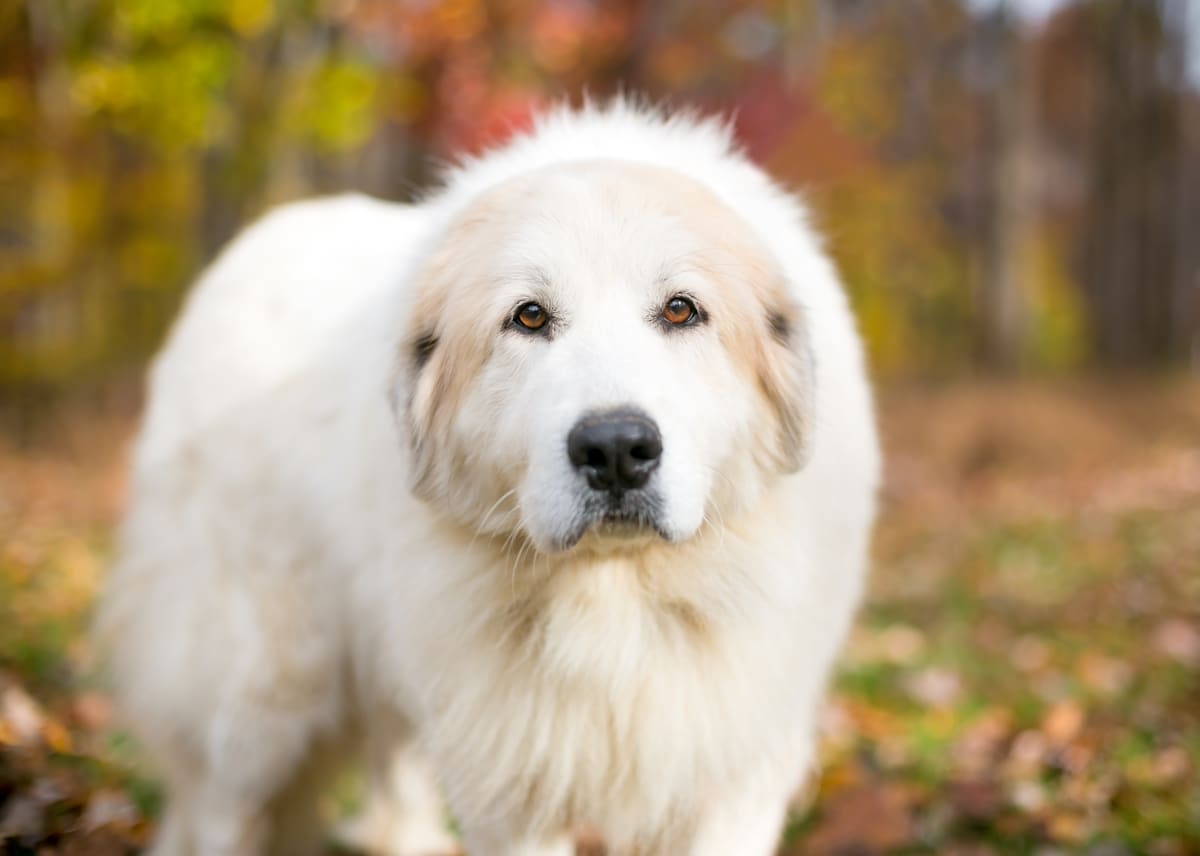
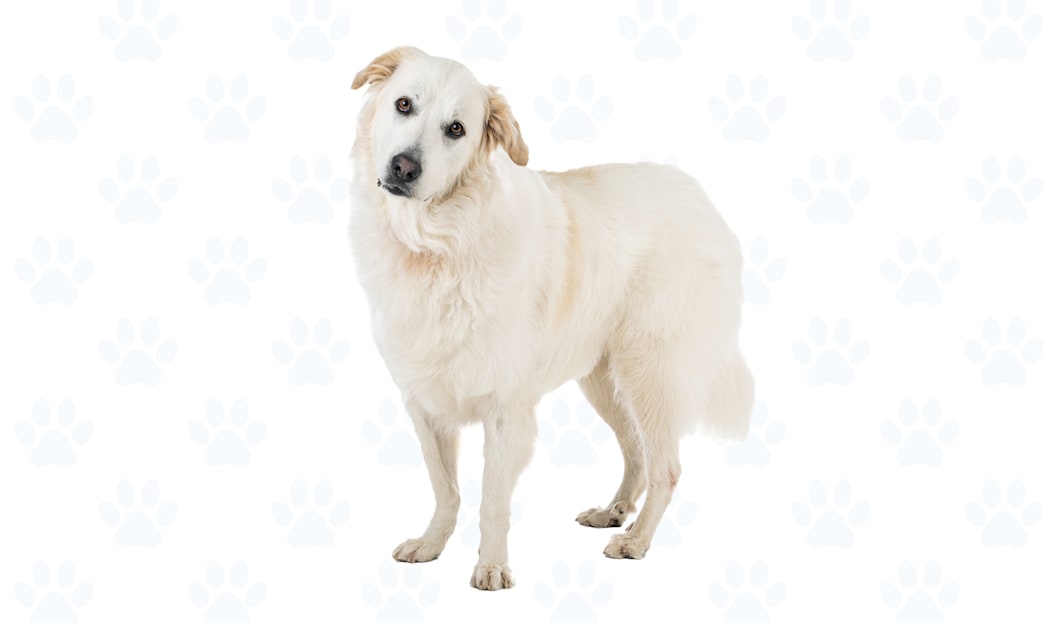
A Great Pyrenees should look strong and elegant, with a lively, friendly expression. The head should not appear too large or heavy, while the neck and chest should be strong and muscular. The tail should be carried low when the dog is at rest, and can rise over the back when the dog is excited. Great Pyrenees have a double coat of hair to protect them from harsh weather. The soft, fine undercoat is covered by a thicker, coarse overcoat.

The AKC recognizes one color and four markings for the Great Pyrenees. White is the only acceptable color, while badger markings, gray markings, reddish brown markings, and tan markings are acceptable.
Male Pyrs are usually 27 to 32 inches tall and weigh 110 to 130 pounds. Females are usually 26 to 31 inches tall and weigh 90 to 115 pounds.
| Full Grown | |
|---|---|
| Female | 26 in. / 90 lbs. |
| Male | 31 in. / 110 lbs. |
Height is measured up to the shoulders.
Male Great Pyrenees are usually 27 to 32 inches tall with females measuring 26 to 31 inches tall.
Both males and females are solidly built. Males weigh 110 to 130 pounds. Females tip the scales between 90 to 115 pounds.
Young Great Pyrenees are large dogs with boundless energy, but they often become fairly mellow with age. If they receive plenty of exercise, they can make do with a smaller living space, but the more space to roam, the better.
Great Pyrenees are extremely strong with plenty of endurance. They should receive at least an hour of exercise every day.
The Great Pyrenees are naturally suspicious and protective dogs, but are also extremely playful and affectionate. If they are properly socialized, they should be calm and friendly towards other dogs and people.
Pyrs are naturally protective of their family and the area that they consider to be their territory. They are somewhat wary of strangers, but will warm up quickly after an introduction
Known to be tolerant, calm, and affectionate, the Great Pyrenees is an incredibly kid friendly dog.
With both an ability to think independently and a stubborn streak, the Great Pyrenees can be a challenge to train. They need an owner that is both patient and firm.
The thick, heavy coat of the Great Pyrenees causes it to shed fairly heavily.
The heavy coat of the Great Pyrenees is well suited to colder climates, but can cause overheating if the dog is left out in the sun for too long.
The Great Pyrenees’ lineage as a protector of livestock means that they tend to bark fairly frequently if they are not properly trained.
Great Pyrenees are sweet, affectionate companions that develop a strong bond with their owners. Though they enjoy independence and thinking for themselves, they do best when they are allowed into the home and are included in the everyday life of their family. Training and socialization are particularly important for this breed because some of their herd-dog instincts can become problematic if left unchecked. They will need to learn to limit their barking, and can be a real challenge to walk without a leash. However, these instincts also make the Great Pyrenees incredibly gentle towards certain smaller creatures and young children. A properly socialized Great Pyrenees is a calm, confident, and kind companion. They have the endurance and energy to join their family in all kinds of activities, and they are sure to make friends wherever they go.

If they are not properly trained, Pyrs can be prolific barkers, especially at nighttime. The breed is quite territorial, and they strive to alert their owner to any possible threats that might be lurking in the dark. A Great Pyrenees should be exposed to plenty of different people, animals, and places while it is young so it can develop confidence and the ability to distinguish between real threats and ordinary occurrences.
Great Pyrenees can be willful, stubborn, and difficult if they are not properly trained. Leaving them alone for long periods of time can cause them to become destructive. If you plan to let your Great Pyrenees out of the house, you should be sure that the perimeter of your yard is carefully secured, because these dogs can be real escape artists. They love exploring and claiming new territory, so boundaries need to be established early. It is very difficult to train a Great Pyrenees to walk off leash because they sometimes struggle with obeying commands that do not interest them.
Great Pyrenees are intelligent, loyal animals, but they can be a real challenge to train. The breed has a definite stubborn streak, so teaching them new commands will take time and patience. Great Pyrenees are accustomed to thinking for themselves and feel protective of their territory and family, so they can get into trouble if they are not closely monitored. As with all large breeds, training and socialization should begin early. By exposing your Great Pyrenees puppy to many different places and people, you will teach it to be confident and well-mannered around strangers. When training a Pyr, it is important to keep things interesting and positive. These are working dogs, and they thrive when they are made to feel useful or given a challenging task. An owner should never be too harsh towards their Pyrenees when it is disobedient. Instead, work on forging a strong bond with your animal and consistently enforce the rules that you expect it to obey.

Great Pyrenees are strong animals with enough endurance to accompany you almost anywhere you wish to go. Historically, they roamed with a flock of animals over rugged terrain, and to this day the breed is known for its graceful movements and regal bearing. Great Pyrenees get along fairly well with other dogs, but they can be difficult to handle at a dog park because of their propensity for wandering. If you are going to play with your Pyr before they are fully trained, you should be sure that the area is secure and safe in case your dog decides to go exploring. Great Pyrenees do best when they are walked on leash. They should receive around an hour of exercise per day to keep them healthy and entertained. Many mature Great Pyrenees become fairly mellow companions who enjoy spending time lounging in the company of their owner, but they are still fully capable of spending the day hiking or roaming through a city.
Frisky, energetic breed that is always ready for action
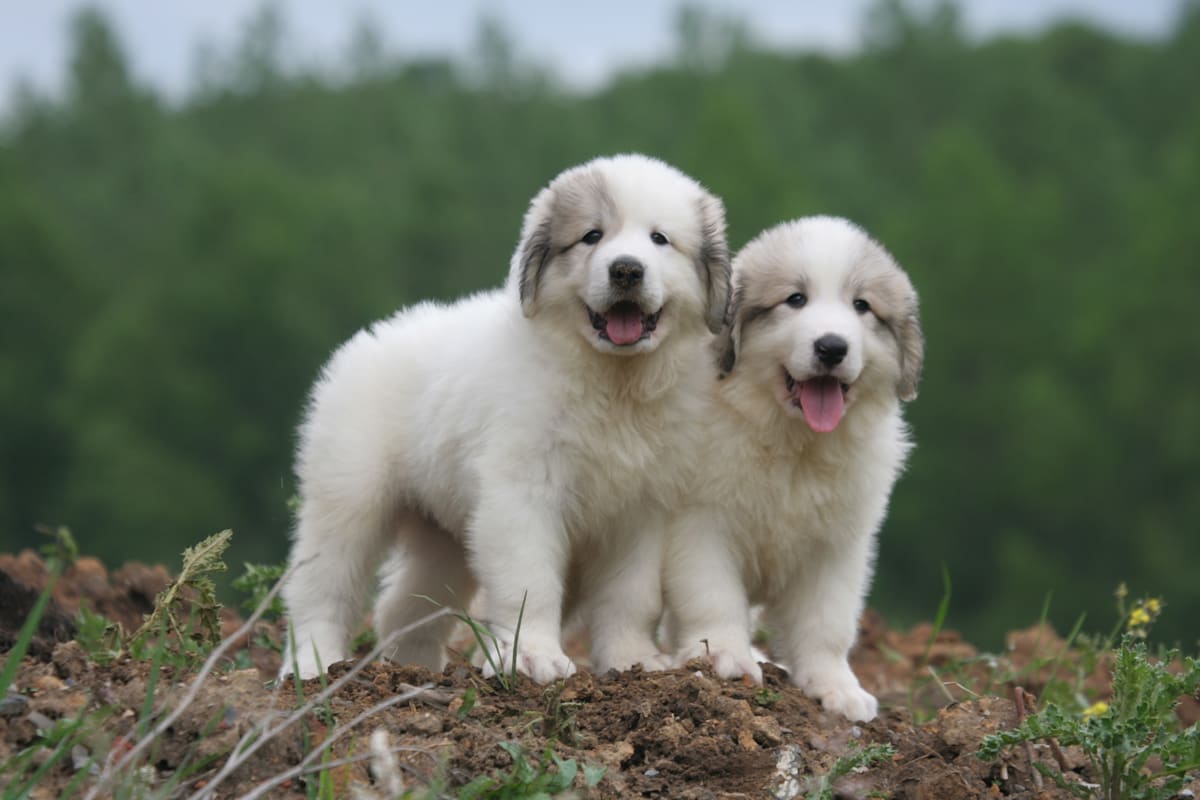
If overfed, Great Pyrenees can readily become overweight. Pyrs should be offered portion controlled meals of a high quality balanced food, while avoiding table scraps and limiting treats. As a large breed, Great Pyrenees continue growing until they are about 18-24 months old, whereas most small to medium sized breeds have finished the majority of their growth by 12 months of age. As a result, it is typically recommended to continue feeding your Great Pyrenees large breed puppy food until they are between 18-24 months old.
Average daily consumption for an adult Great Pyrenees is 3-5 cups
Many of the more common conditions occurring in Great Pyrenees are associated with their joints. While nothing can definitively prevent conditions such as hip dysplasia, panosteitis, or osteochondrosis from occurring, steps to minimize the risk of onset including maintaining a healthy body weight and feeding large breed puppy food during growth. If joint problems do occur, fish oil supplements can be helpful to decrease inflammation within the joint.
Genetic testing is available for some of the more common conditions in Great Pyrenees. Responsible breeders typically perform many of these tests on animals prior to breeding in an attempt to decrease the incidence of health problems within the breed.
Many conditions have been identified in the Great Pyrenees that are either inherited or occur at increased frequency in the breed. Of these conditions, many are associated with joints of these large dogs. These conditions may include, but are not limited to, the following: Tricuspid valve dysplasia, Glanzmann’s thrombasthenia, Hip dysplasia, Panosteitis, Patellar luxation, Shoulder osteochondrosis, Congenital deafness, Entropion, Micropapilla and Multifocal retinopathy.
On average, Great Pyrenees live to be about 10 to 12 years old.
Great Pyrenees have a soft, downy undercoat with thicker, coarser hair on the outside. Though this double coat may cause them to shed fairly heavily, the Great Pyrenees is not a particularly difficult breed to care for. Their coat is generally smooth and easy to brush, and does not need to be brushed every day. Around 30 minutes of brushing a week should be sufficient to keep a Great Pyrenees looking sharp. Dirt and grime usually becomes trapped on the outer coat and brushes off easily, so it is only necessary to bathe a Great Pyrenees around once a month.
Long
Occasional
Great Pyrenees have a double coat of fur, so shedding is going to be an issue. They tend to shed more heavily at different times depending on the climate they live in, so be prepared to deal with unexpected extra hair. It is important to set boundaries with your Great Pyrenees when it is still a puppy; do not allow it to play on furniture when it is small if you don’t want a full grown dog doing the same thing. By training your Pyrenees to stay in certain areas of your home, you can minimize the amount of hair that accumulates.
Great Pyrenees have lived and worked in the Pyrenees Mountains for thousands of years. The breed was developed to assist shepherds by watching over the flock and keeping animals from straying. White hair was a desirable characteristic for these dogs because it allowed them to be distinguished from wild animals. At first, the breed was purely a working dog owned by peasants, but in 1675, the Dauphin (the heir to the French crown) declared Great Pyrenees to be the Royal Dog of France, and they subsequently became popular with the nobility.
In the 1800’s Great Pyrenees began to spread throughout Europe. Some Great Pyrenees were brought to St. Bernard Hospice to be crossbred with St. Bernard dogs in an effort to replenish that great breed. However, in the Pyrenees Mountains, lax breeding practices were diluting the quality of the stock. During the two world wars, the number of Great Pyrenees declined even further. However, after the war breeders in both America and Europe worked diligently to restore the Great Pyrenees breed. Great Pyrenees were first recognized by the AKC in 1933.