Working Group
Dogs of the Working Group were bred to perform such jobs as guarding property, pulling sleds and performing water rescues.
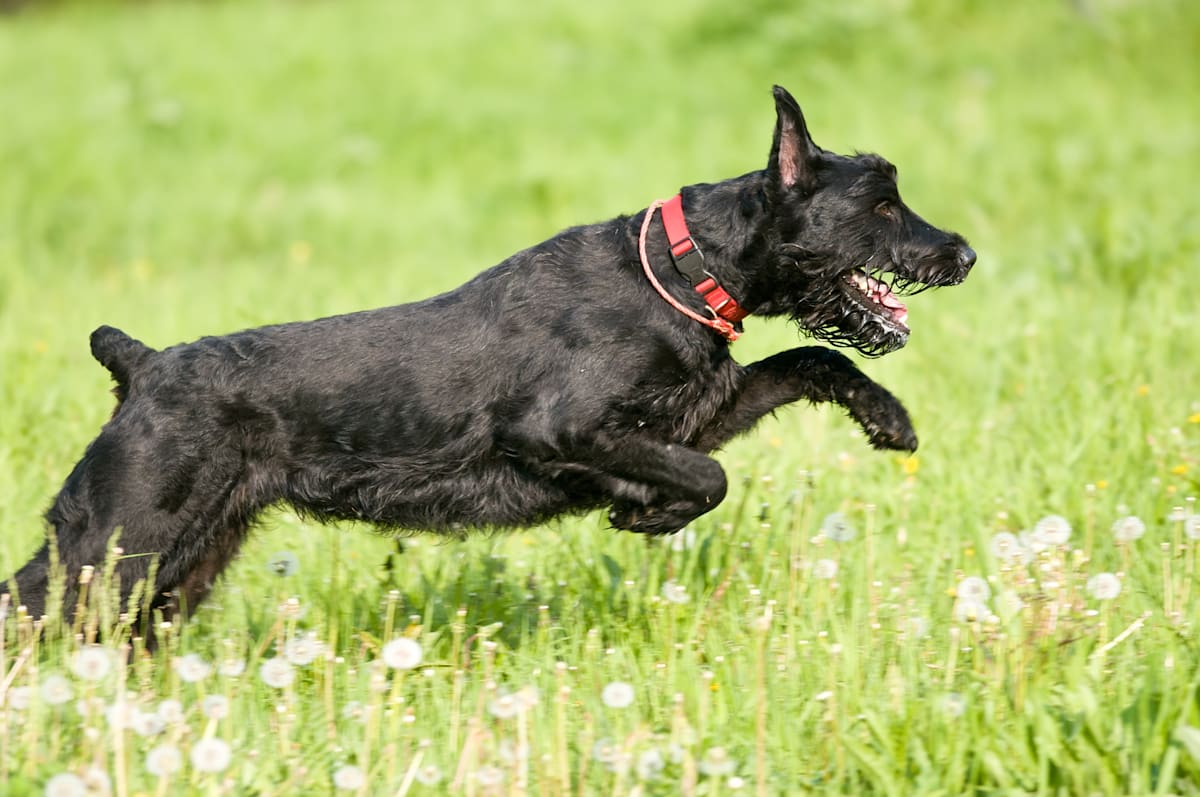
The Giant Schnauzer is an intelligent and loyal dog who is both larger and stronger than other Schnauzer variations, the Standard Schnauzer and the Miniature Schnauzer. These devoted dogs have plenty of energy to burn and have an ingrained protective instinct with their families.
Origin: Germany Other Names: Munich Schnauzer, Munchener, Riesenschnauzer
Dogs of the Working Group were bred to perform such jobs as guarding property, pulling sleds and performing water rescues.
Working Group dogs have been invaluable assets to man throughout the ages. The Doberman Pinscher, Siberian Husky and Great Dane are included in this Group, to name just a few. Quick to learn, these intelligent, capable animals make solid companions. Their considerable dimensions and strength alone, however, make many working dogs unsuitable as pets for average families. And again, by virtue of their size alone, these dogs must be properly trained.
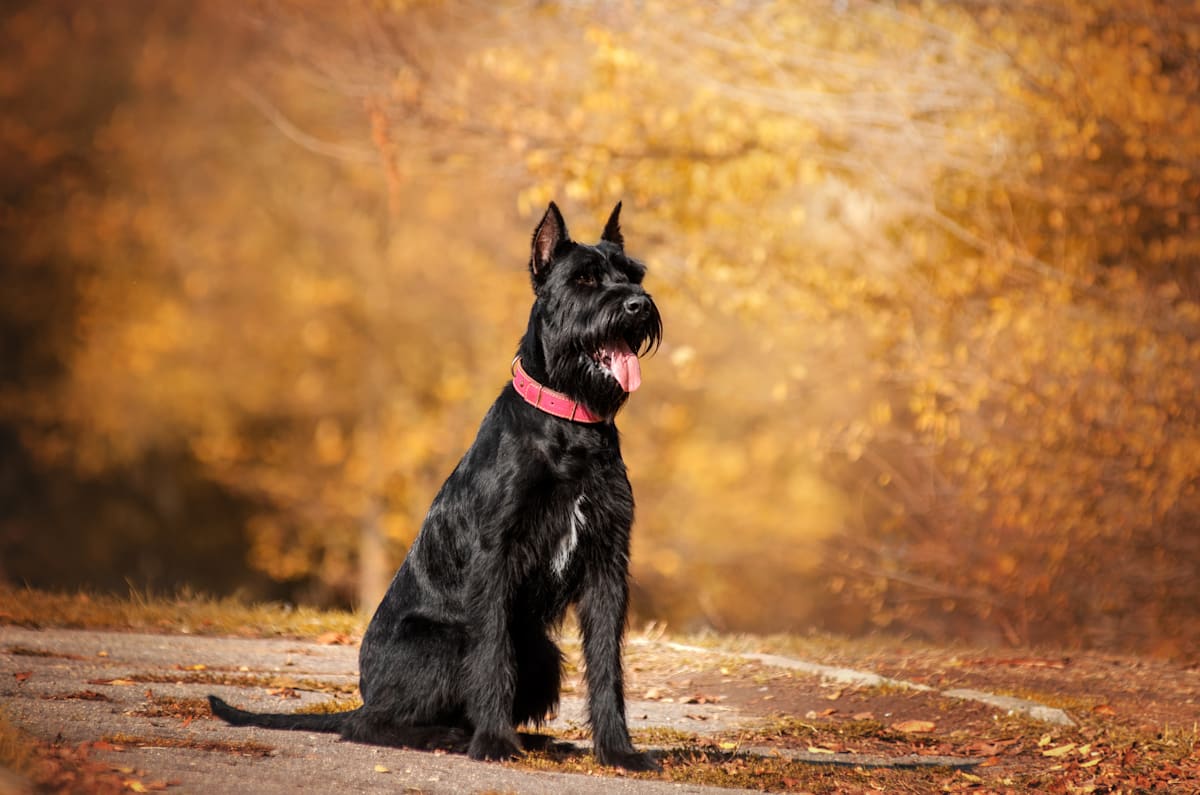
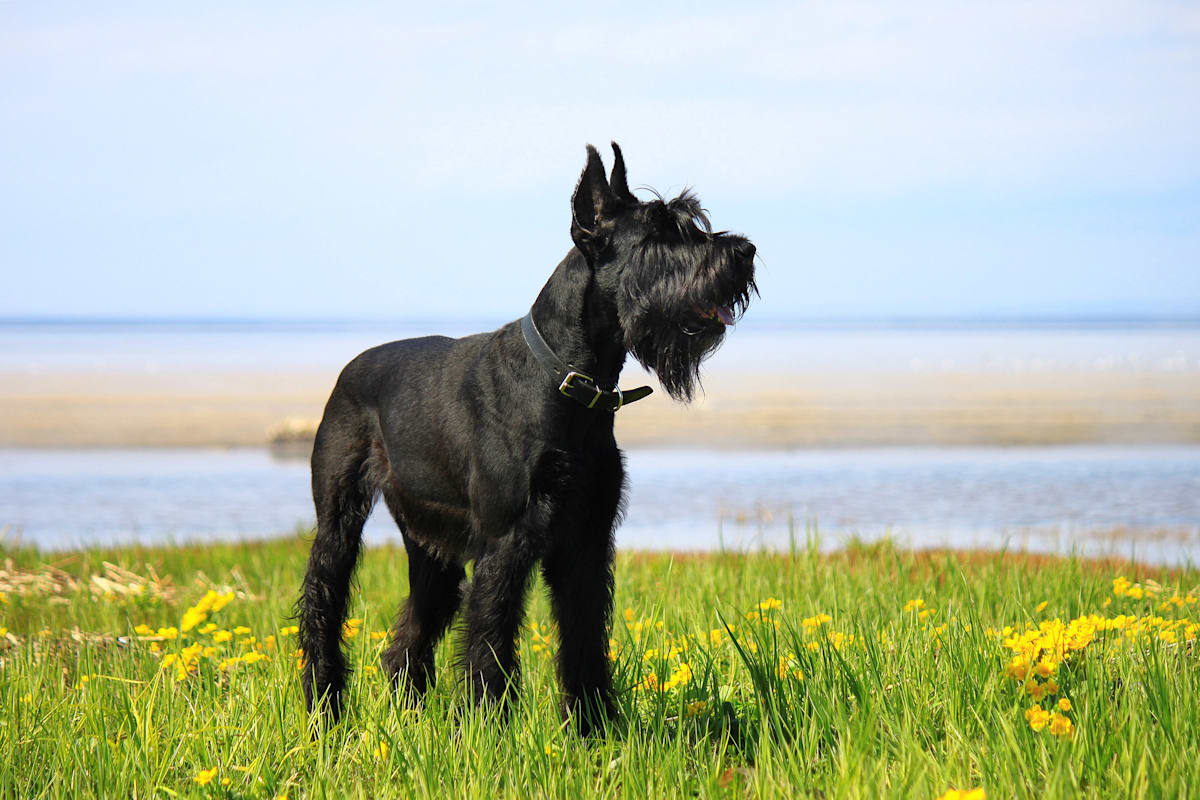
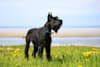
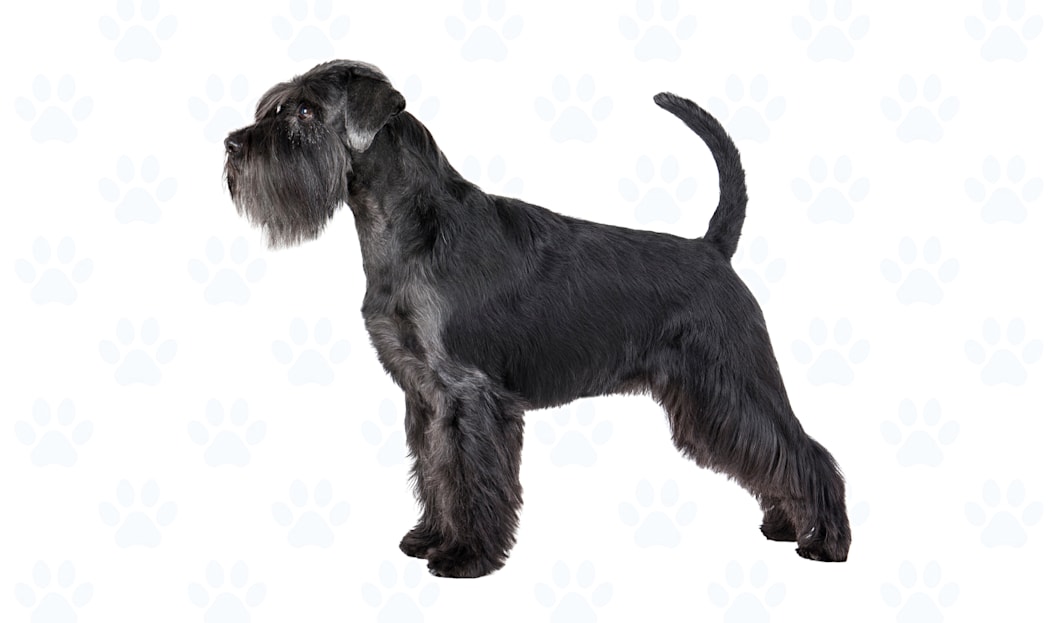
According to the American Kennel Club’s breed standard, the Giant Schnauzer is practically a replica of the Standard Schnauzer, only bigger. Males can weigh up to 85 pounds, while females can weigh between 55 to 75 pounds. The Giant Schnauzer has a square-like frame, with a proportionate length and height. The Giant Schnauzer comes in two standard colors, solid black or salt and pepper, and two non-standard colors, fawn or black and tan.
The largest of the Schnauzer breeds, males stand up to 28 inches tall at the shoulders and weigh up to 85 pounds, while females stand up to 25 inches tall and weigh up to 75 pounds.
| Full Grown | |
|---|---|
| Female | 25 in. / 75 lbs. |
| Male | 28 in. / 85 lbs. |
Height is measured up to the shoulders.
The largest of the Schnauzer breeds, males stand up to 28 inches tall at the shoulders while females stand up to 25 inches tall.
The Giant Schnauzer is practically a replica of the Standard Schnauzer, only bigger. Males can weigh up to 85 pounds, while females can weigh between 55 to 75 pounds.
The Giant Schnauzer is best suited to a home with a yard, but can adapt to apartment living with a dedicated exercise schedule. Either way, they require plenty of space to regularly stretch their legs and take a walk.
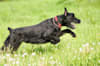
Giant Schnauzers require regular activity and enjoy plenty of exercise, including running, hiking and biking with their owners.
Giant Schnauzers are known for their fierce loyalty and upbeat attitude. However, they require regular activity to keep them from getting into things they shouldn’t around the home.
Giant Schnauzers are loyal dogs who will ensure your family is alerted when they perceive there is a threat. The breed has a history of being used as a formidable guard dog across Europe.

Giant Schnauzers make fantastic family pets with a playful nature that goes well with dog-savvy children.
Giant Schnauzers are intelligent and easy-to-train dogs.
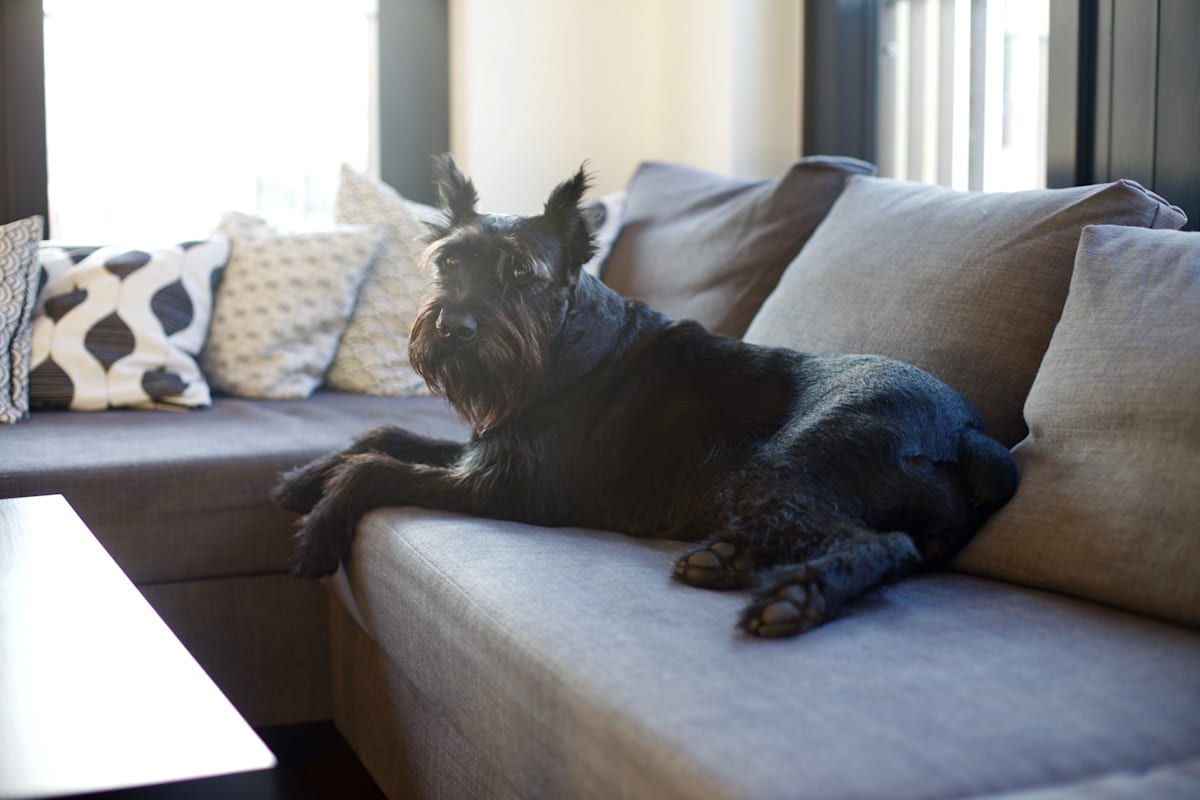
Like all Schnauzers, the Giant Schnauzer has a wiry, weather-resistant double coat that requires regular brushing and grooming.
With weatherproof coats and a love of the outdoors, Giant Schnauzers will do well in nearly any environment, as long as you take the appropriate precautions in extreme temperatures.
The Giant Schnauzer will undoubtedly make their presence known, particularly if they are left alone for extended periods of time.
A fiercely loyal dog with a fun-loving attitude, the Giant Schnauzer can be a good fit for many families, but requires dedicated training and regular activity. According to Cindy Wallace, a Colorado based breeder affiliated with the Giant Schnauzer Club of America, the breed is “high energy, dominant, loyal, highly intelligent and protective.” She adds that for the Giant Schnauzer, “training and socialization isn't a choice, it's a requirement.”

When provoked, the Giant Schnauzer can be a bit of a loud mouth, but in general they are silent unless startled or alarmed. If left alone for an extended period, the breed has been known to act out, which can include barking and yelping for hours on end.
The key to training your Giant Schnauzer effectively is to challenge his body and brain. A highly-intelligent dog, Giant Schnauzers love learning in a positive environment that includes plenty of socialization. A breed that loves having a job to perform, Giant Schnauzers also do well with agility training.
If you are looking for a couch potato, the Giant Schnauzer will not be your best option. The breed is exceptionally active and will need regular opportunities to blow off steam. The key to ensuring that your Giant Schnauzer is of healthy mind and body is to find games that they enjoy, such as catch or hide and seek. A Giant Schnauzer will want to run and play, so an active person is an ideal fit for this breed.
Frisky, energetic breed that is always ready for action
Giant Schnauzers should be fed portion controlled meals of a high quality diet. If overfed or exercised insufficiently, this breed can quickly become overweight. Avoid offering table scraps or too many treats, since this will quickly pack on weight. As a large breed, Giant Schnauzers should be fed puppy food for the first 18 to 24 months of life, as they need to have a proper balance of calcium and phosphorus to aid in growth.
Average daily consumption for a Giant Schnauzer is 2 - 3 cups
Although some health conditions can occur more frequently in Giant Schnauzers, none of these conditions can be definitively prevented. The best ways to keep your Giant Schnauzer in the peak of health include routine annual or semi-annual veterinary visits, monitoring for any changes or concerns at home, and maintaining a healthy body weight. Veterinarians have been extensively trained to detect subtle changes, which can aid in earlier diagnosis and treatment of problems. If you observe any new changes in your Giant Schnauzer’s habits, including changes in their appetite, water consumption, urination, lethargy, or new lumps or bumps, be sure to consult your veterinarian.
Certain health conditions can occur at an increased rate in Giant Schnauzers, as with all breeds of dogs. Responsible breeders perform a number of genetic and screening tests prior to breeding in an attempt to decrease the frequency of these conditions within the breed. These conditions may include, but are not limited to, the following: Follicular dysplasia, Hypothyroidism, Cobalamin (vitamin B12) malabsorption, Cataracts, Retinal dysplasia, Retinal degeneration, Eversion of the cartilage of the nictitating membrane, Glaucoma, Urethral, sphincter mechanism incompetence, Neuroaxonal dystrophy, Factor VII deficiency and Digital squamous cell carcinoma.
Giant Schnauzers have a life expectancy between 12 and 15 years.
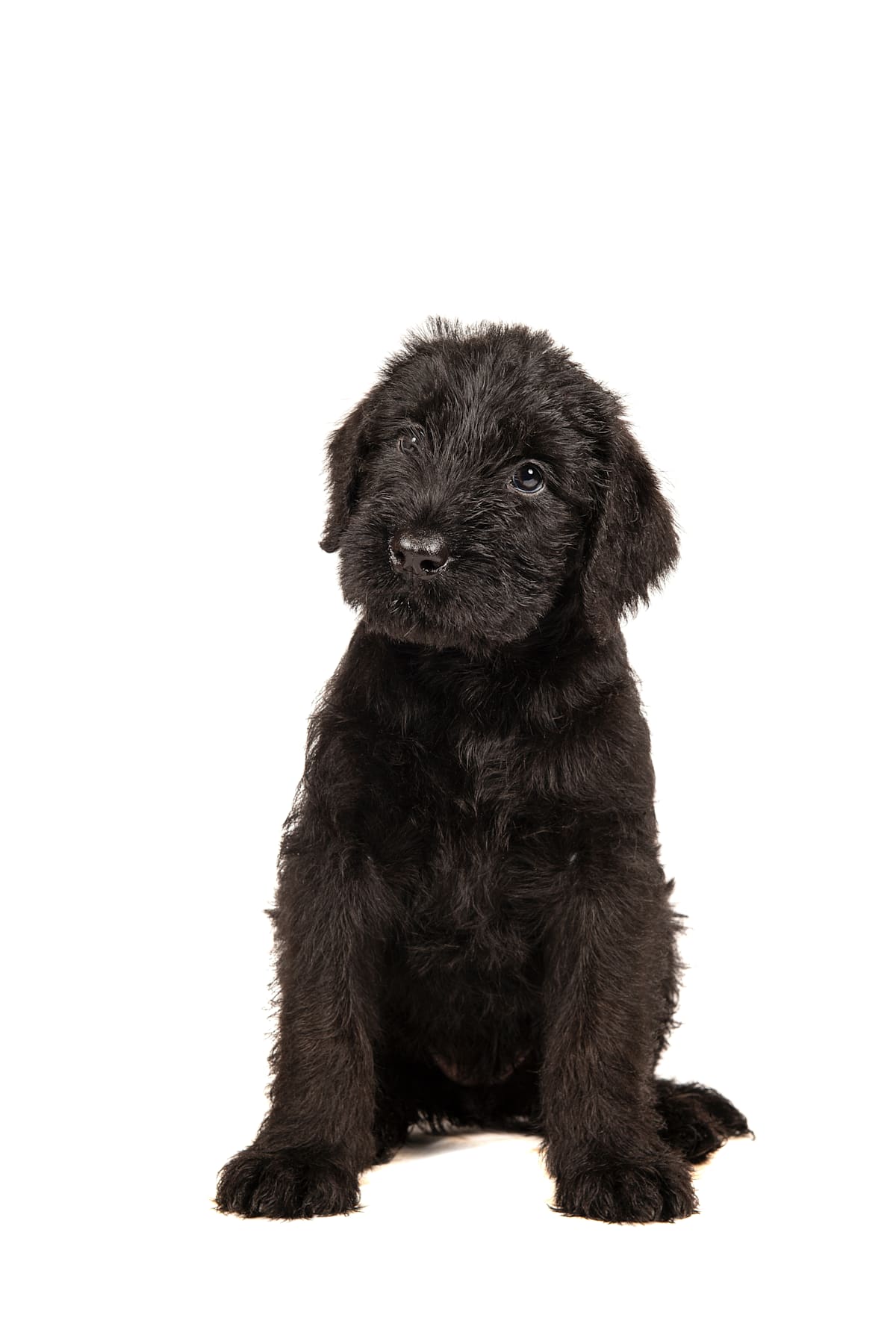
With a wiry double coat that requires regular maintenance, Wallace recommends acclimating your puppy to handling and grooming from the get go. Depending on their coat type, puppies with less hair may require grooming every 14 weeks, while puppies with a more dense coat may require grooming every eight to ten weeks, Wallace says. The Giant Schnauzer will not blow their coat like other double coated breeds, but they do require regular coat care to control the amount of shedding.
Medium
Frequent
Since the Giant Schnauzer’s wiry coat does not blow out, expect them to shed lightly throughout the year. This can be controlled with weekly brushing and regular grooming.
According to the Giant Schnauzer Club of America, it is thought that the Giant Schnauzer breed was first developed in the mid-1800s in the Bavarian Alps. These dogs were bred from the larger Standard Schnauzers until they reached the current size, thus their direct relation to the Standard Schnauzer. The Giant Schnauzer was bred as a working dog and was utilized to drive cattle and to protect farmers. As cattle driving became obsolete, Giant Schnauzers worked with various European military and police forces. Today, the Giant Schnauzer is known for its excellence in obedience and agility competitions. The breed was recognized by the AKC in 1962.