Petco Text Logo
Petco Pet Logo
Jump To Section

    About German Wirehaired Pointers

    Origin: Germany

    Other Names: Deutsch Drahthaar, GWP

    About Section Text: A bundle of energy that will always be by your side, the German Wirehaired Pointer will always amuse you both at home and outdoors. Originally bred as gundogs, GWPs are independent and energetic dogs that also form a close bond with their family. German Wirehaired Pointers thrive when given a job and plenty of exercise.

    Sporting Group

    Naturally active and alert, Sporting dogs make likeable, well-rounded companions. Dog breeds in the Sporting group are usually remarkable for their instincts in water and woods, and many actively continue to participate in hunting and field activities. Potential owners of Sporting dogs need to realize that most require regular, invigorating exercise.

    German Wirehaired Pointer Appearance

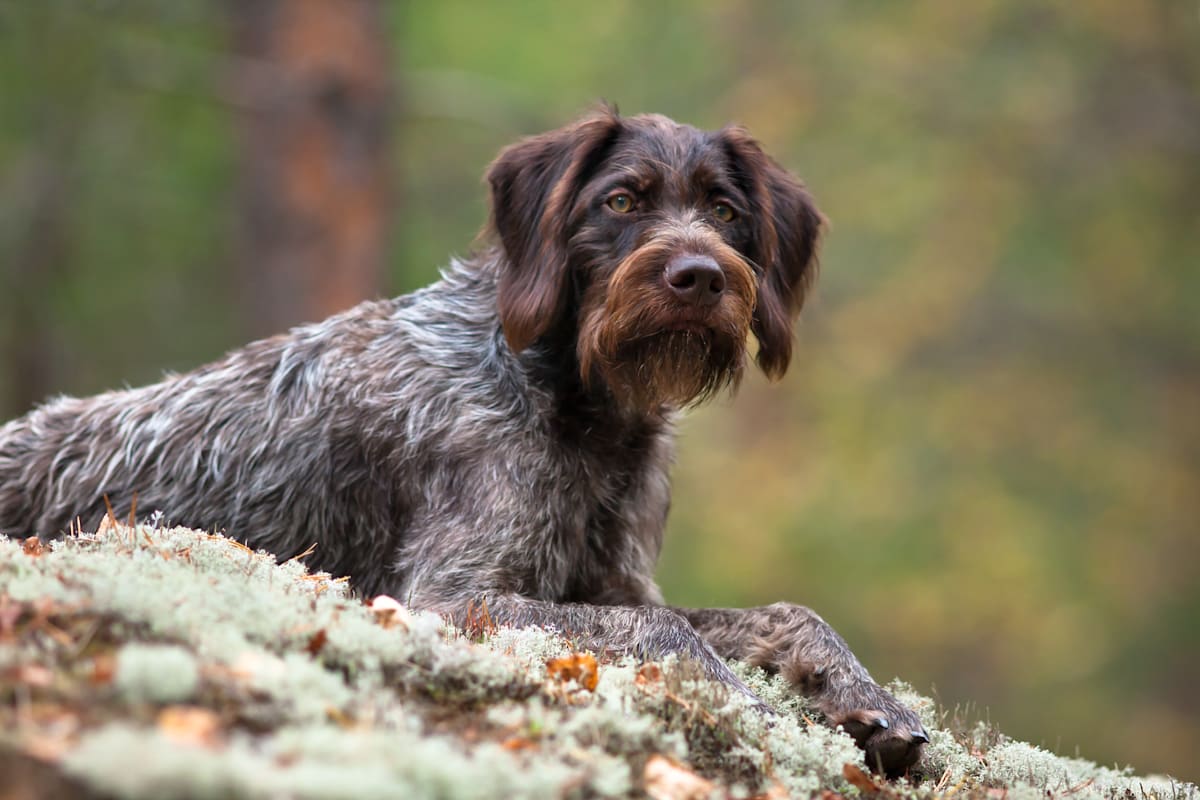
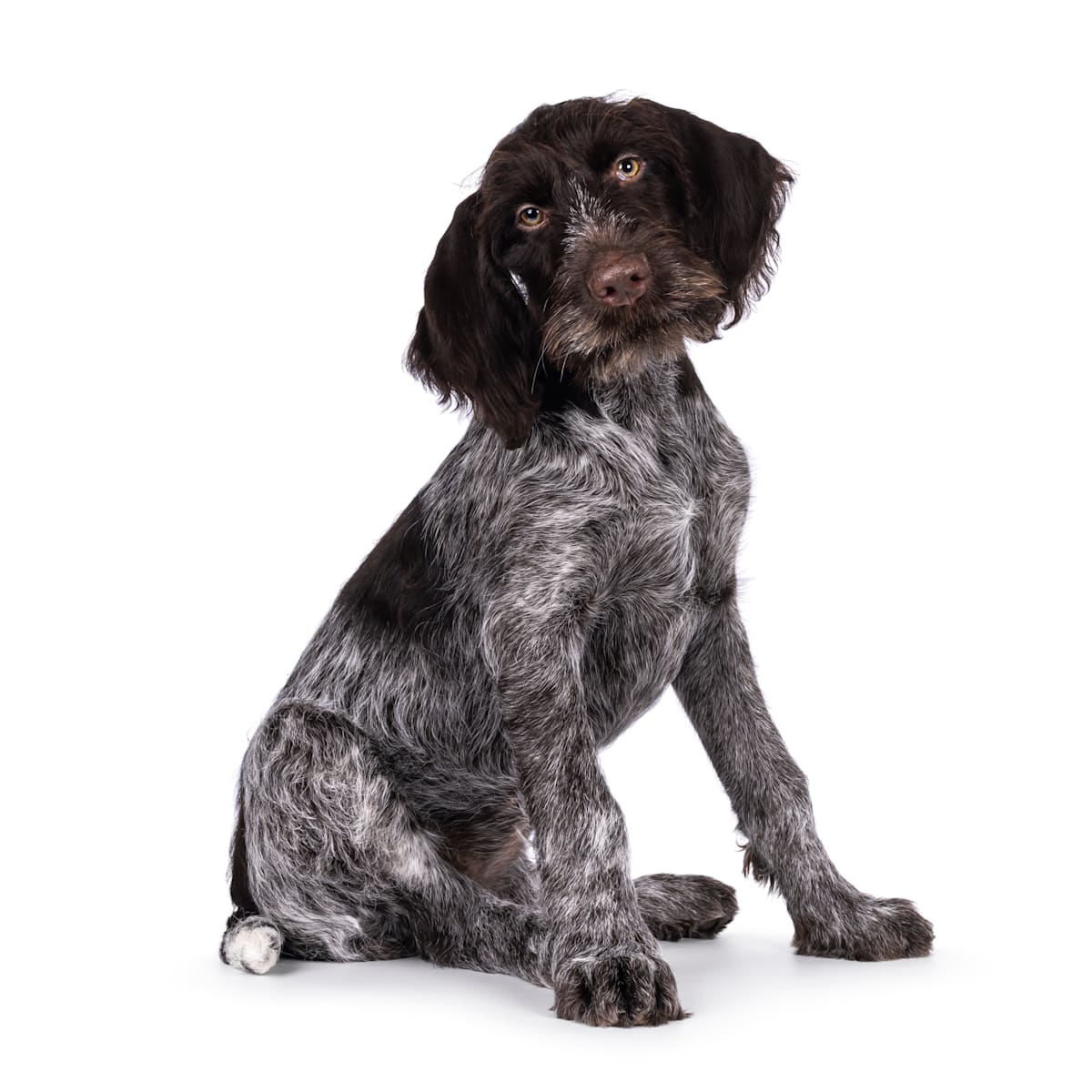
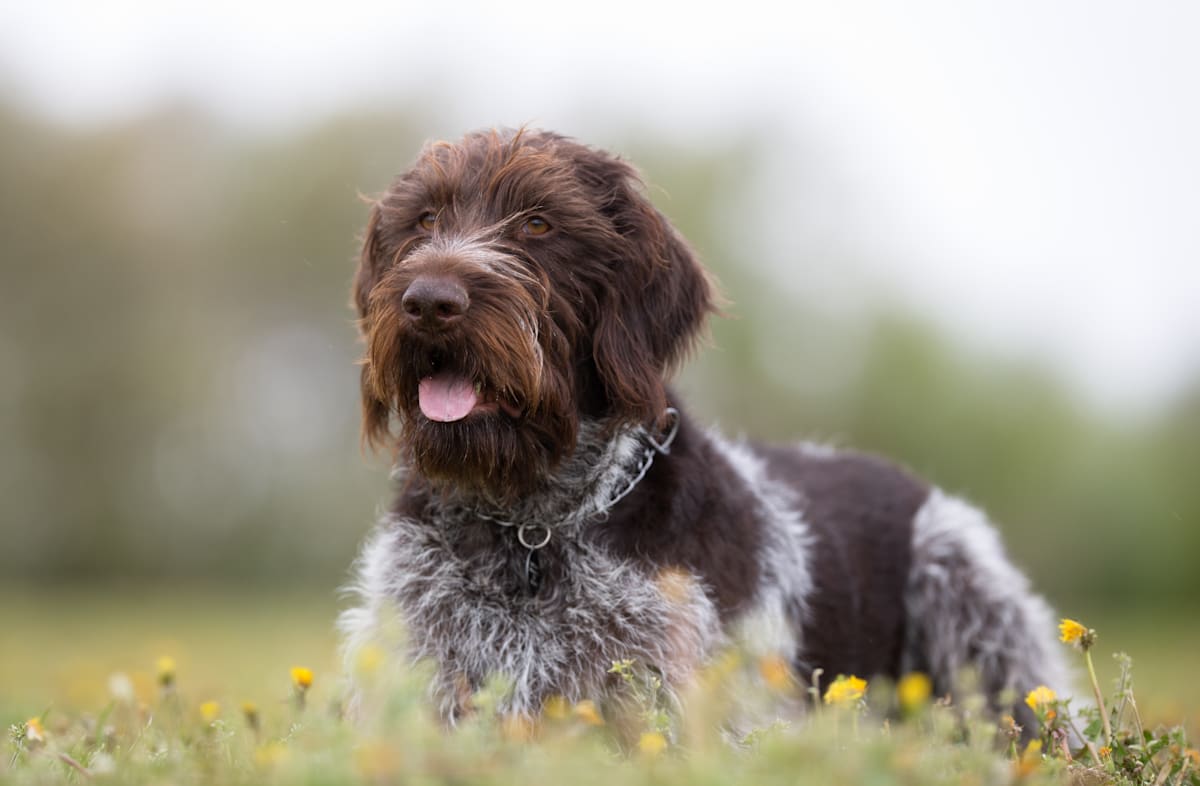
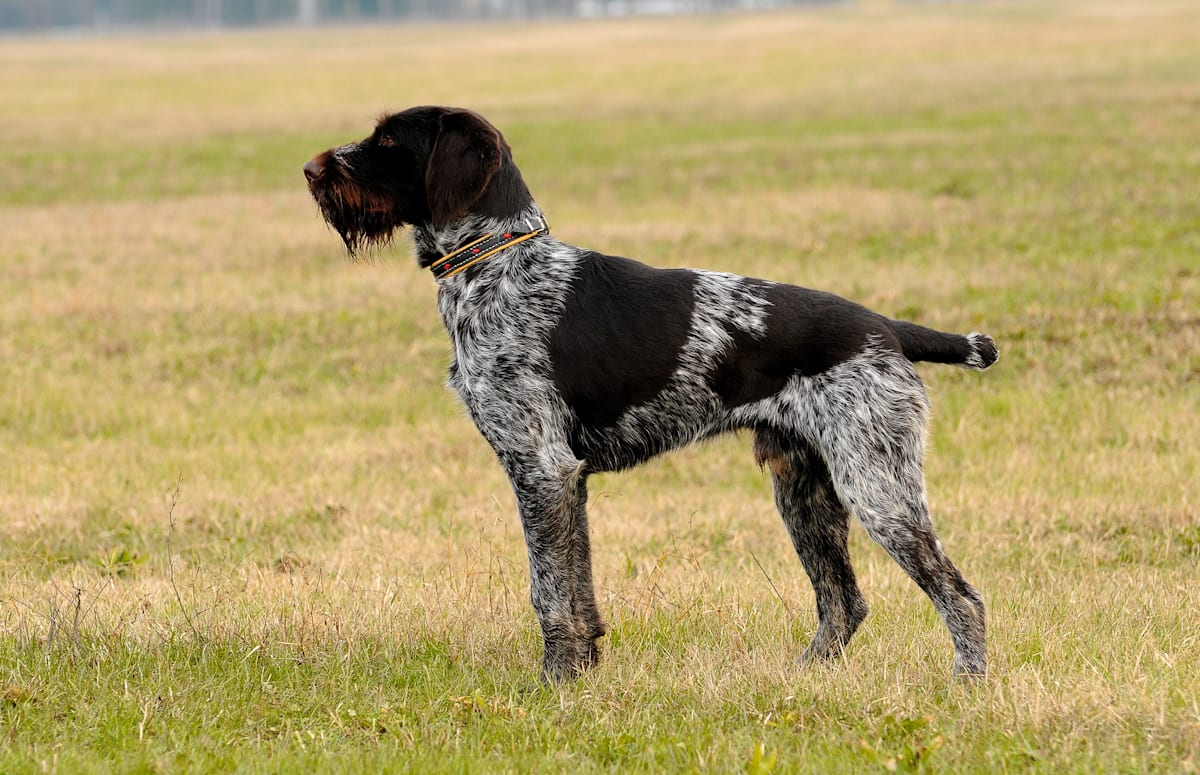
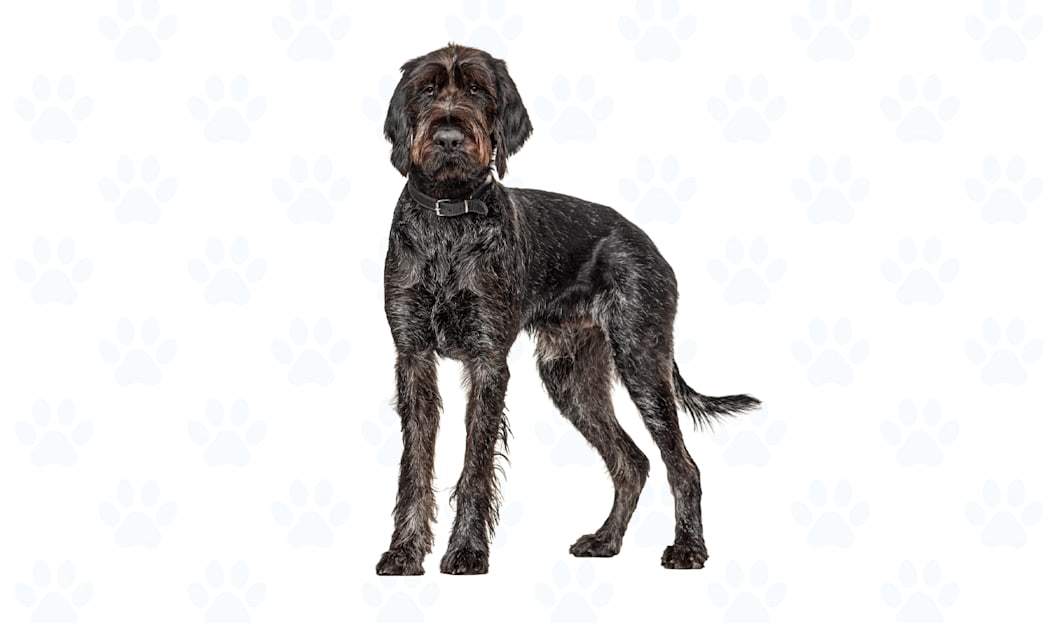
    The German Wirehaired Pointer is considered a well-muscled dog, and weighing in at 50-70 pounds, is considered to be medium in size. The GWP is known for their distinctive weather resistant and wiry coat, and facial furnishings.

    The AKC recognizes three color variations: liver, liver and white, or liver and roan. White spots and ticking are permissible markings, but black markings are penalized in show dogs. With their sturdy build and great balance, it is no wonder why German Wirehaired Pointers were bred to be the ultimate hunter in all conditions.

    Size & Weight

    The German Wirehaired Pointer is a moderately-sized sporting dog. Height wise, a German Wirehaired Pointer should be between 24 and 26 inches tall for males and females should never be shorter than 22 inches. The average adult weight will be between 50 to 70 pounds.
    Full Grown
    Female
    22 in. / 50 lbs.
    Male
    26 in. / 70 lbs.
    Height bar
    Female Pet
    Height Figure
    Male Pet
    Height is measured up to the shoulders.

    German Wirehaired Pointer Characteristics

    Size

    Tiny

    Jumbo

    Weight

    Light

    Heavy

    Shedding

    Minimal

    Abundant

    Coat Length

    Short

    Long

    Grooming Frequency

    Occasional

    Frequent

    Living Space

    City apartment

    Ranch

    Exercise

    Couch potato

    Bring it on!

    Climate

    Warm

    Cold

    Personality

    Antisocial

    Outgoing

    Protection

    None

    Bodyguard

    Behavior with Kids

    Always monitor

    Babysitter

    Training

    Headstrong

    Obedient

    Barking

    Mute

    Loud

    How to Care for a GWP

    Keeping a German Wirehaired Pointer happy means committing to a lifestyle rich in daily exercise, consistent training, and routine grooming — all backed by proper nutrition, proactive health monitoring, and a living environment that matches their high-energy, people-loving nature.

    Coat & Grooming: The coat of the German Wirehaired Pointer is one of the defining characteristics of this breed. Its wiry coat ensures that your dog should be able to handle any weather conditions and only requires a quick weekly brushing to remove dirt and loose hair. Invest in a good quality nail clipper or prepare to take regular trips to a groomer or veterinarian for nail trims every few weeks. The German Wirehaired Pointer's nails can cause discomfort or gait problems if they become overgrown.

    Coat length: Short

    Grooming: Occasional

    Shedding: The German Wirehaired Pointer has fine hair and sheds a good bit. The breed's coat itself is harsh and wiry, and even with consistent grooming, it will still find its way to your couch, carpet, or coat. You will need to invest in a few lint rollers and a quality vacuum if you ever want to deep clean your house with a German Wirehaired Pointer as a resident.

    Training: When it comes to training, German Wirehaired Pointers are always eager to learn. GWPs are intelligent and athletic, and are typically well-mannered. When coupled together, these traits help to make German Wirehaired Pointers highly trainable when they are tasked with a particular job. If left to their own devices, an independent streak may shine through, resulting in some bumps in the training road. Since this breed does fall under the sporting category, they typically excel at agility or hunting competitions, as it is truly in their blood.

    Barking: Understanding your dog: The German Wirehaired Pointer is a loyal family dog that is not a big fan of strangers. They will bark when uncomfortable or if they sense that their family is in immediate danger. Some dogs have been known to bark continually if left alone for a long period of time or if they have not had any exercise or play in a few hours. If you have a doorbell that is rung frequently or have a number of package deliveries, be prepared for a cacophony of sound from your dog.

    Temperament & Behavior: A German Wirehaired Pointer is a pup that will always have your back. "German Wirehaired Pointers are a very affectionate dog, but do find strangers to be a little questionable," says Renee Fortier, a German Wirehaired Pointer breeder for over 20 years. "These dogs are protective over their families and absolutely love to play with kids."

    Fortier adds that these dogs are always a pleasure to train and will quickly pick up any trick or behavior that you want them to emulate. Make sure to be ready for a lot of walks, as without consistent activity, a German Wirehaired Pointer may get bored which can lead to continual barking or other misbehaviors.

    Behavior with kids: German Wirehaired Pointers need to be socialized with young children, and will quickly become best friends. Since Pointers often crave human companionship, pairing them with kids is never a bad idea.

    Protection: German Wirehaired Pointers are generally not considered a guard dog, but due to their reservations with strangers, they will wake you and the neighbors up with continual barking if there is an intruder.

    Life Span: On average, German Wirehaired Pointers live to be 9-12 years old.

    Inherited health issues: Although the German Wirehaired Pointer is a generally healthy breed, certain health conditions can occur at an increased frequency or through inheritance. Responsible breeders perform a variety of screening tests in order to decrease the frequency of many conditions within the breed. These may include, but are not limited to, the following conditions: Hemophilia B, Von Willebrand's disease, Hip dysplasia and Cataracts.

    Preventive care: Keeping your German Wirehaired Pointer in the peak of health involves home monitoring and routine preventative veterinary care. Take your GWP to the veterinarian once or twice a year for wellness exams, even if they seem to be healthy at home. Veterinarians have been extensively trained to detect subtle changes in a pet's health, which helps to detect subtle problems before they become more severe. Be sure to bring any concerns that may arise or changes at home to your veterinarian's attention.

    Developing a good regimen of flea and tick prevention, heartworm prevention, and intestinal deworming for your German Wirehaired Pointer is important to avoid bringing home any pesky pests after a hunting trip or romp in the backyard.

    Nutrition: The calorie and nutritional requirements for German Wirehaired Pointers can vary widely depending on an individual dog's lifestyle. GWPs that are out hunting need to consume more calories than those that go for an afternoon walk and game of fetch. If overfed or left to a sedentary lifestyle, a GWP can quickly become overweight. Be sure to offer portion-controlled meals of a good quality balanced diet in order to keep your four legged friend at a healthy weight. Always consult your veterinarian for specific recommendations for your individual dog's needs.

    Daily Consumption: Average daily consumption for an adult GWP is 2 to 4 cups.

    Energy Level: Frisky, energetic breed that is always ready for action

    Exercise: The key to ensuring your German Wirehaired Pointer is happy is to let them run and have plenty of activity every single day. These dogs were bred for hunting, and although they can live anywhere, a German Wirehaired Pointer is happiest while on the move. Make sure to also play with your pup, as these balls of energy love to interact with and learn from their owner. Utilize them in hunting, obedience, agility, rally, or tracking activities to truly ensure your pup is a well-rounded canine.

    Climate: The coat of the German Wirehaired Pointer was designed to be outside and ensures that these pups are up for a walk regardless of the weather.
    Living space: German Wirehaired Pointers love to be outdoors and are not your typical lapdog. They typically prefer a larger home, but can be housed in an apartment as long as you are willing to provide plenty of daily outdoor exercise.

    Cost of Owning

    On average, owning a middle-aged GWP costs around $1500 per year
    $400
    Vet Care
    $300
    Grooming & Boarding
    $300
    Food & Treats
    $500
    Other

    Unlock exclusive rewards with Petco Perks. Plus, members get 35% off their first Autoship order and 5% off all future orders.

    Enjoy exclusive rewards on expert rated and pet parent approved products, like member prices, extra points and special offers designed to help you save on what your pet needs.

    Get your pet’s essentials delivered on your schedule so you never run out and save up to 35% on your first order, then 5% on every order after that. 
     

    Your love story starts here.

    Find adoptable pets near you with a simple search.

    Fun Facts

    A German Wirehaired Pointer's coat is weather resistant and for the most part, water repellent as well.

    A German Wirehaired Pointer's coat is weather resistant and for the most part, water repellent as well.

    The German Wirehaired Pointer was first bred to meet the demand and increased popularity of hunting within continental Europe by the upper class stretching from Prussia to Flanders.

    The German Wirehaired Pointer was first bred to meet the demand and increased popularity of hunting within continental Europe by the upper class stretching from Prussia to Flanders.

    The history of the German Wirehaired Pointer is still debated among dog experts, but most accept the breed as part Griffon, Stichelhaar, Pudelpointer, and German Shorthair.

    The history of the German Wirehaired Pointer is still debated among dog experts, but most accept the breed as part Griffon, Stichelhaar, Pudelpointer, and German Shorthair.

    History

    The German Wirehaired Pointer was bred to be a bird dog that could be a jack of all trades on continental Europe. The name itself comes from the German breed name Deutsch-Drahthaar, where the breed took off in the early 1800s. By the mid-1800s, wire-coated pointing dogs had become popular in both continental Europe and the United Kingdom, and breeders and fanciers started to classify these animals by breed rather than type.

    Out of this new scheme of classification came the German Wirehaired Pointer, a breed with a focus on its waterproof coat. Hunters and sportsmen saw this dog as an all-terrain and all-season dog that could handle thick bush or open plains to retrieve fallen birds. The German Wirehaired Pointer was first imported to America in the 1920s to aid sportsmen and finally received admittance to the American Kennel Club in 1959.

    Read More

    Sponsored