Herding Group
Created in 1983, is the newest AKC classification; its members were formerly members of the Working Group.
Superdogs of the canine world, German Shepherds are confident, courageous, intelligent, and faithful. They have a look of nobility, and the intentions to boot. They are a versatile breed prized for their utility and smarts, often used in working roles as K-9 units, search and rescue, and service dogs. They’re a popular family pet with a knack for protecting the flock. German Shepherds are a large, active breed with few standard drawbacks besides shedding, and they make great companions so long as they are properly socialized, well-trained, and have consistent leadership.
Origin: Germany, in 1899 Other Names: GSD (German Shepherd Dog)
Created in 1983, is the newest AKC classification; its members were formerly members of the Working Group.
The Herding Group, created in 1983, is the newest AKC classification; its members were formerly members of the Working Group. All breeds share the fabulous ability to control the movement of other animals. A remarkable example is the low-set Corgi, perhaps one foot tall at the shoulders, that can drive a herd of cows many times its size to pasture by leaping and nipping at their heels. The vast majority of Herding dogs, as household pets, never cross paths with a farm animal. Nevertheless, pure instinct prompts many of these dogs to gently herd their owners, especially the children of the family. In general, these intelligent dogs make excellent companions and respond beautifully to training exercises.
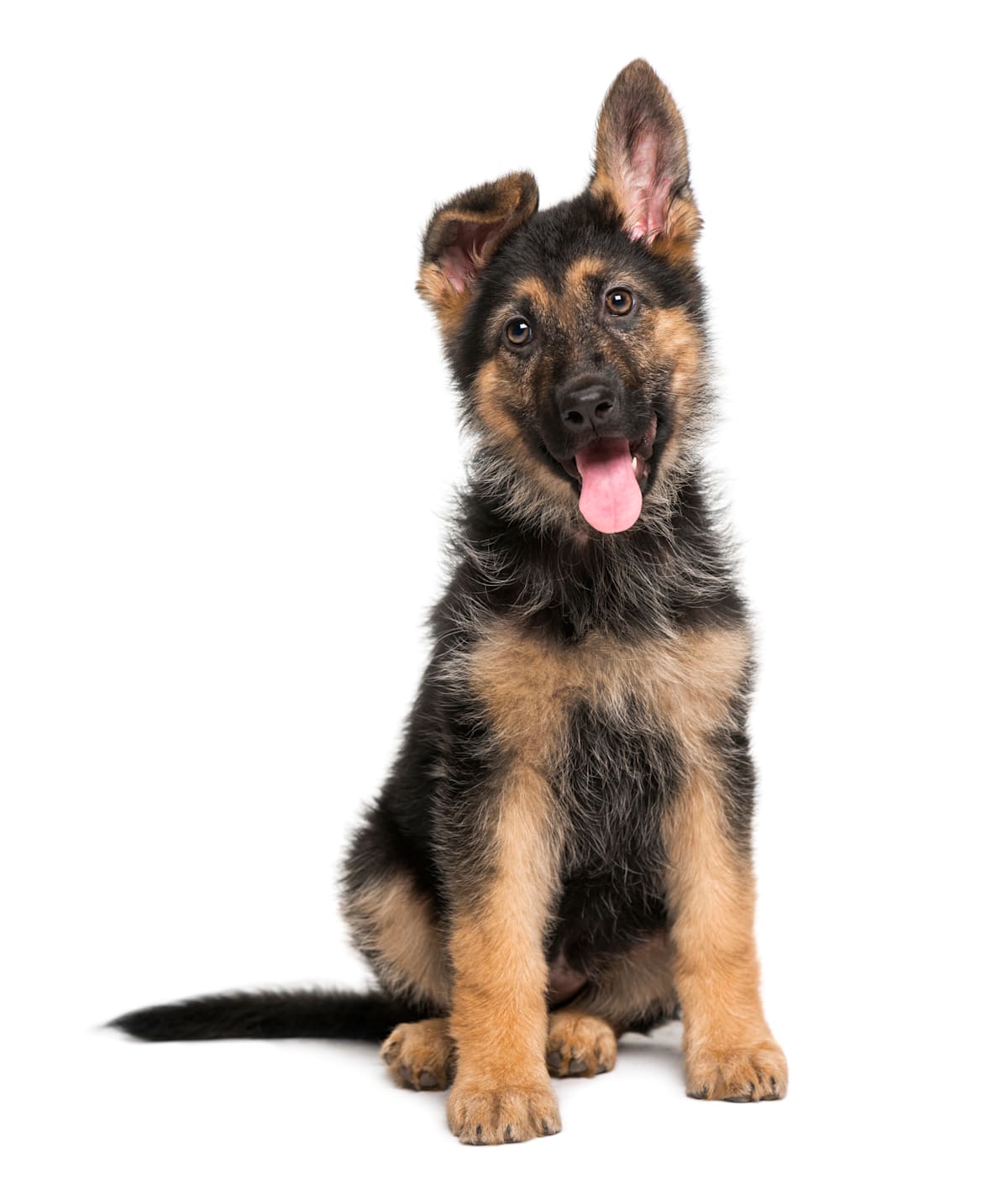
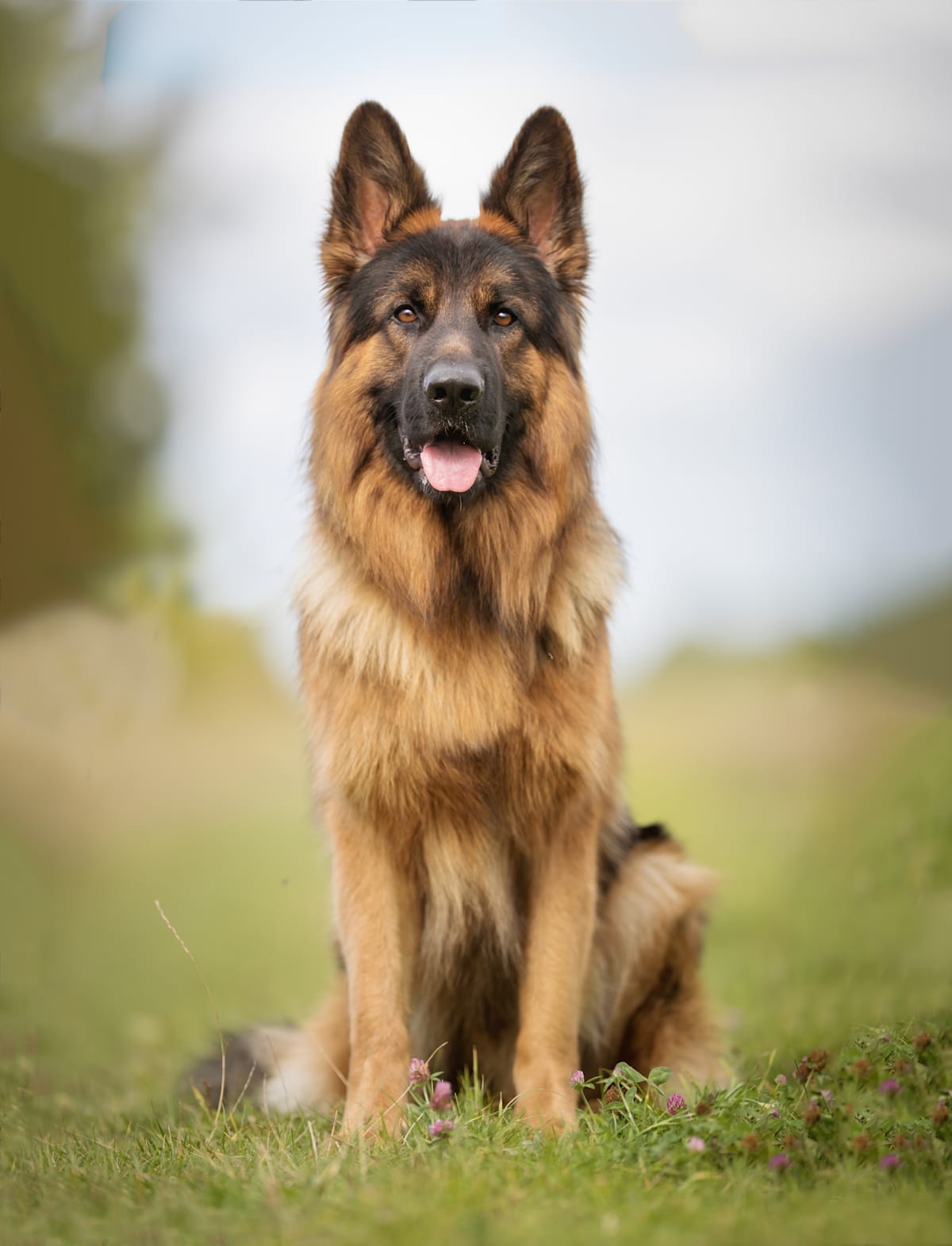
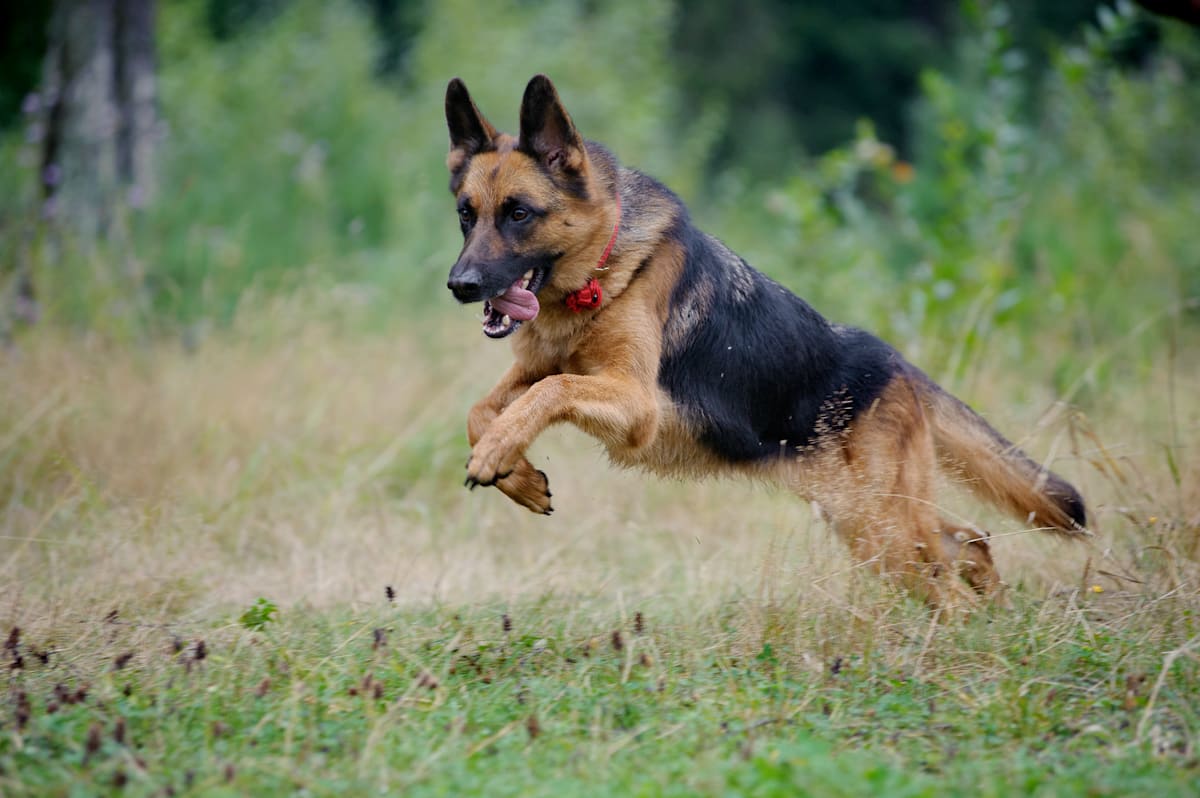
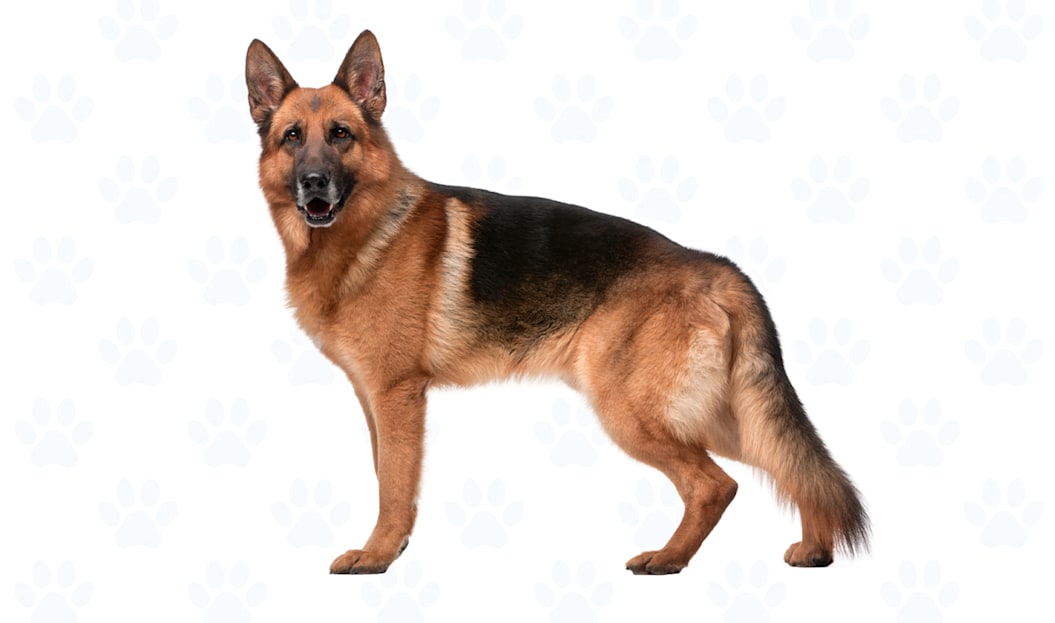
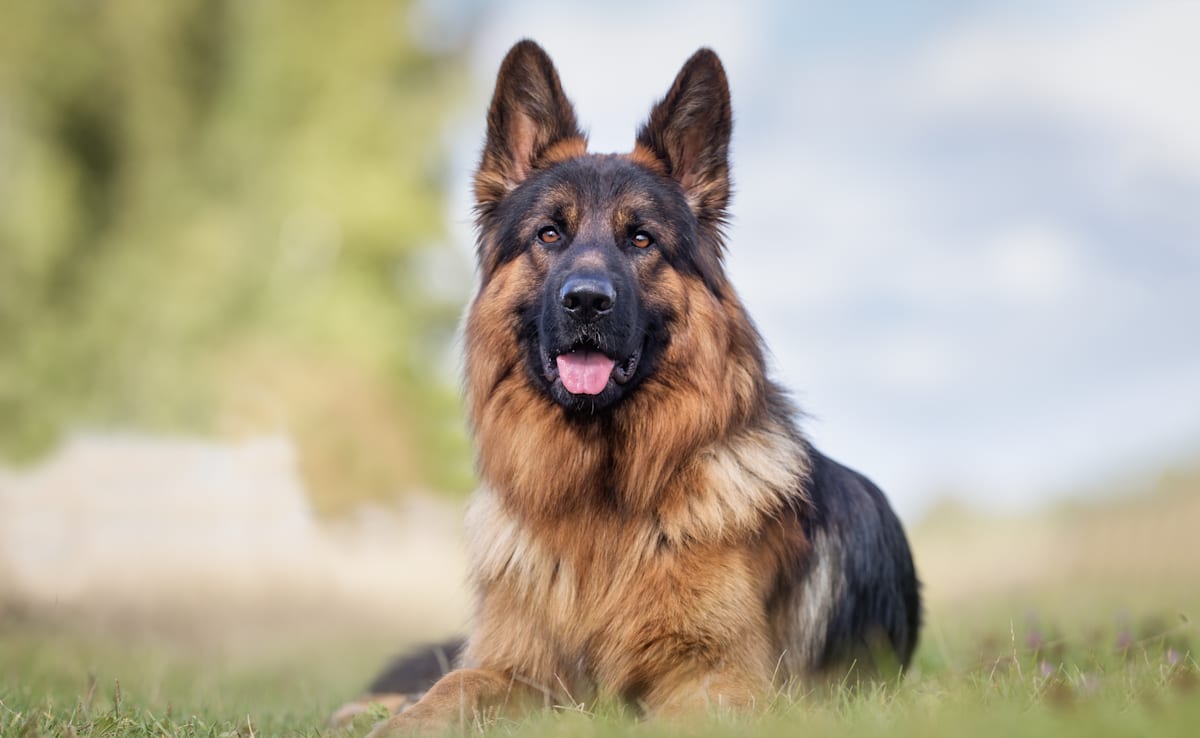
The German Shepherd has the appearance of high physical capacity and mental alertness. German Shepherds are strong, agile, well-muscled dogs that are longer than they are tall. They have a loping stride that easily covers ground to satisfy working demands. They have a long muzzle, square head and erect, pointed ears. Their back and hind legs are slightly angled and they have long, bushy tails.
There are two main varieties of German Shepherd, German and American. The German bloodlines produce heavier dogs, with straight legs and backs, and longer coats. Some people assert that these sturdier dogs are better suited to rugged fieldwork. The American variety is finer-boned, has a more slanted back, and angled hind legs. Some people find the American variety to be more aesthetically pleasing, though due to controversy over the health and soundness of the dogs’ bone structure, a limit to such aesthetics has been imposed. Regulations are now in favor of less angled dogs with an uninterrupted gait.
German Shepherds usually have a black and tan coat in strong, rich colors. Other coat varieties can include solid black or solid sable, hues of red, and a number of combinations. They commonly have black masks on their muzzles and a black saddle patch over their backs. White German Shepherds are disqualified from participating in AKC showings, though this color is becoming more popular.
Most adult males stand 24 to 26 inches and weigh 80 to 95 pounds, while females usually stand 22 to 24 inches and weigh 75 to 85 pounds.
| Full Grown | |
|---|---|
| Female | 24 in. / 85 lbs. |
| Male | 26 in. / 95 lbs. |
Height is measured up to the shoulders.
The average German Shepherd is 22-26 inches tall, and weighs 75-95 lbs. There are two main bloodlines of German Shepherd, German and American, which vary slightly in size and build.
German Shepherds can adapt to almost any space as long as they are well exercised. However, due to their physical size and amount of shedding, a house with a yard for convenient exercise would be ideal.
German Shepherds need ample exercise. They are easy to work out and a good partner for nearly any athletic activity.
German Shepherds are loyal, fearless, reliable, intelligent, and somewhat aloof. They are intensely focused on their leader and not immediately friendly with people who aren’t a part of the inner circle.
German Shepherds can be gentle and tolerant, but introduction to babies, unknown children, or raising both a puppy and children simultaneously, should be well planned. German Shepherds are territorial, can be possessive, and have a strong prey drive, so the boundaries and expectations of behavior around children need to be clear.
German Shepherds are very protective of their families. Their alert and reserved nature makes them excellent guard dogs.
German Shepherds bark a fair amount, like many other herding dogs. They will sound the alarm when suspicious, when excited, and when communicating regularly.
German Shepherds have a dense double coat that protects them from the elements. They shed the undercoat seasonally and the topcoat constantly. Invest in a good doggie coat rake.
German Shepherds’ coats are intended to defend against harsh elements, and they are more susceptible to overheating as double-coated dogs. A temperate location is better suited to their outfit.
German Shepherds are renowned to be confident, fearless, alert, and suspicious of potential dangers. Careful breeding made them ready and willing to nab the bad guys, whether they’re wolves in the flock or enemy troops. They’re eager to do whatever duty appointed. There are working and companion or ‘show’ bloodlines that influence the intensity of an individual dog. Working dogs aren’t meant to be companions as they are high-energy and have a high prey drive.
When they’re off the clock, German Shepherds are gentle and generally not high-strung. They are relaxed, calm, and even-tempered, neither overly excitable nor lethargic. A well-balanced German Shepherd can weigh situations independently before jumping into action, but they walk a fine line. Some dogs that have confidence issues or a lack of leadership are prone to snapping. German Shepherds, like other dogs with herding instincts, tend to be on the nippy side, and unfortunately this breed tops the list of frequent biters. This is a tendency that needs to be mediated and carefully monitored.
German Shepherds are average barkers. It’s in their instincts to direct herds of animals and sound the alarm with their voice, so barking is a normal behavior for them. They prioritize guarding the home and pack, and can be counted on to bark while standing watch. Their bark is sharp and within a medium range tonally, or can be a high-pitched yap when excited. They can, and should, be taught how to control their barking with commands like “soft” or “quiet.”
German Shepherds are extremely intelligent, ranking third behind Border Collies and Poodles. Ultimately, the German Shepherd is a brains-over-brawn kind of dog, which means that communication, leadership, and expectations are most important when training. To keep this agent from going rogue, puppy obedience is the best place to start. German Shepherds are highly trainable so the sky is the limit on what they can perform.
The talents of the German Shepherd are prized in many different arenas. The breed accounts for thousands of deputy dogs serving in the police force. Not a single standout feature, but a combination of abilities, makes them so valuable. They have a strong bite, excellent sense of smell, high intelligence and regulated aggression. Tracking, obedience, and protection are such strong features specific to German Shepherds that a contest called “schutzhund”, now called IPO, was devised to evaluate breed worthiness.
German Shepherds also perform well at other non-aggressive duties. From guide and service dogs to search and rescue, and therapy, there isn’t much work that hasn’t been entrusted to this breed.
German Shepherds are moderate to high-energy dogs who need ample, vigorous exercise. They are extremely versatile and excel at a number of physical activities. They are great competitors in physical dog sports like agility, frisbee, flyball, and dock diving. They also have keen noses and intelligence that make them well suited to other challenges, like nose work, service training, and obedience. Additionally, they make great companions for their humans for activities like jogging, hiking, and swimming.
While the German Shepherd isn’t overly sociable, their aloofness needs to be managed to prevent issues from occurring. It’s important that they receive adequate socialization to become comfortable with approaching people and vice versa.
German Shepherds don’t do well with long stretches of time on their own. They quickly become bored if their need for activity and responsibility is ignored. If they’re not stimulated, German Shepherds can be woefully destructive and impossible to manage. They’re experts in all matters of doggie destruction: Chewing, nipping, digging, barking, jumping, chasing, escaping, and attacking.
Frisky, energetic breed that is always ready for action
Because German Shepherds are one of the breeds that commonly suffers from hip dysplasia, it’s imperative that puppies be fed a food that is specifically formulated not to encourage rapid growth. Rapid growth is one of the factors known to increase the risk of hip dysplasia, so feed your German Shepherd puppy a high-quality food labeled for large breed puppies.
Average daily consumption for an adult German Shepherd is 3-4 cups
Because German Shepherds are prone to a number of medical conditions, routine care is paramount to their well being. German Shepherd owners should establish a relationship with a veterinarian as soon as they bring their new puppy home, as early examination can identify many conditions before they become major issues.
It’s important to note that German Shepherds are believed to be more likely to be infected with parvovirus if exposed to this serious gastrointestinal disease, so puppies should always be vaccinated at the recommended intervals (8, 12, and 16 weeks) and not allowed into public areas until this series is complete.
Because German Shepherds can suffer from multiple joint issues, they may benefit from lifetime supplementation with omega-3 fatty acids in the form of a high quality fish oil supplement developed for dogs. Omega-3 fatty acids are believed to have anti-inflammatory properties when given at appropriate doses, and research shows that reducing inflammation in this manner helps to control the pain associated with osteoarthritis, which is a common problem in dogs with joint issues.
The ocular condition known as “pannus” occurs frequently in German Shepherd dogs, especially those living at high altitude. You can help to protect your GSD’s eyes by training him to wear “Doggles,” which are essentially sunglasses for dogs. Doggles dramatically reduce the amount of ultraviolet light that your dog’s eyes are exposed to, and also make him look extremely cool!
To limit the risk of gastric dilatation and volvulus (GDV), a life threatening condition in which the stomach flips over, never allow your German Shepherd to exercise for 30 minutes to one hour after eating.
Due to their lengthy period of popularity, both as family pets and working dogs, German Shepherds have been over-bred, and the breed has suffered in recent years from multiple chronic health problems. Orthopedic problems top the list, with German Shepherds being one of the most frequent breeds to suffer from hip dysplasia, a disease due primarily to inherited defects in joint formation. It’s widely believed that the German strains of these dogs have fewer health problems that the American.
When looking for a German Shepherd breeder, it’s critical to ask about what health testing is performed on the breeding pairs. Many conditions, especially orthopedic ones, can be tested for, and veterinarians can predict, based on the results, the chances of the offspring suffering from those diseases. Reputable German Shepherd breeders are dedicated to ensuring that the breed stays strong, and will always perform these tests in their breeding dogs.
Common conditions found in German Shepherds include: aortic stenosis, mitral dysplasia, tricuspid dysplasia, allergies, German Shepherd Dog pyoderma, hot spots, Cushing’s syndrome, megaesophagus, perianal fistula, EPI, GDV, cancer, vascular ring anomaly, parvovirus, elbow dysplasia, hip dyplasia, panosteitis, shoulder OCD, stifle OCD, degenerative myelopathy, idiopathic epilepsy, intervertebral disc disease, cataracts, pannus and urinary stones.
On average, German Shepherds live to be 10-13 years old
German Shepherds have a thick double coat. The topcoat consists of coarse hair, and can be either long or short. The undercoat is dense and wooly. Frequent brushing (once a week or more) should keep both layers in order, and a more intensive ‘coat rake’ would be a good investment. This tool clears out dead, loose undercoat ‘lint’ while leaving the topcoat undamaged. Although occasional bathing and frequent brushing is in order, German Shepherds don’t require more advanced grooming, like clipping.
Medium
Frequent grooming
German Shepherds are heavy shedders. The hairs on the top layer are of the coat are shed constantly, and the rest of the coat replaces itself seasonally for cold and warm weather changes. Clumps of soft, fluffy hair, and long, coarse stray hairs all over the place are part of owing a German Shepherd. Of course, the loose hairs and shedding can be moderated with continual brushing and regular bathing.

The German Shepherd was created as the ultimate herding dog by a German Army Captain named Max von Stephanitz. He noticed that a quality dog was key for herders in Europe, but there was no specific breed that embodied all the perfect attributes. Von Stephanitz began developing the breed with the purchase of an intelligent, wolf-like dog named Horand von Grafeth, and by the early 1900s, standards for the German Shepherd had been written. In 1908 the breed was recognized by the AKC.
Ironically, while the German Shepherd emerged as an ideal herding dog, Germany became less dependent on a nomadic herding and agricultural lifestyle. The purpose of the German Shepherd pivoted to became the quintessential police, military, and service dog. The breed served in the German Army in WWI and WWII, and soon achieved movie star status, thanks to one puppy rescued from France during WWI named Rin Tin Tin. Today, the German Shepherd is the second most popular breed in the United States and can be found doing their duties all over the world.