Herding Group
Created in 1983, is the newest AKC classification; its members were formerly members of the Working Group.
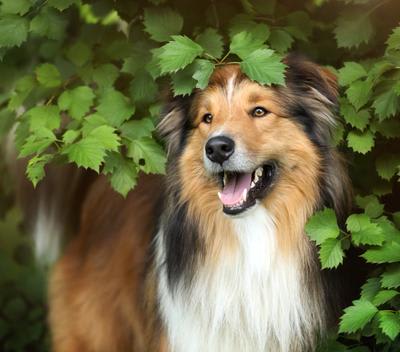

A Collie is a proud and devoted companion for any dog owner. This distinctive breed has a loyal following of admirers in the United States, UK and around the world. The Collie is a medium-built dog with a light and athletic frame. They gained popularity as working dogs to help with herding and other farming tasks. These dogs have stamina, agility and a pleasant personality. There are many breeds that fall under the name “collie” but most of the following commentary refers to the “Rough Collie” as described by the AKC under the name Collie. This classification also includes the smooth-coat collie. Other popular related collie breeds are the Border Collie, the Bearded Collie and the Shetland Sheepdog.
Origin: Scotland, United Kingdom Other Names: Rough Collie, Scottish Collie, Long-haired Collie, Lassie Dog

Created in 1983, is the newest AKC classification; its members were formerly members of the Working Group.
The Herding Group, created in 1983, is the newest AKC classification; its members were formerly members of the Working Group. All breeds share the fabulous ability to control the movement of other animals. A remarkable example is the low-set Corgi, perhaps one foot tall at the shoulders, that can drive a herd of cows many times its size to pasture by leaping and nipping at their heels. The vast majority of Herding dogs, as household pets, never cross paths with a farm animal. Nevertheless, pure instinct prompts many of these dogs to gently herd their owners, especially the children of the family. In general, these intelligent dogs make excellent companions and respond beautifully to training exercises.
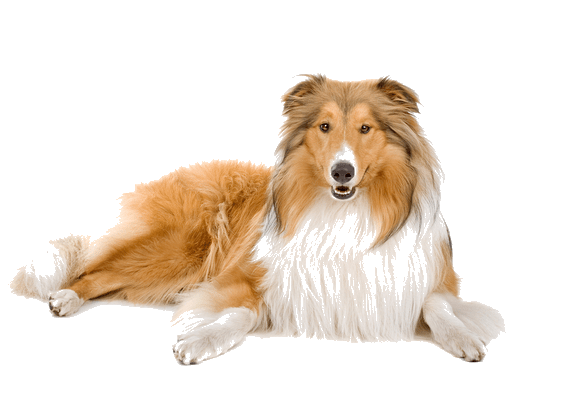
Collies are light and agile-looking dogs with a distinctive head. The wedge shape and rounded muzzle of the head contrasts with the strong, athletic body. The ears are usually “semi-prick”with the top third folded down. The Collie has a distinctive posture with a flowing gait and a regal look.
The AKC recognizes ten coat colors for competition Collies: black white & tan, blue merle, blue merle & white, blue merle white & tan, sable, sable & white, sable merle, sable merle & white, white, and white & merle. Standard markings are black & tan, blue merle, sable, and sable merle.
This breed can be found in a variety of colors. You can check them out below.
Collies are medium-sized dogs. Adult dogs can grow up to 60-75 pounds at a shoulder height of 24-26 inches.
| Full Grown | |
|---|---|
| Female | 24 in. / 60 lbs. |
| Male | 26 in. / 75 lbs. |
Height is measured up to the shoulders.



Collies are medium-sized dogs, reaching a shoulder height of 24-26 inches. These are not purse dogs, but they fit well into most homes.
Adult Collies can grow up to 60-75 pounds.
Collies are fairly adaptable, but they do need some space to avoid feeling cramped. A tiny apartment is no place to leave a Collie all alone during the work day. Collies are outdoor working dogs, so they like a bit of room in the backyard or dog park for a daily run around the lot.
Through careful breeding, Collies were built for long days in the field. You need to invest your time in a daily regime to ensure a healthy and happy companion. If you have to leave your dog at home all day, it’s crucial to get a long walk done in the morning and evening.
Collies are very social and happy dogs. They are loyal and loving when it comes to their human family. Your Collie shouldn’t display any timidity or shyness, and aggressiveness is very unusual to the breed.
Collies aren’t the best guard dogs, but they will be a bit wary of strangers unless you work hard to build good social graces. Early socialization and exposure to diverse people and places should help your Collie feel comfortable. A well-trained Collie shouldn’t scare off any strangers.
Collies are well known for their love of children and become a devoted member of the entire family. As with any dog, always supervise your Collie around any unfamiliar children or adults.
These dogs are members of an intelligent and perceptive breed. Many years of herding and taking instructions from humans translate to a highly trainable and obedient dog. Your Collie should be eager to please and learn new tricks. Be careful with a dog left alone for too long. No amount of training will make up for neglect and boredom.
Collies shed a lot. Their thick fur and intense seasonal shedding are a big job for your vacuum cleaner. Make your life easier and practice good grooming habits with your Collie. Regular brushing and bathing are your only hope to contain the flying fur.
Collies handle all climates, but they can be sensitive to any extreme elements like harsh winter environments or hot locales. They might need a break from extreme cold or heat. Always keep an eye on your dog for signs of distress, but you can trust your Collie to tough it out through most weather conditions.
Collies aren’t very talkative. They’ll only bark if absolutely necessary. If your Collie is overly chatty, it may be a sign of boredom, health issues or behavioral problems.
A good Collie is a sweet and friendly dog, perfect for a family companion. They typically enjoy being around people and taking part in activities with their human family. On top of their sweet and gentle personalities, Collies have deep loyalty and high intelligence.
Collies benefit greatly from early socialization and obedience training as puppies. Other important factors in an individual Collie’s temperament are inherited – try to meet the parents if you can.
Collies aren’t overly chatty with their bark. You might hear the odd yap to announce a stranger or someone at your door, but don’t expect your Collie to replace your door bells and alarm systems. If your Collie barks all the time, it may be a sign of boredom, distress or a medical problem
These are highly trainable and obedient dogs, but it helps to get your Collie started at an early age. Simple commands (like sit, stay, and quiet) are easy for them to learn, even at a young age. The Collie is very intelligent and eager to please their companions. In general, herding breeds are often very trainable and respond well to commands – the Collie is no exception.
Collies can be happy and healthy in most environments and living situations, but it’s crucial to give them enough opportunities to get exercise. A brisk walk is something you need to do every day to maintain their mental and physical health. Collies were bred to run the fields and herd livestock, so they have a big gas tank that you need to burn off every day. Long periods of isolation and inactivity will cause behavioral problems in your Collie after awhile.
Frisky, energetic breed that is always ready for action

Collies are at an increased risk of developing bloat (GDV; gastric dilatation-volvulus), so they should be fed at least two meals throughout the day with their bowls on the ground. Avoid strenuous exercise immediately before or after eating. Assure that your Collie maintains a healthy body weight throughout life by feeding measured portion-controlled feedings of a high quality balanced diet.
Average daily consumption for an adult Collie is 2-3 cups

Many of the more common health conditions identified in Collies (such as progressive retinal atrophy, cyclic neutropenia, Collie eye anomaly and multidrug resistance) have genetic testing available. While responsible breeders will test their dogs prior to mating in an attempt to decrease the presence of these genetic conditions, these tests are also available to test your individual Collie. The presence of these genes can allow for closer monitoring of your dog for the onset of certain conditions and will determine if your dog has a greater sensitivity to some medications, as in the case of multidrug resistance.
Regular grooming of your Collie will help to maintain both a healthy coat and healthy skin. Close monitoring of changes in your dog’s skin condition will allow your veterinarian to promptly treat any problem as it arises. As with any dog, assure that your Collie maintains a healthy body weight by feeding portion-controlled feedings of a high quality balanced diet.
Many of the health conditions that occur either through inheritance or at an increased frequency in Collies include eye conditions and immune system disorders. Genetic tests are available for some of the following conditions: Cutaneous histiocytosis, Discoid lupus erythematous, Dermatomyositis, Sterile pyogranuloma/ granuloma syndrome, Pemphigus erythematous, Systemic lupus erythematosus, Multidrug resistance (MDR1 gene), Exocrine pancreatic insufficiency, Gastric dilatation-volvulus, Cyclic neutropenia, Perineal hernia, Nasal cavity tumor, Cerebellar degeneration, Congenital deafness, Idiopathic epilepsy, Collie eye anomaly, Corneal dystrophy, Retinal dysplasia, Progressive retinal atrophy, Microphthalmia, Congenital cataracts, Nodular granulomatous episclerokeratitis, Retinal pigment epithelial dystrophy and Pyometra.
Collies live to be about 10-14 years old

Whether you have Rough or Smooth Collies, the general care and grooming are similar. Collies don’t have much of a dog odor, so it’s not necessary to bathe them all the time to reduce that dog smell that is more notable with other breeds. Smooth Collies need weekly brushing, while Rough Collies needs much more frequent grooming to maintain a healthy coat.
As with all breeds, it’s important to take care of your dog’s teeth, nails, ears, and eyes. Keep an eye out for changes or signs of irritation. Trim their nails monthly and take good care of their teeth with routine brushing and dental chews.
Long

Occasional

Collies shed a lot, so be prepared to pick up after them. Regular grooming and bathing can help keep the fur from flying too much, but you need to step up your household-cleaning regimen once a Collie arrives on the scene. A good quality dog brush and a regular schedule are helpful, but the best tool is a powerful vacuum. It’s important to get your Collie used to grooming and handling early in life. It makes it easier as your dog grows older if you lay the groundwork as a puppy.
Both common varieties of the Collie (Smooth and Rough) came from a herding breed found in Scotland and Wales. The Scottish version was bigger and stronger, bred for highland sheep herding. The Welsh version was smaller and more nimble, best suited for goat herding. English breeders took these dogs and created the modern Collies we love today. Some breeders believe that the Collie has a little Borzoi (Russian Wolfhound) in its ancestry pool, given the long muzzle and regal look. The earliest drawings of modern Collies first appear around 1800.
After Queen Victoria got her very own Collie, the popularity of the breed skyrocketed in the UK and Europe. The breed gained status in North America with its first AKC registration in 1886, and the Collie Club of America was only the second parent club to join the national AKC. It remains a popular breed, loved by thousands around the world.