








Petco Text Logo
Petco Pet Logo

About Cavalier King Charles Spaniel

One of the sportiest of the toy breeds, the Cavalier King Charles Spaniel is like the Mazda Miata of dogs—fun and low maintenance, retaining a few athletic features. The breed is known as an affectionate, gentle, and relaxed companion. They’re devoted to their owners and ideal for families. Unlike some other small breeds, the Cavalier is relaxed and rarely barks. Instead, they have a sweet greeting for everyone, including strangers and other dogs. Their coat comes in a few standard color combinations and is medium length. They shed an average amount and require some regular brushing. Unfortunately, the breed is prone to heart problems but otherwise can enjoy a healthy life of about 12 years.


Origin: United Kingdom   Other Names: Cavalier , Cavvie, Cavalier, King Charles Cavalier, CKCS

Toy Group

The diminutive size and winsome expressions of Toy dogs illustrate the main function of this Group: to embody sheer delight.

Don't let their tiny stature fool you, since many Toys are tough as nails! If you haven't yet experienced the barking of an angry Chihuahua, for example, well, just wait. Toy dogs will always be popular with city dwellers and people without much living space. They make ideal apartment dogs and terrific lap warmers on nippy nights.

Petco Pet Education Center

General appearance

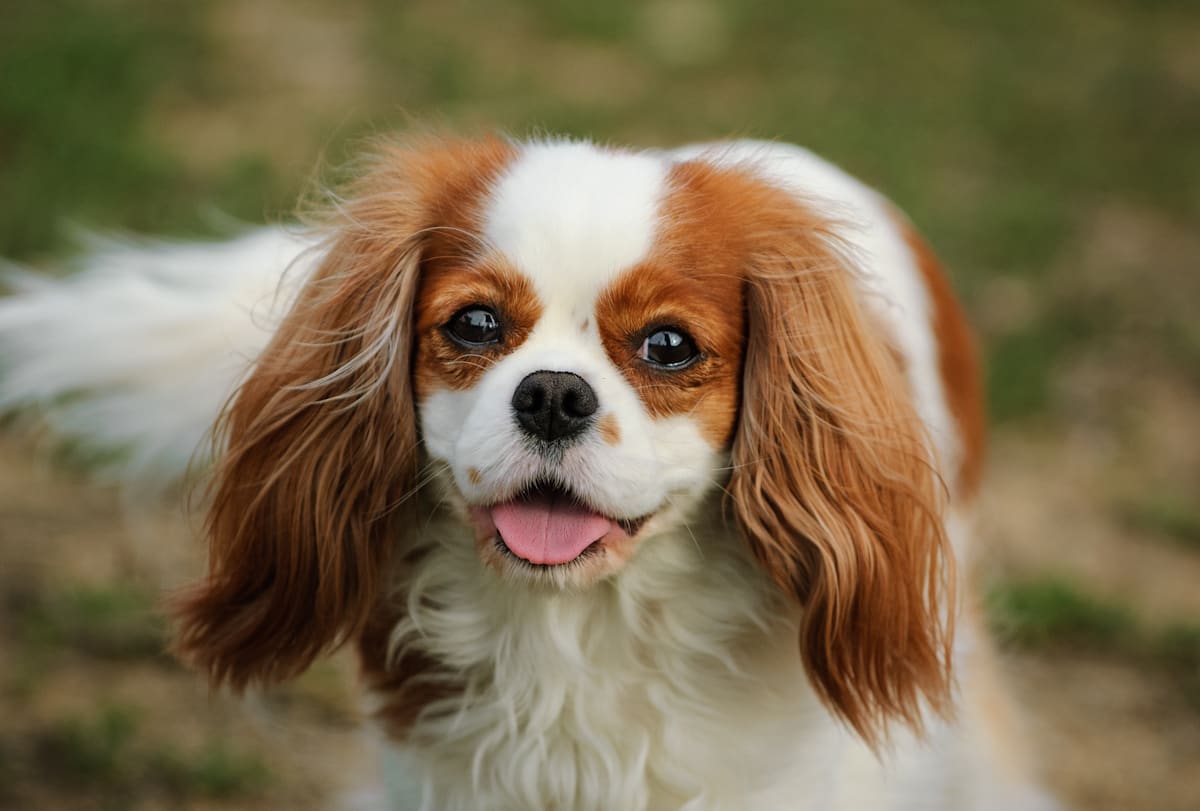
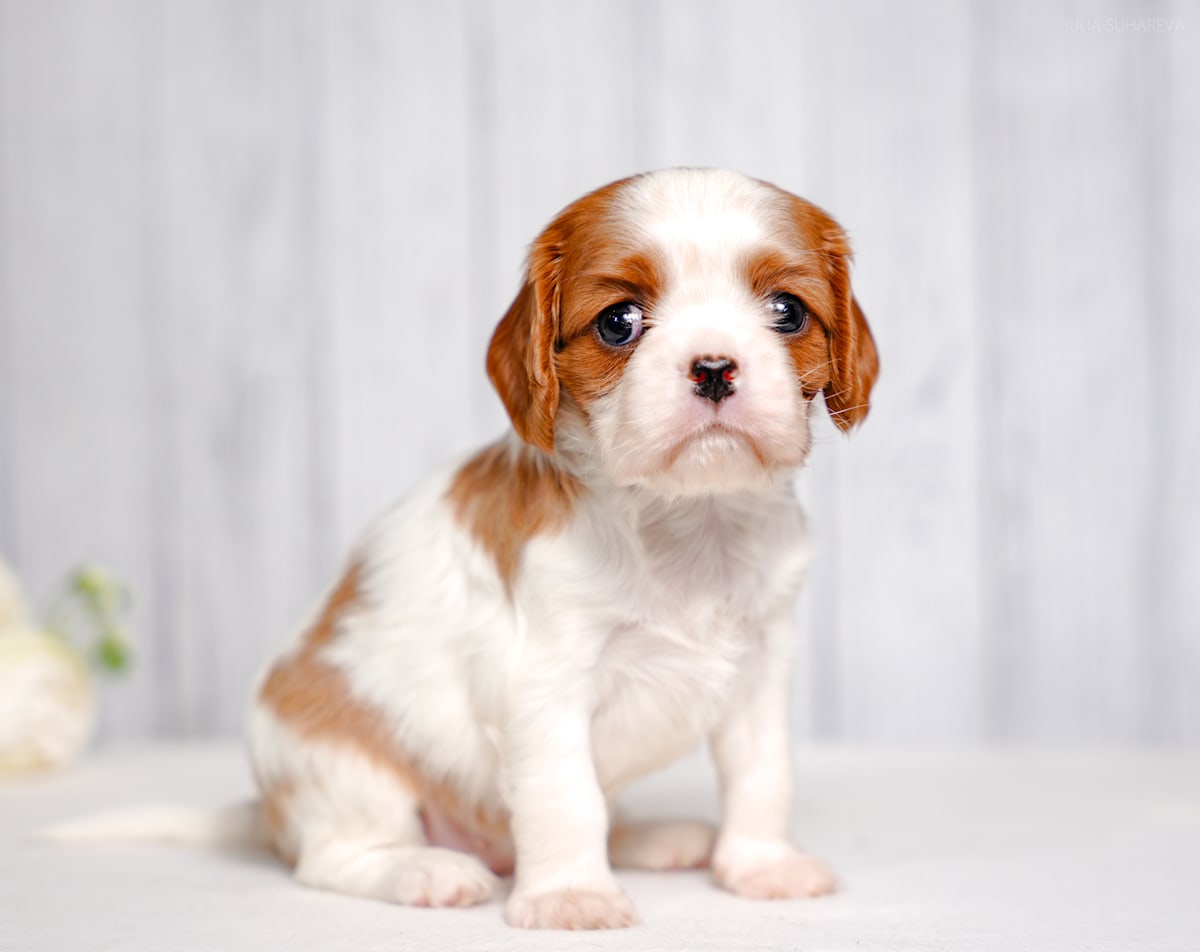
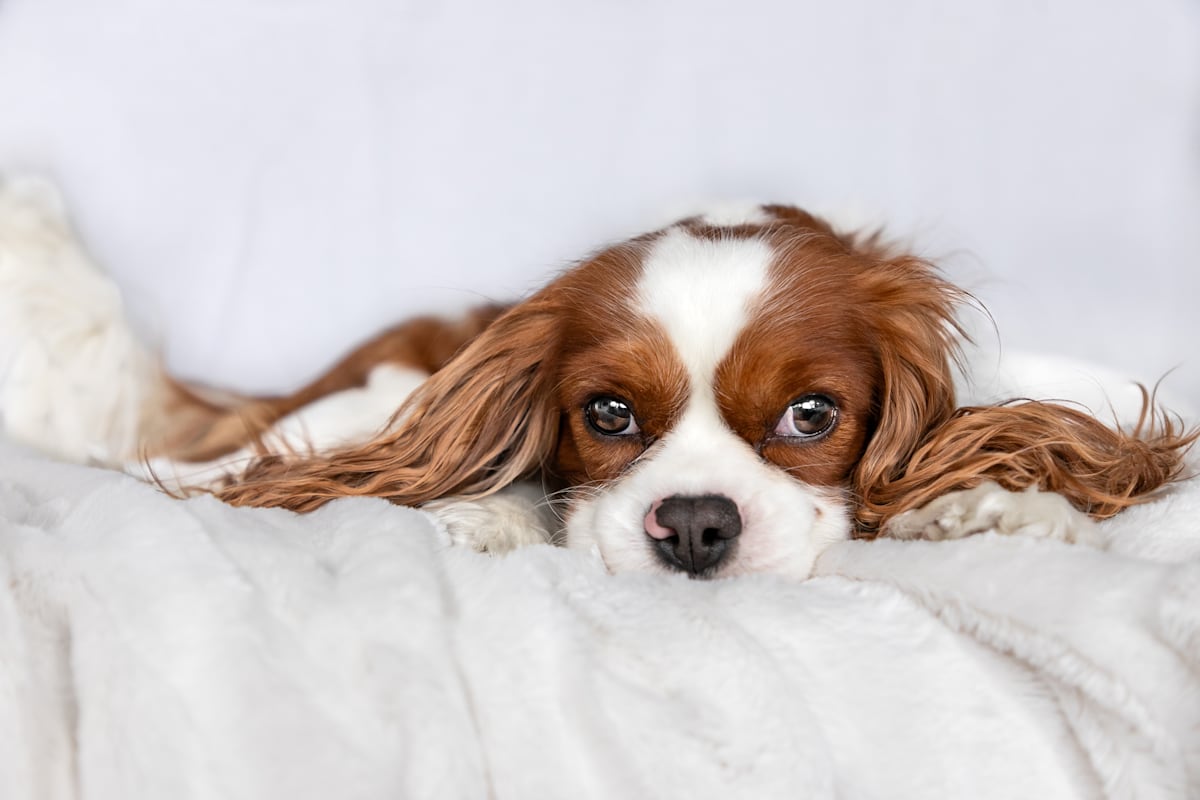
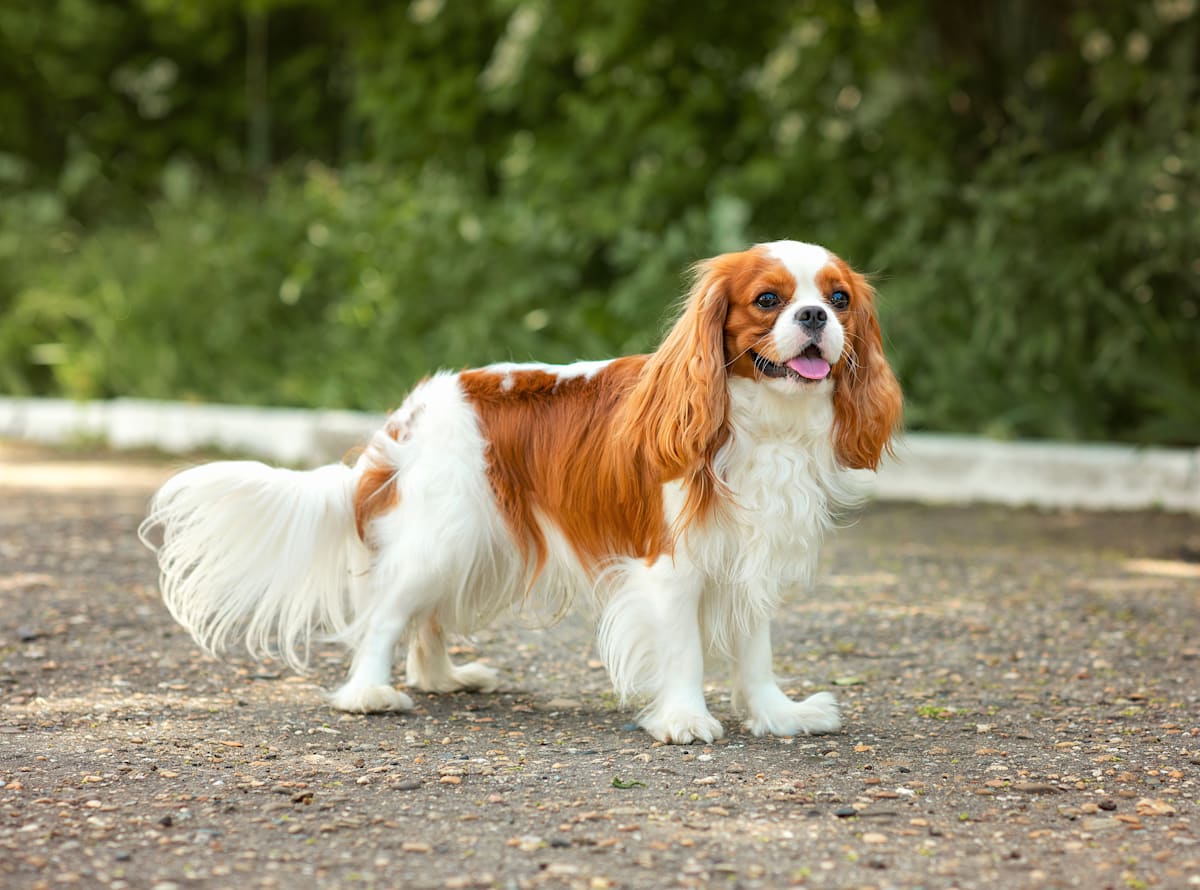
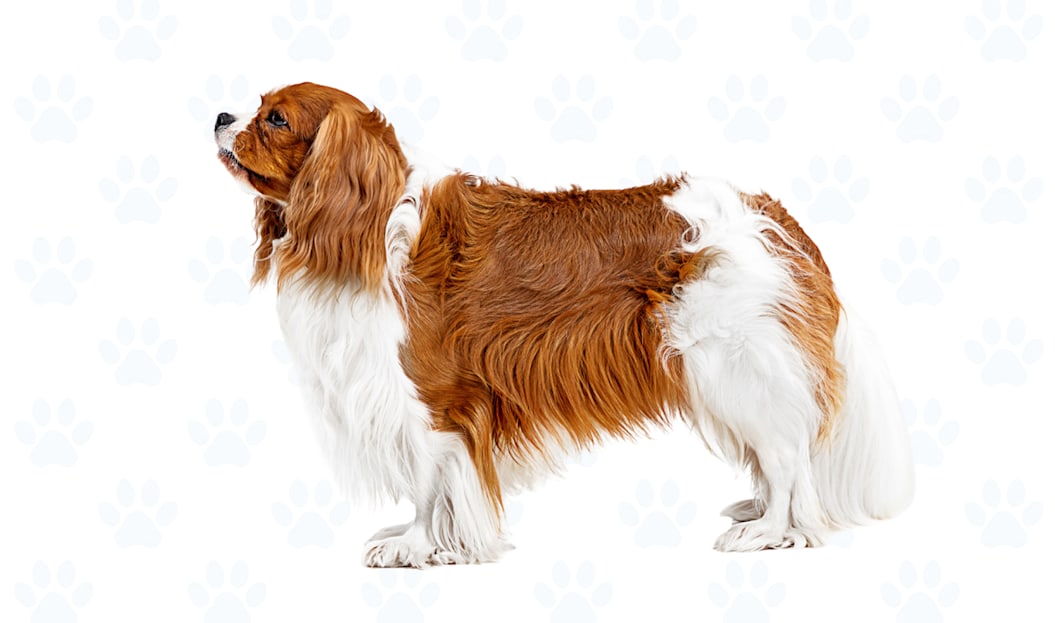
The Cavalier is a well-proportioned toy spaniel, slightly longer than it is tall, with an easily recognized face and coat. The Cavalier head is square, flat between the ears and in proportion to rest its body. They have medium-length triangle ears that lay next to the face, and have a compassionate, interested expression. Their eyes are round, dark brown, and set well apart though not overly prominent. The ears grow to be feathered and should not be trimmed. They have a fairly long neck with slight arch, and a long tail that is usually carried below the line of the back.


The Cavalier coat is silky and feathered in some places, like the ears, chest, legs and tail. There are three coat variations, each with a unique name: Prince Charles (tricolor), King Charles (black and tan), Ruby (red), and Blenheim (red and white). The Cavalier resembles another breed called the King Charles Spaniel (aka English Toy Spaniel) but can be distinguished by its longer muzzle.

Colors

This breed can be found in a variety of colors. You can check them out below.


Size & Weight

The Cavalier is a small dog, although one of the larger toy breeds. On average, they stand 12-13-inches tall and weigh between 13-18 lbs.

Full Grown
Female 12 in. / 13 lbs.
Male 13 in. / 18 lbs.

Height is measured up to the shoulders.

Female Size Chart
Height Figure
Male Size Chart
6 ft. 4 ft. 2 ft.

Cost of Owning

On average, owning a middle-aged Cavalier costs around $1050 per year
$400
Vet Care
$300
Grooming & Boarding
$150
Others
$200
Food & Treats

Characteristics

Size

The Cavalier is a small dog, although one of the larger toy breeds. On average, they stand 12-13-inches tall.

Tiny
Jumbo

Weight

The Cavalier , on average, weighs between 13-18 lbs.

Light
Heavy

Living space

The Cavalier is a great apartment dog. As a quiet, relaxed breed, they require little extra room and conserve floor space by occupying any available lap.

City apartment
Ranch

Exercise

Most Cavaliers have low to medium energy levels and require only basic daily exercise. A couple brisk walks, and a few rounds of fetch, should be enough to keep them fit.

Couch potato
Bring it on!

Personality

Cute and sincere, the Cavalier readily makes friends and revels in mutual adoration. They are known for being people-pleasers with an enjoyable playful streak.

Antisocial
Outgoing

Protection

If you want to turn your foes into friends, then consider a Cavalier your secret weapon. Other than heart-melting, they really have no martial intentions and don’t make a great guard dog.

None
Bodyguard

Behavior with kids

Cavaliers are renowned for their tolerance towards children. However, as a small breed they need to be safeguarded from rough play.

Always monitor
Babysitter

Training

Thanks to its sporting roots, the Cavalier has retained the ability to learn and follow commands. They’re eager to please and considered easy to train.

Headstrong
Obedient

Shedding

The Cavalier sheds an average amount. Their feathered coat needs regular combing, and can be clipped occasionally to lessen its maintenance.

Minimal
Abundant

Climate

Cavaliers do well in just about any climate, so long as they are primarily indoor dogs. They need to be carefully exercised in the heat, as they can easily overheat due to their shorter muzzles.

Warm
Cold

Barking

Cavalier is generally a mellow breed, happy to go with the flow when action is high and lay low when things are quiet down.

Mute
Loud

Cross Breeds

Select a Breed to Cross

Choose a breed from the dropdown to see potential crosses.

Pug
Dropdown Icon

Temperament & Behavior

With respect to temperament, the Cavalier is sometimes referred to as a big dog in a small dog’s body. They are easy going and quiet, with a relaxed disposition that is unusual in small breeds. The Cavalier is just content with attention, and happy to please everybody. Their easy and friendly disposition typically makes them great around children and other dogs and pets. As a small, mild dog, they need a gentle hand and plenty of socialization to avoid getting a bad impression about the big, wide world.

Barking: Understanding your dog

Cavaliers are willing to give 24/7 no-strings-attached constant companionship as long as you’ll let them. However, a Cavalier separated from personal affection will easily become lonely and develop problem behaviors like barking. Their bark is sharp and high pitched, although a happy Cavalier should rarely bark without a good reason.

Training

Cavaliers are capable learners and eager to please. They are sensitive, and even a scolding look can be punishment enough! They respond best to gentle, positive reinforcement, and treats. While they don’t need strong corrections, they require an amount of firmness and consistency, like all breeds. You won’t find many Cavaliers working the front lines but because of their relaxed, loving temperaments they often make wonderful therapy dogs.

Habits and Exercise

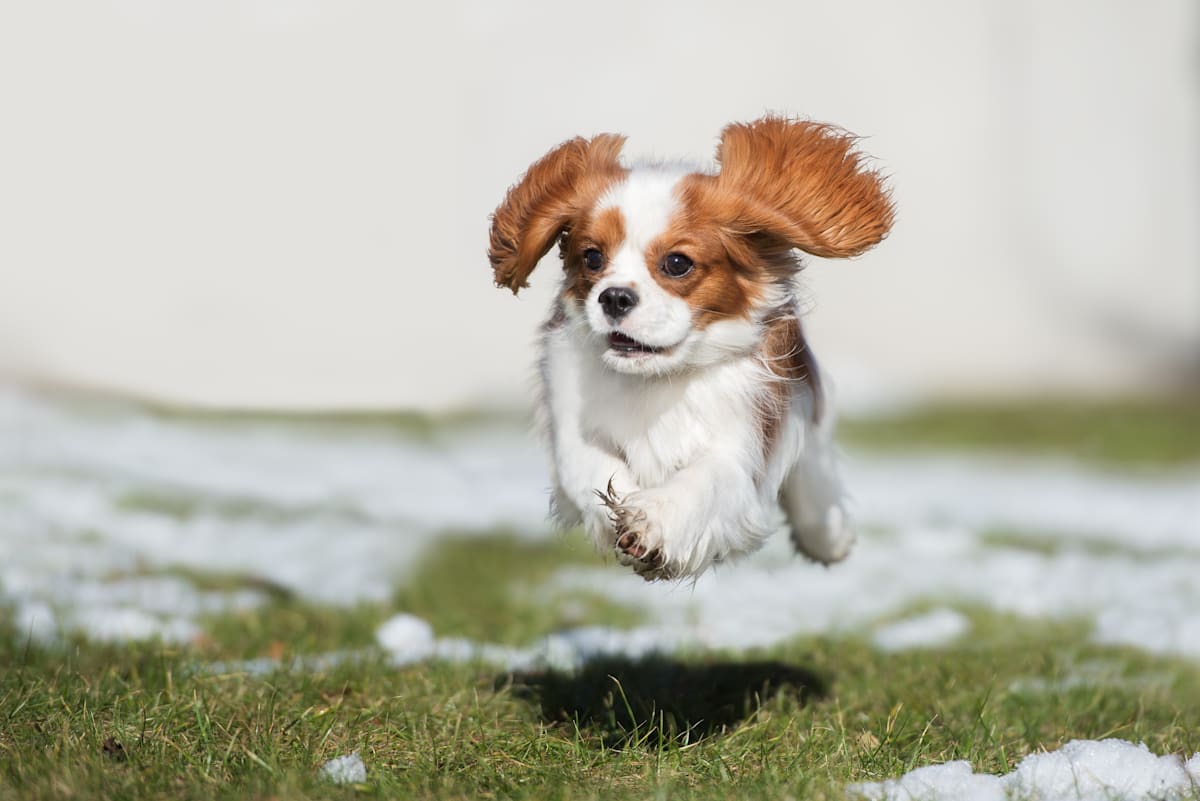
In general, Cavaliers have a medium energy level and, combined with their size, require only basic daily exercise. They’ll take a 30-minute walk and a few rounds of fetch to stay in shape. Despite their lap-dog personas, Cavaliers can still get carried away with chasing instincts. A fun way to channel this instinct is through agility work. They may not seem so competitive but Cavaliers often lead their size class.


As a brachycephalic breed (which basically means short-muzzled), overheating and stress-induced hyperventilation is a potential problem. Avoid vigorous exercise in extreme heat and make sure they have enough water and rest. And while the Cavalier is an expert table beggar with their sweet and woeful looks, it’s important that they aren’t over-indulged with food. A few extra pounds on a small dog can lead to greatly increased health risks.

Energy Level

Enjoys some moderate exercise every now and then

Energy Level

Nutrition

CKCS should be fed a high quality diet specific for small breeds. Your veterinarian can help to determine your Cavvie’s ideal weight, and advise you how to feed accordingly. As a number of common Cavvie conditions can be exacerbated by weight gain, it’s important to keep yours at his ideal weight.

Daily Consumption

Average daily consumption for an adult Cavalier is 0.5 to 1 cup

Daily Consumption

Preventive care

Because Cavaliers are a brachycephalic or short-nosed breed, they are prone to a number of airway problems. Keeping your Cavvie at or slightly below its optimal weight can help to diminish these problems. This can also help to decrease the chances of problem developing related to the spine, as well as arthritis associated with the very common knee disease known as luxating patella. Ensure that you carefully monitor your Cavvie for any unusual eye discharge or abnormal appearance to the eyes, as the breed is prone to a number of eye conditions.

Inherited health issues

As with any purebred dog, there are certain diseases that are more common in Cavaliers than other breeds. For some of these breeds, a specific pattern of inheritance is understood, and for others we only recognize that the breed of dog is more commonly affected that others, but we don’t necessarily understand why. If you are interested in purchasing a CKCS puppy, be certain to speak with any prospective breeders regarding whether breeding dogs are tested for genetic conditions that might be passed along to offspring. The list may include the following: myxomatous mitral value degeneration, syringomyelia, patellar luxation, chiari malformation, hydrocephalus, idiopathic epilepsy, intervertebral disk disease (IVDD), cataracts, corneal dystrophy, entropion, keratoconjunctivitis sicca (KCS aka dry eye), retinal dysplasia, pyometra and brachycephalic airway syndrome.

Life Span

On average, Cavaliers live to be about 9-14 years old.

Life Span

Did you know?

  • • All modern Cavaliers are descended from the six dogs that survived WWII. • The character Charlotte, from the TV show, “Sex and the City,” owned a Cavalier named Elizabeth Taylor. • Cavalier King Charles (and King Charles) Spaniels are the only spaniels in the AKC Toy Group. • Frank Sinatra and Ronald Reagan owned Cavaliers.

Coat and Grooming

Cavaliers need regular combing and brushing. Their feathering can catch debris, while their long ears need special attention to avoid potential sources of infection. It’s possible to clip their coat to a shorter, more manageable, length, although this hair-do is not allowed for conformation dogs.


Sadly, Cavaliers are prone to heart problems, and are 20-times more likely than any other breed to develop mitral valve disease. Eye screening is also important, as they can suffer from hereditary eye problems like cataracts and retinal dysplasia.

Coat length

Medium

Coat length

Grooming

Occasional

Grooming

Shedding

Cavaliers shed an average amount. Unlike many other sporting breeds, they do not have a double coat, so won’t be shedding as much during the change of seasons. Regular combing will keep shedding manageable.

History

The Cavalier of today is actually a relatively new, although descended from historic European spaniels and other toy breeds, namely the Japanese Chin and the Papillon. A similar-looking breed was popular in Tudor times, and depicted in 15th century paintings. Over time, the breed was standardized to be smaller, with a shorter muzzle, and rounder head. They were named after famous fanboy, King Charles II. Fast forward to the 1920s, when dog fancier Roswell Eldridge was interested in reviving the more classically fashioned spaniels with a longer muzzle. To incentivize breeders, he offered 25 pounds in prize money for the best “old-style” individuals exhibited at Crufts each year. In the following decades, the “Cavalier type” version of the breed emerged and barely weathered the hardships of WWII. The first Cavaliers arrived in the United States in 1956 and the national breed club was formed soon after. In 1994, the breed had enough numbers to be recognized by the AKC, and grew to become the 19th most popular breed today.