Working Group
Dogs of the Working Group were bred to perform such jobs as guarding property, pulling sleds and performing water rescues.
The Bullmastiff first appeared in the 1860’s when British gamekeepers crossed Bulldogs with Mastiffs to create a dog capable of defending their master’s vast estates against poachers. Bred to be loyal, watchful, and determined in the face of danger, these noble giants continue to be a source of comfort for their owners today. Though they are large and intimidating, properly socialized Bullmastiffs are calm and loyal companions who can adapt to many different living environments.
Origin: United Kingdom
Dogs of the Working Group were bred to perform such jobs as guarding property, pulling sleds and performing water rescues.
Working Group dogs have been invaluable assets to man throughout the ages. The Doberman Pinscher, Siberian Husky and Great Dane are included in this Group, to name just a few. Quick to learn, these intelligent, capable animals make solid companions. Their considerable dimensions and strength alone, however, make many working dogs unsuitable as pets for average families. And again, by virtue of their size alone, these dogs must be properly trained.
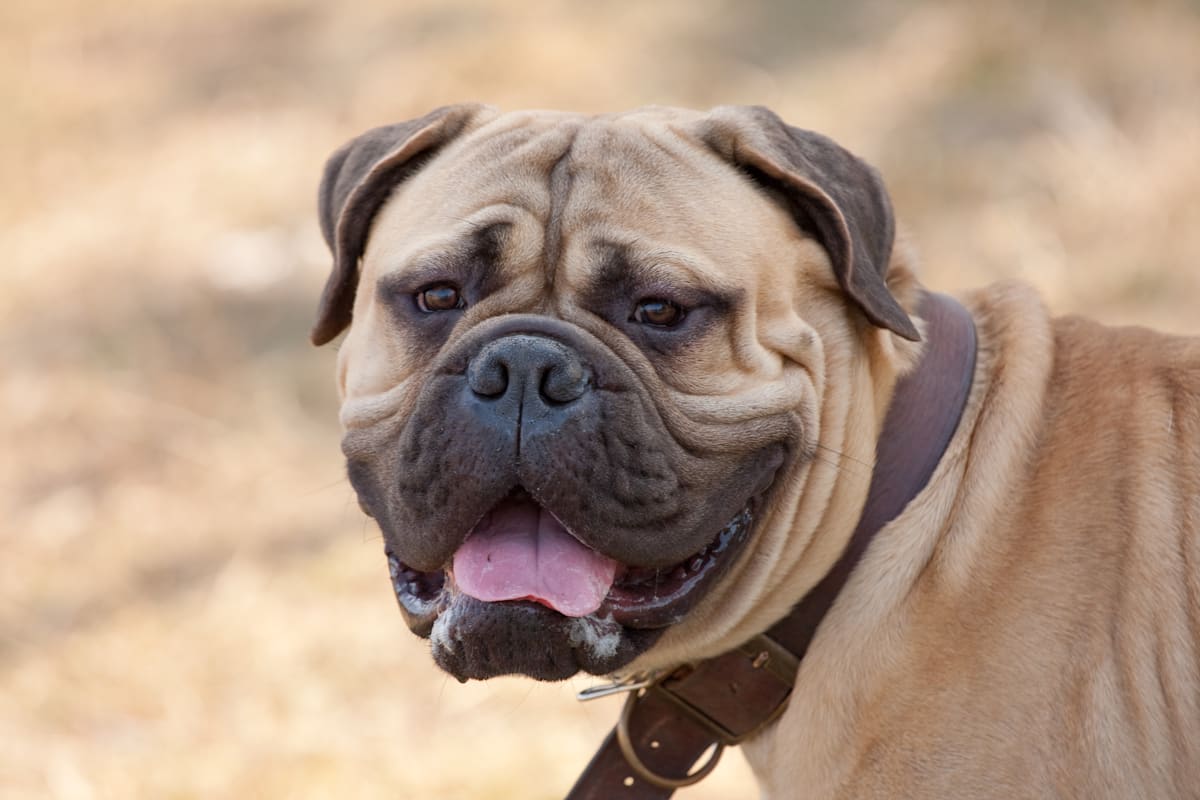
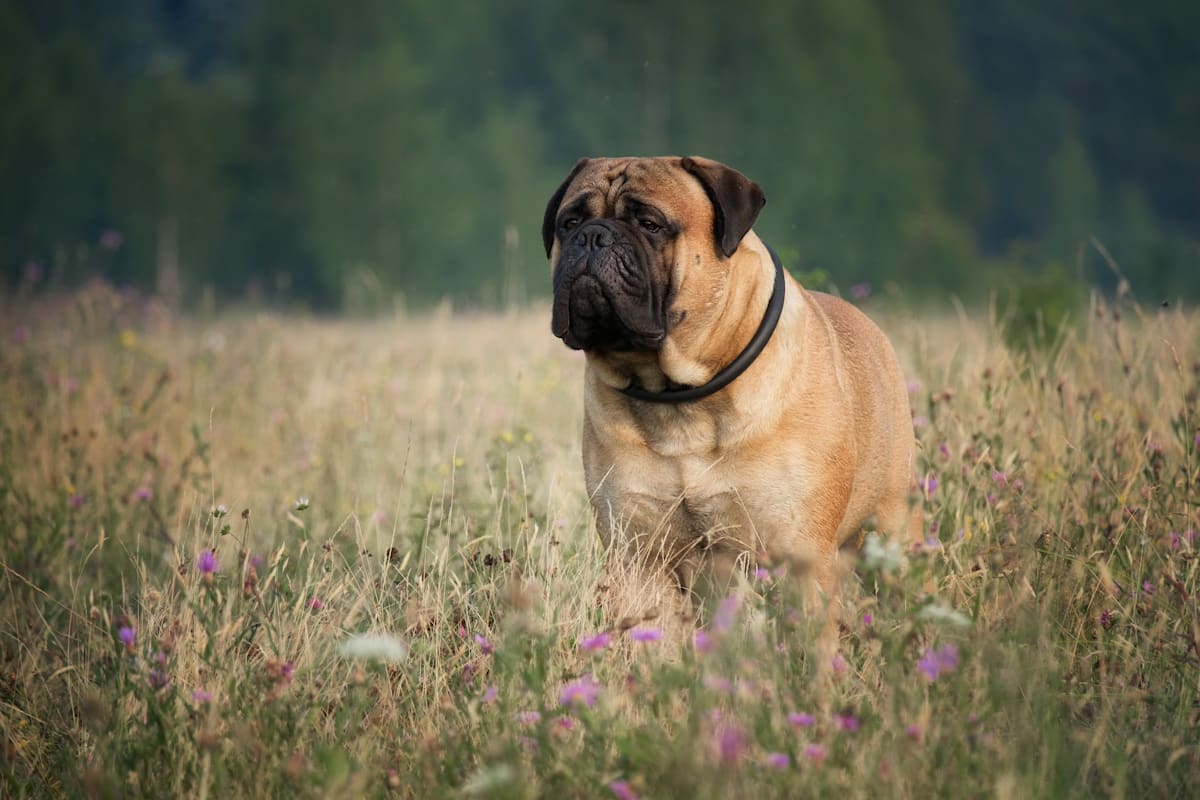
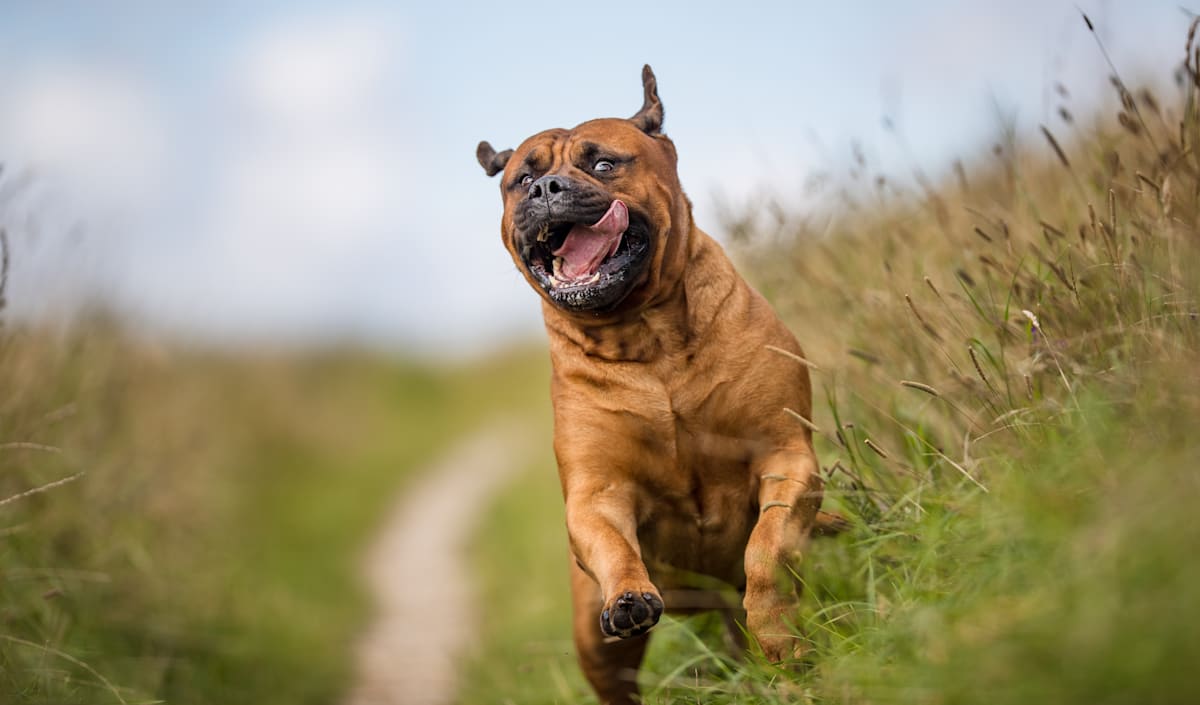
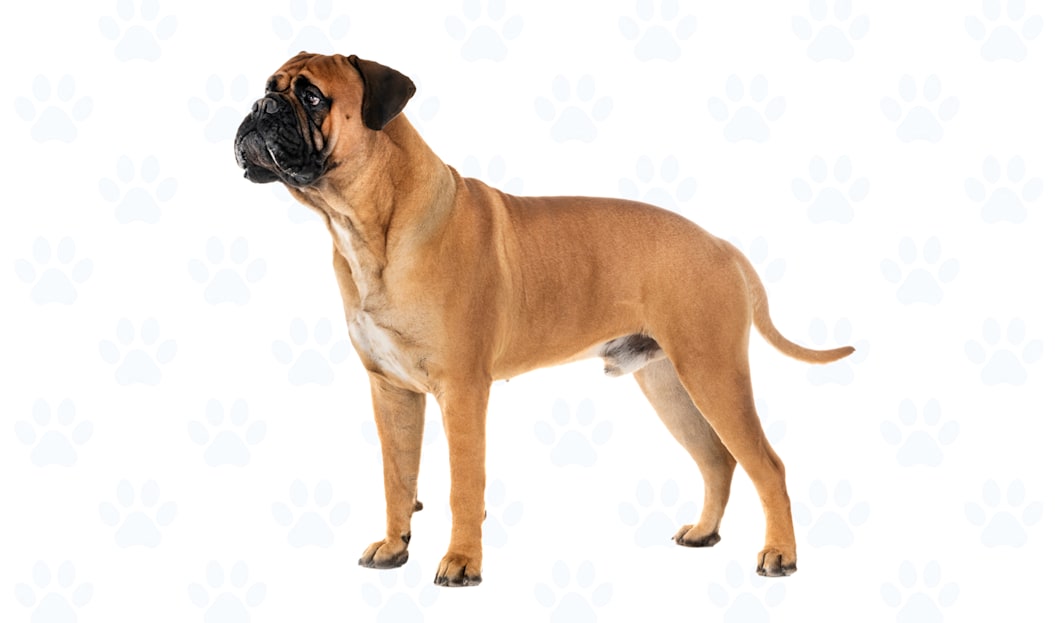
Bullmastiffs are muscular, powerful animals. They have an alert expression, a broad muzzle, and triangular ears that flop down beside the head. Prominent cheeks, a wrinkled face, and a dark muzzle give them a distinctive look. They have a very thick neck and broad chests.
The AKC recognizes several distinct colors for the Bullmastiff: fawn, fawn brindle, red, red brindle, red fawn, and red fawn brindle. The black mask on their face is their most distinctive marking. All Bullmastiffs have a short, dense coat.
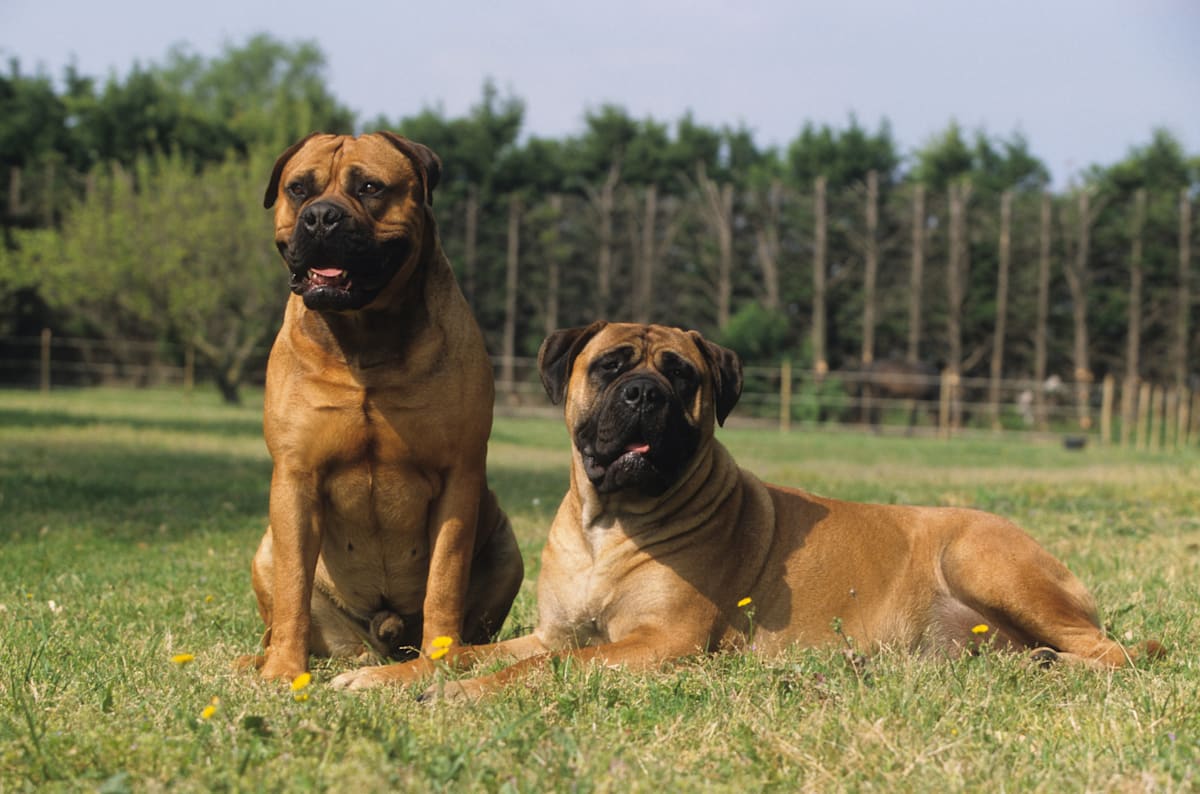
Male Bullmastiffs weigh between 110 and 130 pounds, and are 25 to 27 inches tall. Females are 24 to 26 inches tall and weigh between 100 and 120 pounds. Their sheer size combined with their muscular build gives them a commanding presence.
| Full Grown | |
|---|---|
| Female | 24 in. / 100 lbs. |
| Male | 27 in. / 130 lbs. |
Height is measured up to the shoulders.
Bullmastiffs can measure between 25 to 27 inches tall at the shoulder.
Male Bullmastiffs weigh between 110 and 130 pounds. Females weigh between 100 and 120 pounds.
Though they are obviously a large breed that would be comfortable roaming the grounds of a manor house, Bullmastiffs are fairly low energy dogs once they reach maturity. It is possible for them to live in an apartment if they get consistent exercise. However, owners need to remember that their sheer size can be difficult in compact living spaces.
By the time they are around two years old, Bullmastiffs usually display a calm temperament and a willingness to simply lie peacefully and watch over their domain. They can be perfectly content with one or two short walks or playtimes in a day.
A typical Bullmastiff is brave and confident. They can display an independent streak, but when they are properly trained and socialized, Bullmastiffs are a loyal and obedient friend. Because of their history as guard dogs, they can be somewhat sensitive to conflict or perceived threats, so they do best in a stable environment.
The large size and bold appearance of the Bullmastiff is often enough to deter many threats. Bullmastiffs were bred to have the intelligence and quickness to catch intruders, and the size to hold them down. They are fearless and relentless in the defense of their owners, and respond instinctively to threats.

The Bullmastiff can be an excellent companion for children, often displaying plenty of patience and a surprising degree of playfulness. However, their size means they could accidentally step on a toddler or knock them over, and their protective instincts can sometimes lead them to react if children are playing rough with each other. Like all breeds, they should not be left alone with young children.
Bullmastiffs can be somewhat independently minded and willful, but they are also attentive and loyal. They can become bored with repetitive commands, so they require an owner with some patience and creativity to help them reach their full potential. Because they grow so rapidly, these dogs need to be socialized and trained from an early age.
Bullmastiffs have a short coat that is easy to groom. However, their large size means that you will still be dealing with a moderate amount of dog hair.
Bullmastiffs do well in cold or temperate climates, but struggle in the heat. Owners should avoid walking them during the hottest parts of the day, and if they are left outside they must have plenty of water and shade.
Most Bullmastiffs will only bark if alarmed. When they do bark it can be quite a deep, startling sound. Prospective owners should also be aware that Bullmastiffs can be fairly noisy in other ways; their short muzzle and large face can make them loud snufflers and snorers.
Bullmastiffs were originally bred to be the guardians of large estates, and though they have adapted to become wonderful family dogs today, much of their behavior can be explained by their historical purpose. They can be territorial and mistrustful of strangers, so it is essential to socialize and train them properly from an early age. Bullmastiffs are fairly independent animals who are happy to spend time alone while you are away, but they still need their fair share of affection and companionship. Most Bullmastiffs are calm and relaxed, but when they sense trouble they will instinctively and courageously protect their owner from a threat.
Bullmastiffs are not known to be frequent barkers. When they do speak, it is a deep, authoritative bark that is sure to deter an intruder. However, if a Bullmastiff is not properly socialized, their territorial instincts may cause them to bark more frequently than desired.
As long as prospective owners understand the lineage of the Bullmastiff and have a good understanding of how they want to train their dog, they should have no trouble raising a confident, loyal animal that is comfortable in a wide range of situations. However, inexperienced owners may be challenged by the Bullmastiff’s tendency to think for themselves. If they are not well socialized and do not understand their place within the home, a Bullmastiff can be dangerous to other animals and people.
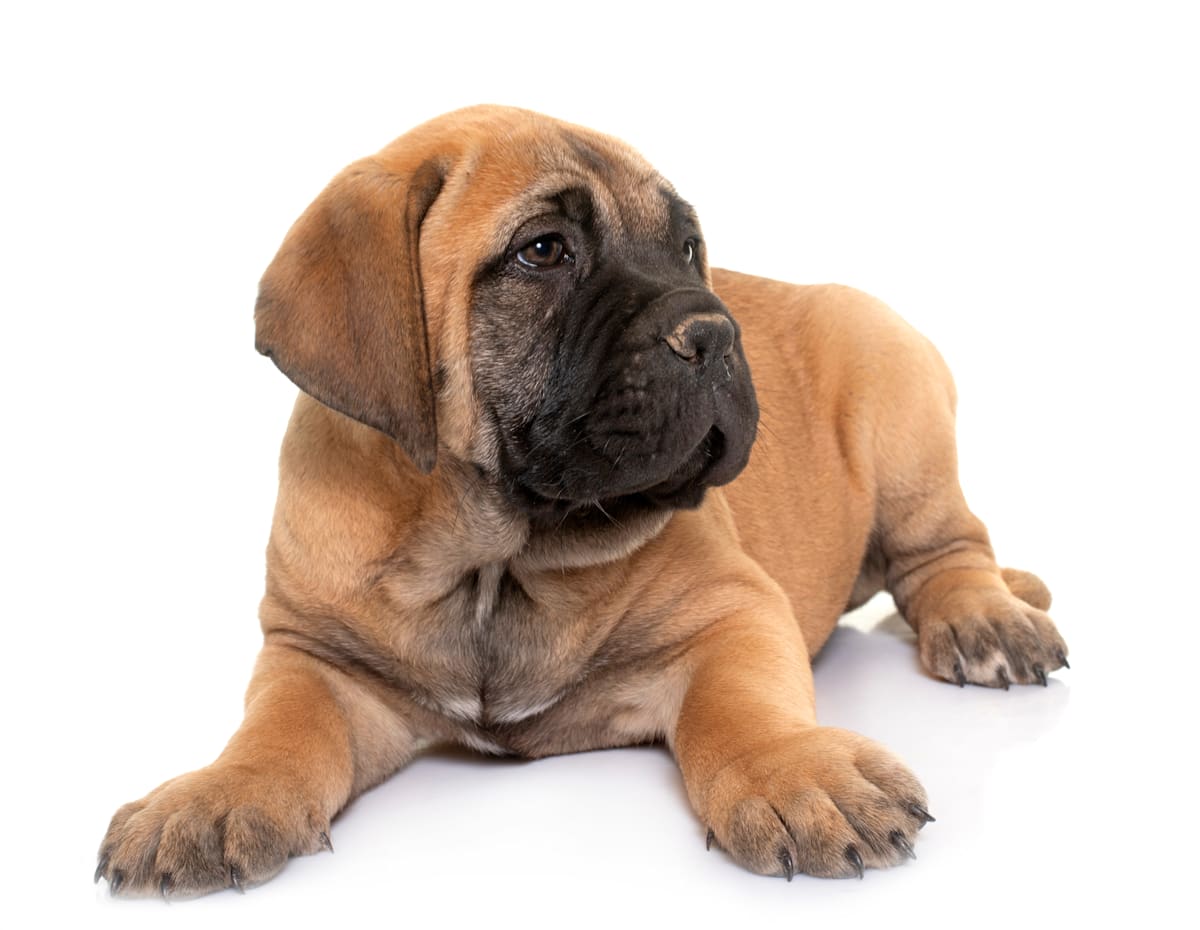
Early socialization and constant training are essential when you choose a large breed that comes from a guard dog lineage like the Bullmastiff. They are intelligent animals that seek to please their masters, but they are also independent thinkers who need clear boundaries to be set for their behavior. Bullmastiffs can become bored with repetitive commands or poorly planned training sessions, so it is important to have a good base of knowledge in different dog training methods. Positive reinforcement and food rewards are often effective, while physical punishment has little effect and often causes more problems than it corrects. Owners need to remember that bad habits that seem cute when a Bullmastiff is small can become a huge problem once the dog is fully grown.

The amount of exercise that a Bullmastiff needs changes throughout its life. Before they are two years old, Bullmastiffs can be quite energetic, so owners can be tempted into overworking them. Excess walking at this age can cause health problems down the road, so owners must carefully monitor the activity level of their pet.
As a Bullmastiff grows older, they should mellow and be quite content spending the majority of their time guarding their home. Adult Bullmastiffs will still require around 30 minutes of exercise per day. Early training is essential to ensure that a strong, powerful breed like the Bullmastiff does not walk you.
Not interested in exercise, would rather doze the day away
Since adult Bullmastiffs are not known for a high level of energy, they can easily become overweight if they are overfed. Make sure that your Bullmastiff is fed several portion-controlled meals of a balanced diet every day. Avoid offering treats or table foods in excess because this will quickly pack on the pounds.

Average daily consumption for an adult Bullmastiff is 3-5 cups daily
Related to their giant stature, Bullmastiffs are prone to developing a variety of joint conditions. Maintaining a healthy body weight is crucial to keeping your Bullmastiff’s joints in the best shape possible. Fish oil supplements can also be helpful to decrease inflammation within the joints related to the onset of arthritis.

Bullmastiffs can also develop a variety of eye issues. Be sure to take your Bullmastiff to the veterinarian if you notice any changes in the appearance of their eyes or with their vision. Any problems are best addressed sooner rather than later.
Many health conditions have been identified in the Bullmastiff and occur either through methods of inheritance or at an increased frequency within the breed. Genetic testing is commonly performed by responsible breeders in an attempt to decrease the incidence of many health issues. These may include: lymphoma, ectropion, entropion, progressive retinal atrophy, glaucoma, macroblepharon, optic nerve hypoplasia, persistent pupillary membranes, retinal dysplasia, cystine urolithiasis, osteochondritis dissecans, hip dysplasia and elbow dysplasia
On average, Bullmastiffs live to be about 8 to 10 years old.
Bullmastiffs don’t shed too much, but their coat should be kept clean and shiny with a short daily brushing. Their ears should be checked for any discharge or build-up, and can be cleaned with a solution provided by a veterinarian. Nails should be trimmed once a month, and teeth should be brushed daily. Frequent grooming helps form a bond between the Bullmastiff and owner, and ensures that your animal stays healthy.
Short
Occasional
As long as a regular grooming schedule is followed, Bullmastiffs should not produce too much excess fur. However, their large size means that owners will need to clean hairs off of rugs or furniture every so often.
Seeking to create a dog fast enough to both pursue poachers and strong enough to hold them down, British gamekeepers began breeding the large Mastiff with the quick, determined Bulldog in the mid-1800’s. Early Bullmastiffs were known as the “Gamekeeper's Night Dog”. In these early days, the Bullmastiff was a crossbreed created to fulfill a specific purpose, but around the beginning of the 20th century, they began to be bred as a distinct variety.
The English Kennel club declared the Bullmastiff breed pure in 1924, establishing a genetic background of approximately 60% Mastiff and 40% Bulldog. The American Kennel Club followed suit in 1934. Today, the Bullmastiff has evolved far beyond its original utilitarian roots, and can be found in the ring at dog shows or living happily as a family pet.