


Related Articles


Senior Cat Behavior Changes: Understand Causes & Find Solutions
Published on August 21st, 2000
Updated on October 22nd, 2025

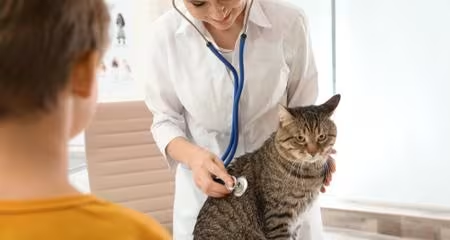
As cats become older, they may be more likely to change their behavior or develop certain behavioral problems. With the correct diagnosis and treatment, and a bit of patience, many of these behavioral problems can be resolved.
Inappropriate Elimination
Inappropriate elimination (urinating or defecating outside of the litter box, and/or [spraying](https://www.petcoach.co/cat/condition/inappropriate-elimination/) is the most common behavior problem of older cats. There are numerous causes for this behavior, many of them medical, so a cat who has inappropriate elimination should be examined by a veterinarian. Laboratory tests will need to be performed in most cases.
Medical Causes of Inappropriate Elimination
Medical conditions, which result in an increased frequency of urination or defecation may be the underlying cause for this behavior problem. These conditions include: [colitis](https://www.petcoach.co/dog/condition/colitis/), [inflammatory bowel disease](https://www.petcoach.co/cat/condition/inflammatory-bowel-disease-1/), [diabetes mellitus](https://www.petcoach.co/cat/condition/feline-diabetes/), [hyperthyroidism](https://www.petcoach.co/cat/condition/hyperthyroidism/), [kidney disease](https://www.petcoach.co/cat/condition/kidney-disease-1/), [liver disease](https://www.petcoach.co/cat/condition/liver-disorders/), and [feline lower urinary tract disease](https://www.petcoach.co/cat/condition/lower-urinary-tract-disease/) (FLUTD). Medical conditions, which cause pain to urinate or defecate, or make it difficult for the cat to get in and out of the litter box, may also result in inappropriate elimination. Such conditions include [arthritis](https://www.petcoach.co/cat/condition/arthritis/), [anal sac disease](https://www.petcoach.co/cat/condition/conditions-of-the-anal-glands-1/) and a loss of vision. Treatment of these medical conditions may help to resolve this associated behavioral problem. In addition, using litter boxes with lower sides, placing the litter box in the area in which the cat spends the most time and increasing the number of litter boxes may be helpful.
Behavioral Causes of Inappropriate Elimination
Stress can be a major cause of inappropriate elimination in cats of all ages. Older cats may not be able to handle stressors as well as younger cats. Stressors such as moving, changes in routine or changes in the makeup of the family can all result in inappropriate elimination. Reducing these stressors or decreasing their impact on the household will benefit your cat (and probably you, too). Calming pheromones, which are chemicals used to communicate with other members of the same species, can be helpful in reducing anxiety in cats, thus decreasing the incidence of urine spraying or inappropriate urination in many cases. Feliway is one example of a calming pheromone product that can be used as a plugged in diffuser, collar or spray.
Cats of all ages may develop an aversion to the litter box or substrate (material inside of the litter box). Trying different types of litter, including clumping litter, sand, shredded newspaper and no litter are things that could be helpful. Other tips on managing behavioral inappropriate elimination and spraying include using enzyme cleaners to clean the areas that have been soiled with urine or feces, feeding the cat in the area in which they are inappropriately eliminating, and using upside down carpet runners (the ones with the spikes on the bottom), double-sided tape, motion detectors, pet repellents or scat mats to limit their access to the area where they eliminate inappropriately.
Aggression
Cats may become aggressive toward people or other animals in the household. Again, this aggression may be the result of a medical problem, such as one causing pain (arthritis, for example), vision or hearing loss, which results in the cat being easily startled, or diseases having direct effects on the nervous system. As with inappropriate elimination, stressors can cause irritability and subsequent aggression in some cats. A combination of counter-conditioning (teaching the cat a different response when exposed to a certain stimuli), desensitization (gradually reintroducing the cat to the stimuli), medical therapy and calming pheromones may help change the cat's behavior. Consult your veterinarian and an animal behaviorist if your older cat is becoming aggressive.
Fear & Anxiety
As with the other behavioral problems discussed above, loss of hearing or vision, stress, pain and neurologic disease can contribute to fear or anxiety in a cat. When possible, the treatment includes determining the cause of the fear and minimizing it, providing appropriate therapy for any medical condition, and prescribing various anti-anxiety medications.
Change in Activity Patterns
For their entire lives, some cats tend to be active during the night, and then they go into sound sleep as soon as we get up. Some older cats will develop this altered sleep-awake cycle, as well. Pain, the need to urinate or defecate more often, the loss of vision or hearing, changes in appetite, and neurologic conditions can contribute to this behavior. Playing or grooming your cat prior to bedtime may help them to sleep. Experiment with changing feeding times to see if that makes a difference. Keep in mind that you may not be able to change this altered sleep-awake cycle. In those cases, you may simply want to keep your cat out of the bedroom.
Many of the behavioral changes seen in older cats can be due to medical conditions. If your cat's behavior is changing, have your cat examined by a veterinarian. Older cats are more easily stressed, so attempt to reduce their stress by making any necessary changes in routine gradually, and decreasing the exposure of your cat to stressors. With patience, understanding and treatments recommended by your veterinarian, you can help to make your cat's older years a quality time for everyone.

34Pet Parents found this article helpful



Book an appointment with the pros – our expert vets are here to help.
