


Related Articles


Feed Your Cat Right: Avoid These 6 Common Cat Feeding Mistakes
Published on July 29th, 2019
Updated on October 22nd, 2025

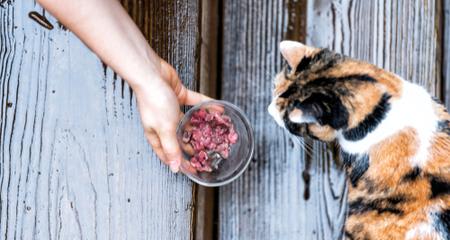
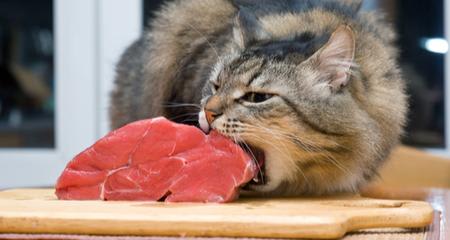
Forgetting About Your Cat’s Nutritional Needs
[Fruits and vegetables](https://www.petcoach.co/article/are-vegan-diets-safe-for-pets/) may appeal to humans, “but cats are carnivores, and many of these ingredients are either unnecessary or not well-processed by them,” says [Dr. Sasha Gibbons](http://justcatsonline.com/pages/pages/staff.html), an associate veterinarian at Just Cats Veterinary Hospital in Stamford, Connecticut.
Being a carnivore doesn’t mean your cat can eat just any type of meat, however. “They need different parts of the animal to obtain all the amino acids, vitamins and minerals they need for everyday function,” she says.
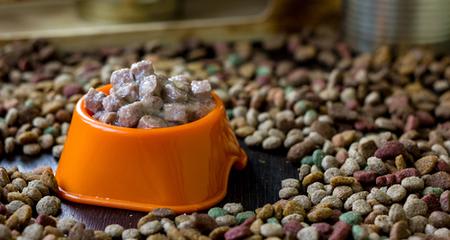
Holding on to Myths About Wet (and Dry) Cat Food
Despite popular belief, [wet cat food](https://www.petcoach.co/article/dry-vs-canned-food-which-is-better-for-your-pet/) generally has fewer calories, which can be attributed to its high water content, says Gibbons. “Many dry foods use carbohydrates to bind the food to stick together. Therefore, canned food is often higher in protein and lower in carbohydrates than dry food. Plus the higher water content in canned food is good for kidney issues, and can help prevent other urinary issues.”
Conversely, many pet parents believe dry food helps prevent dental disease, she says. In reality, chewing dry food or cat treats can help wear plaque from the teeth, however many cats swallow food whole or only chew on one side of their mouth, negating the purpose, Gibbons adds.
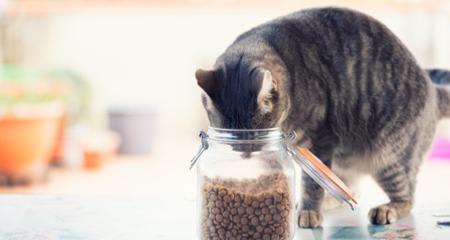
Allowing Cats to Graze All Day
Letting cats graze on dry food all day, also known as free feeding, is a common mistake, says Marilyn Krieger, a certified cat behavior consultant and owner of [The Cat Coach](http://www.thecatcoach.com/) in the San Francisco Bay area.
“Free-fed cats are often overweight, lethargic and bored. In their natural state, felines don’t graze, and food is not readily available—they hunt for their food,” she says. “Instead of free feeding, cats should be fed multiple times a day and they should work a little for their food.”
Krieger recommends that [cats eat](https://www.petcoach.co/article/new-cat-survival-guide-feeding-tips/) at least five small meals every day. “Automatic timed feeders that have ice packs make it easy to feed canned food, even when cat parents aren’t around or are asleep.”

Not Consulting with Your Veterinarian About Your Cat’s Diet
Pet food labels are good guidelines, says Gibbons, however the research done to formulate these labels are often done on pets that weren’t spayed or neutered. These animals have higher metabolic requirements, so if you follow them exactly and your pet has been spayed or neutered, you may be feeding your cat more than they actually need.
Additionally, Gibbons says that [certain life stages](https://www.petcoach.co/article/when-to-switch-your-pet-to-senior-food/) and health conditions may change a cat’s caloric requirements. “Kittens have high caloric requirements due to the amount of energy they need for growth,” she says. “Therefore, feeding a kitten diet to cats under nine months of age is imperative.”
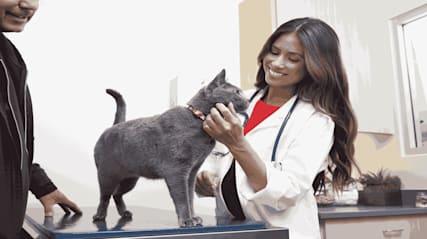
Your best option is to consult with a veterinarian to determine your cat’s specific nutritional needs so you can explore the variety of foods available for different life stages and conditions.
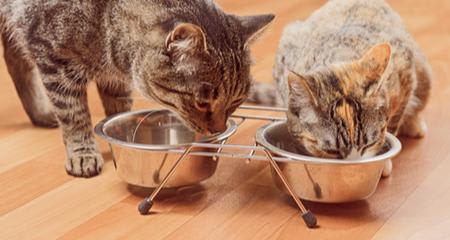
Feeding Your Cats Together
Pet parents with multiple cats often mistakenly place food bowls next to each other, or only provide one bowl for all the entire community, says Krieger. “Although household cats who are fed next to each other have no choice and have to eat in those circumstances, it can be stressful and cause eating disorders including stomach upsets, overeating and not eating.”
Each cat needs their own bowl, and they should be placed at a distance from each other. Depending on the individual cat, they may need to be placed in completely separate rooms, Krieger says.
You also want to avoid placing cat food bowls next to litter boxes, she adds. “Cats are clean and don’t want to smell excrement, especially where they eat. When given the chance, they won’t eat next to where they go to the bathroom.”
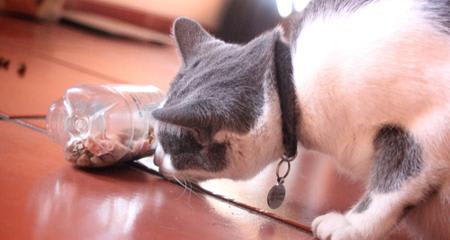
Not Providing Enrichment at Mealtime
Cats are predators who instinctively work and hunt for their food, so mealtimes should be mentally and physically stimulating, says Krieger. One thing pet parents can try are [food puzzles](https://www.petcoach.co/article/which-feeding-method-is-right-for-your-pet).
“Cats are notorious for over-consumption of food or too rapid consumption. Puzzle bowls have become popular as ways to help slow down the rate of food consumption, which can also help with vomiting associated with overeating,” says Gibbons.

427Pet Parents found this article helpful
What's the best food for a 6-month-old cat: wet, dry, and how much?
My cat is overweight. What are the best feeding tips for weight loss?
What's the best food and feeding schedule for my indoor cat's health?
My cat is healthy free-feeding. Should I switch to scheduled meals?

What are common questions about cat health, food, behavior, breeds?
What human foods can my cat eat safely, and which should I avoid?

Help me find high-quality cat food after a bad brand experience.
What should I feed my cat for health and what foods are toxic to them?
Getting a new kitten? How to prevent picky eating habits.
How do I feed multiple cats and stop one from eating others' food?







Book an appointment with the pros – our expert vets are here to help.
